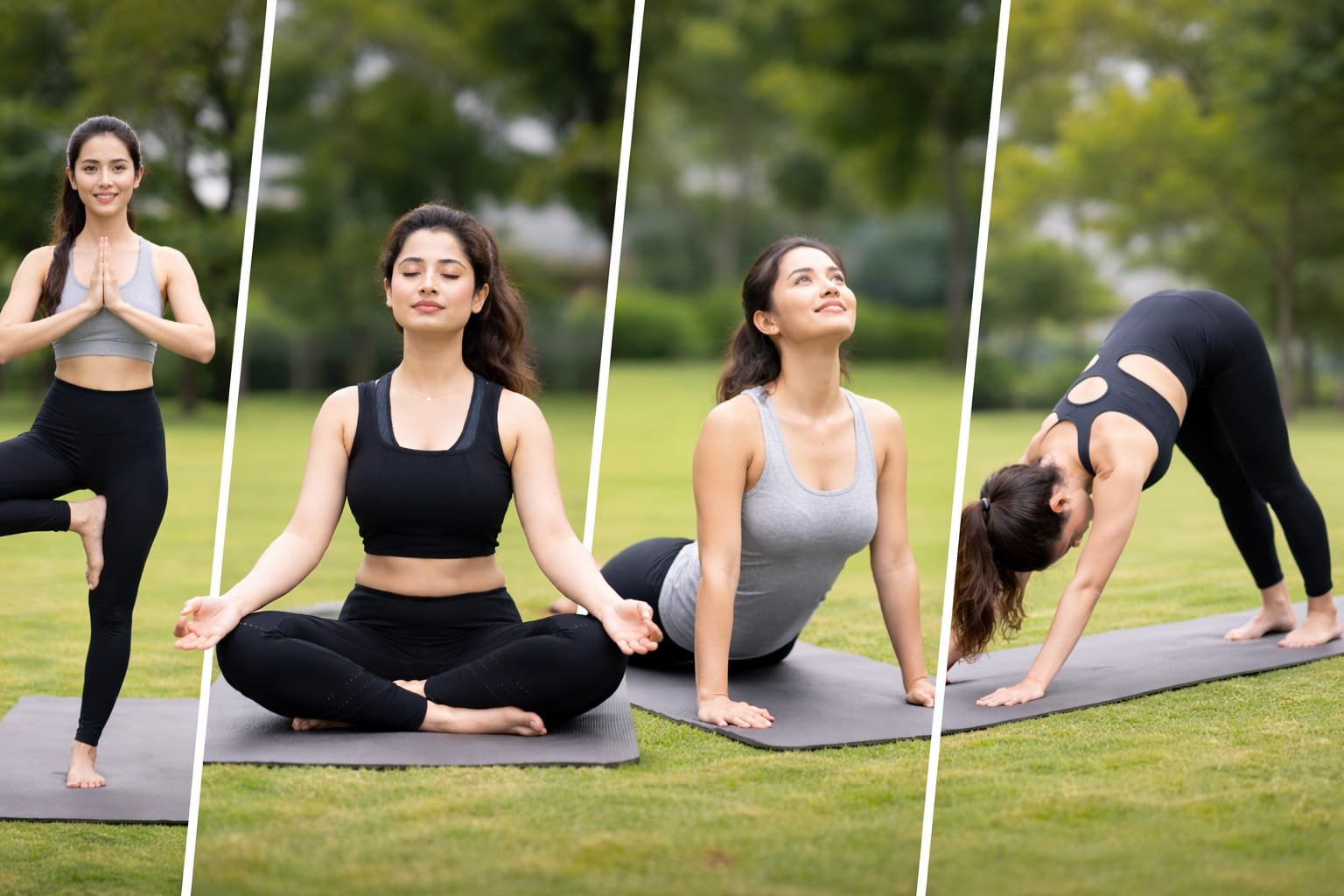
Yoga is one of the safest and most effective ways to begin a healthy lifestyle. If you are new to fitness or looking for a gentle yet powerful way to improve flexibility, strength, and mental peace, yoga is the perfect starting point. Unlike high-intensity workouts, yoga focuses on slow, mindful movements, controlled breathing, and deep body awareness.
Many beginners feel nervous before starting yoga because they believe it requires extreme flexibility or advanced skills. However, the reality is completely different. Yoga is designed for everyone — regardless of age, body type, or fitness level. Even the simplest poses, when practiced consistently, can deliver powerful physical and mental benefits.
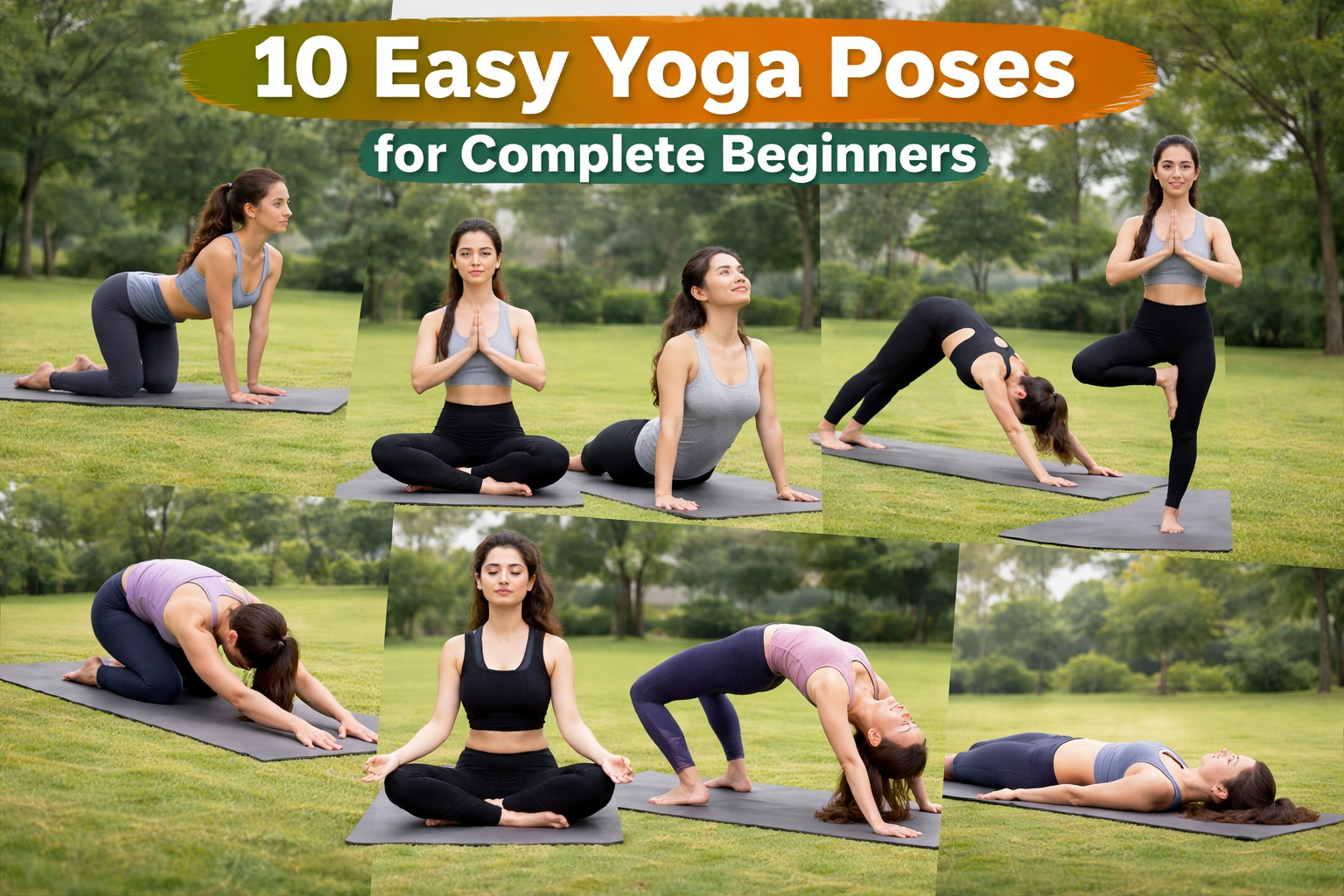
In this beginner-friendly guide, you will learn 10 easy yoga poses that help build confidence, improve posture, and promote relaxation. These poses require no prior experience and can be practiced safely from the comfort of your home.
Why Beginners Should Start with Easy Yoga Poses
Starting with basic poses allows your body to adapt gradually. Jumping directly into advanced postures may lead to discomfort or even injury. Beginner-friendly poses help strengthen muscles, improve mobility, and teach proper breathing techniques, creating a strong foundation for your yoga journey.
- Improves flexibility gradually
- Builds body awareness
- Reduces stress and anxiety
- Prepares the body for advanced yoga
- Helps create a consistent and sustainable habit
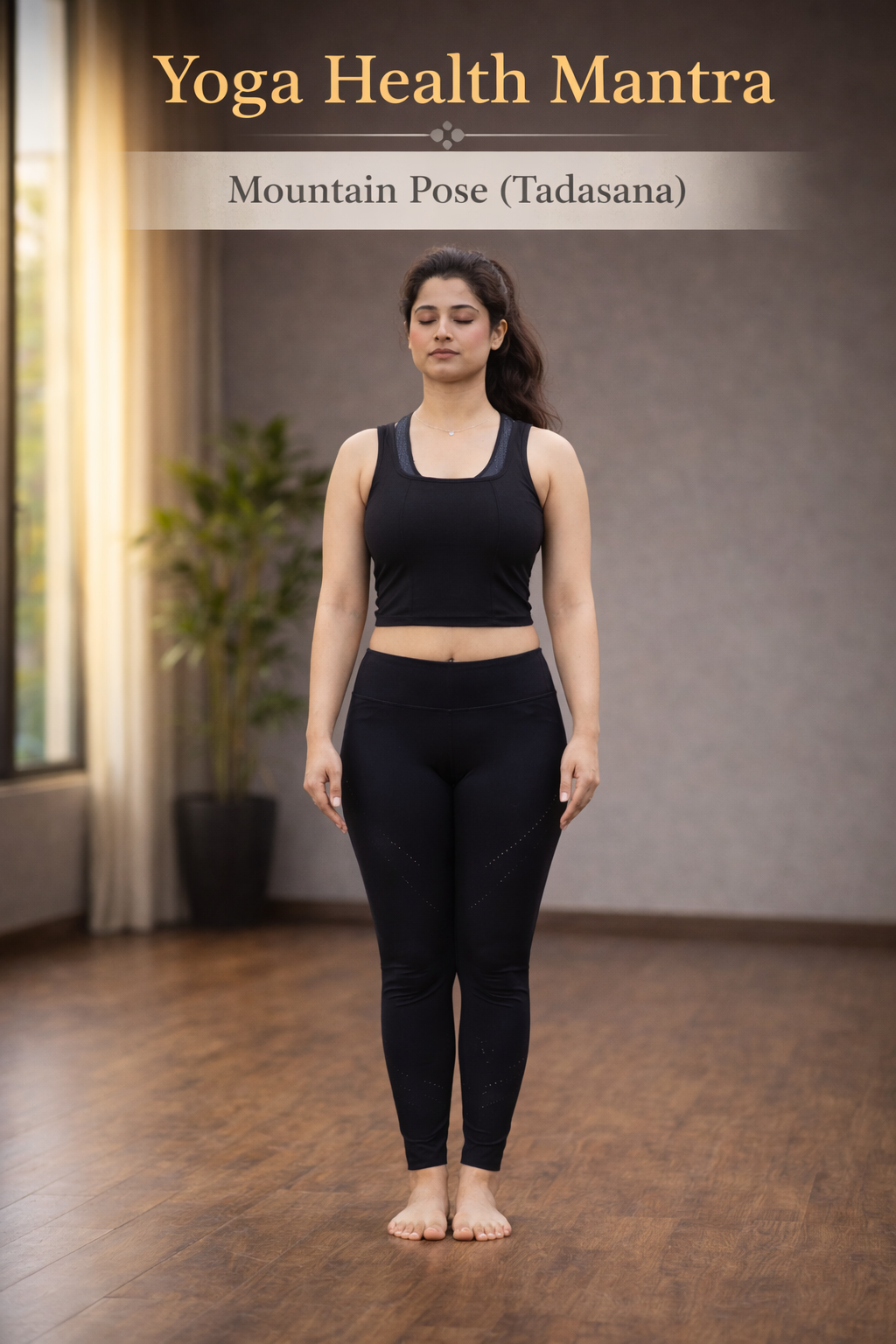
1. Mountain Pose (Tadasana)
How to Perform
Stand upright with your feet together and arms relaxed naturally by your sides.
Distribute your body weight evenly across both feet. Keep your spine elongated,
shoulders relaxed and rolled slightly back, and your chin parallel to the floor.
Engage your core gently and take slow, deep breaths, maintaining a steady and
grounded posture.
Key Benefits
- Improves posture and spinal alignment
- Enhances balance and stability
- Develops body awareness and focus
Although it appears simple, Mountain Pose plays a fundamental role in yoga practice.
It teaches correct alignment, balance, and awareness, forming the foundation for
all standing yoga postures.
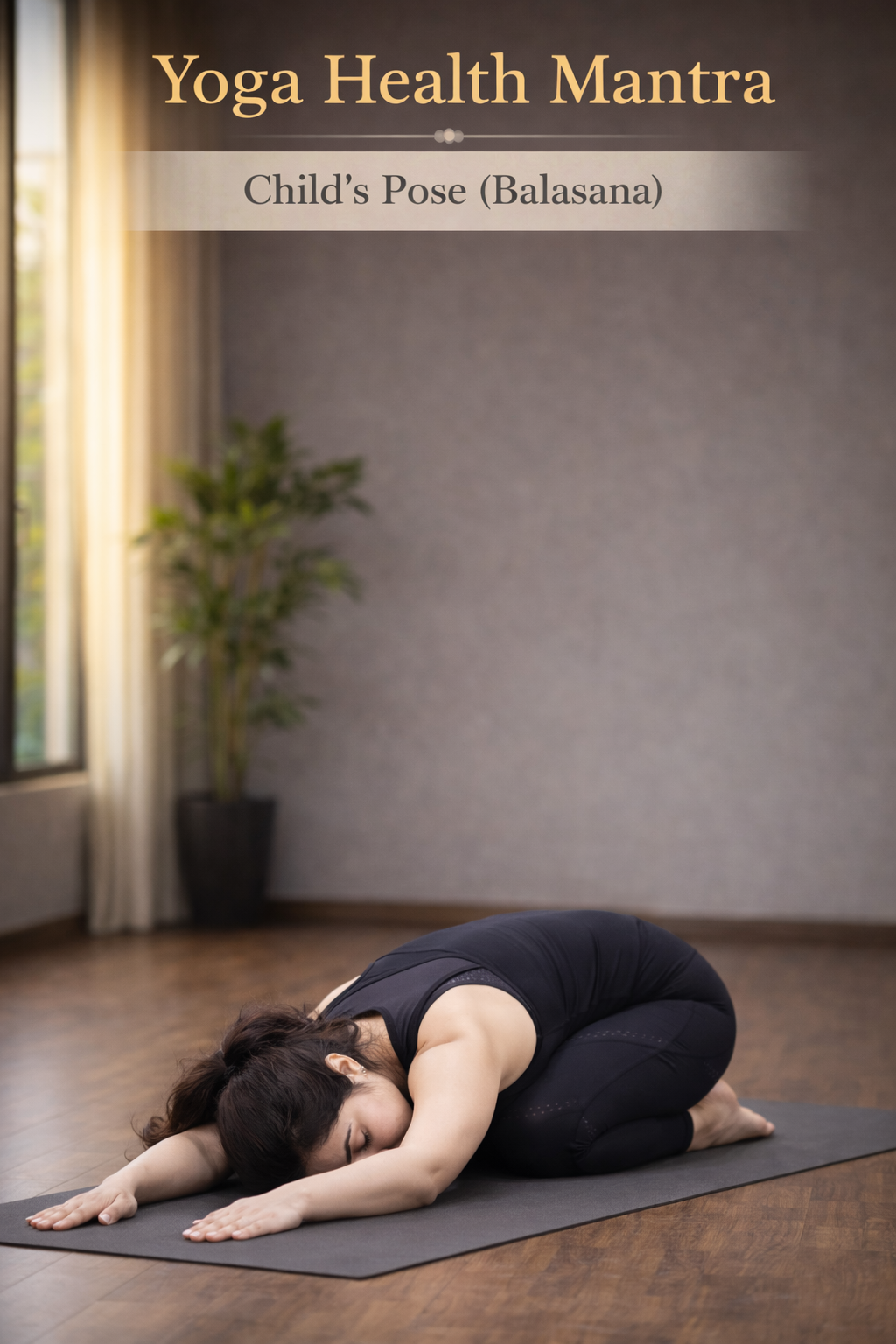
2. Child’s Pose (Balasana)
How to Perform
Begin by kneeling on the floor with your big toes touching and knees slightly apart.
Gently sit back on your heels and extend your arms forward, lowering your torso
toward the mat. Rest your forehead comfortably on the floor and allow your body
to relax completely while taking slow, deep breaths.
Key Benefits
- Calms and relaxes the nervous system
- Gently stretches the back, hips, and thighs
- Helps reduce fatigue and mental tension
Child’s Pose is a restorative posture, making it ideal for resting between yoga
sequences or whenever your body needs relaxation during practice.
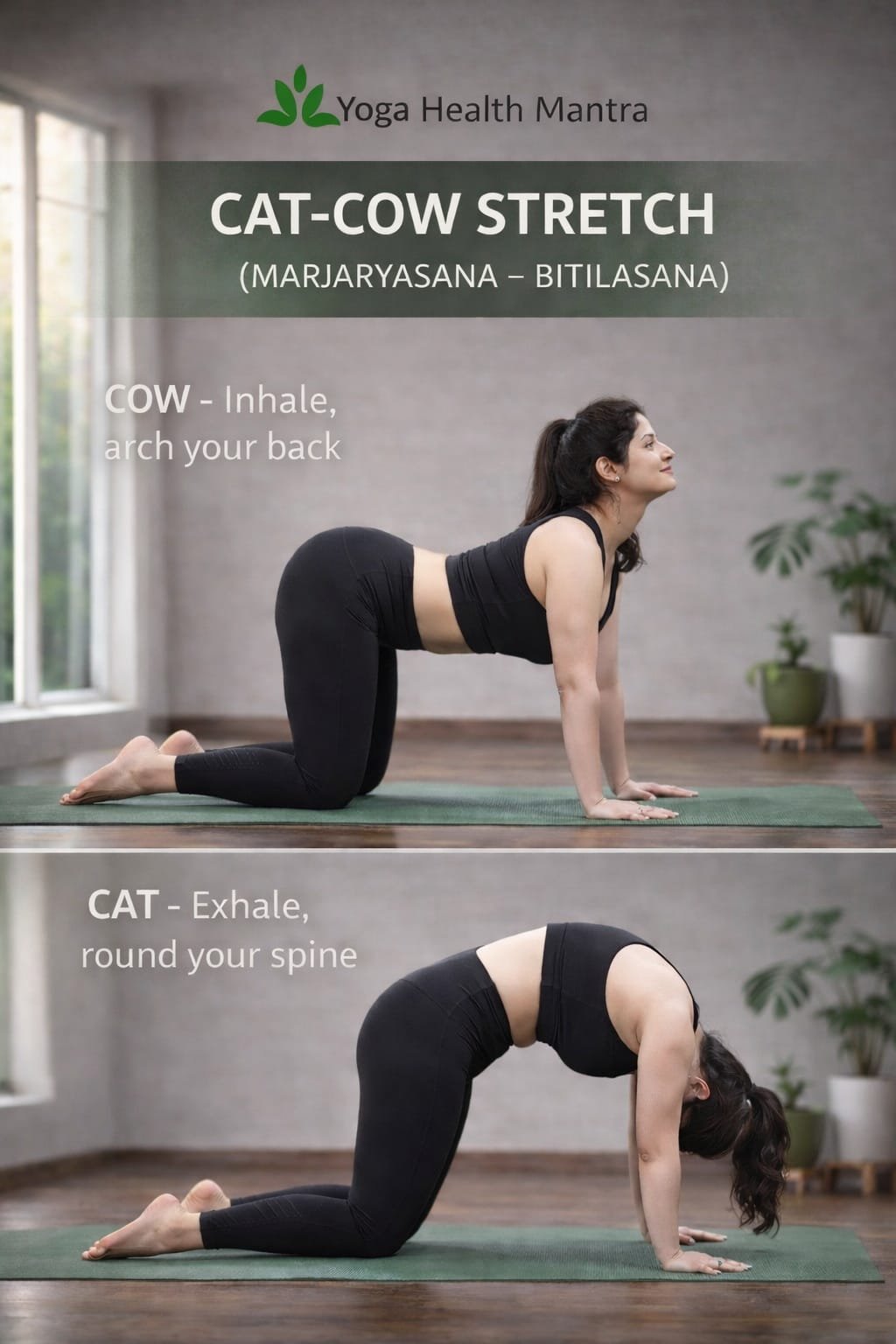
3. Cat-Cow Pose (Marjaryasana–Bitilasana)
How to Perform
Start in a tabletop position with your hands placed directly under your shoulders
and knees under your hips. As you inhale, gently drop your belly toward the mat,
lift your chest forward, and tilt your head slightly upward (Cow Pose). As you exhale,
round your spine upward, draw your navel toward your spine, and lower your head
toward the floor (Cat Pose). Continue this smooth, rhythmic movement in sync with
your breath.
Key Benefits
- Improves spinal flexibility and mobility
- Helps relieve back stiffness and tension
- Enhances coordination between breath and movement
This gentle flow between Cat and Cow poses warms up the spine, improves posture,
and prepares the body for more advanced yoga movements.
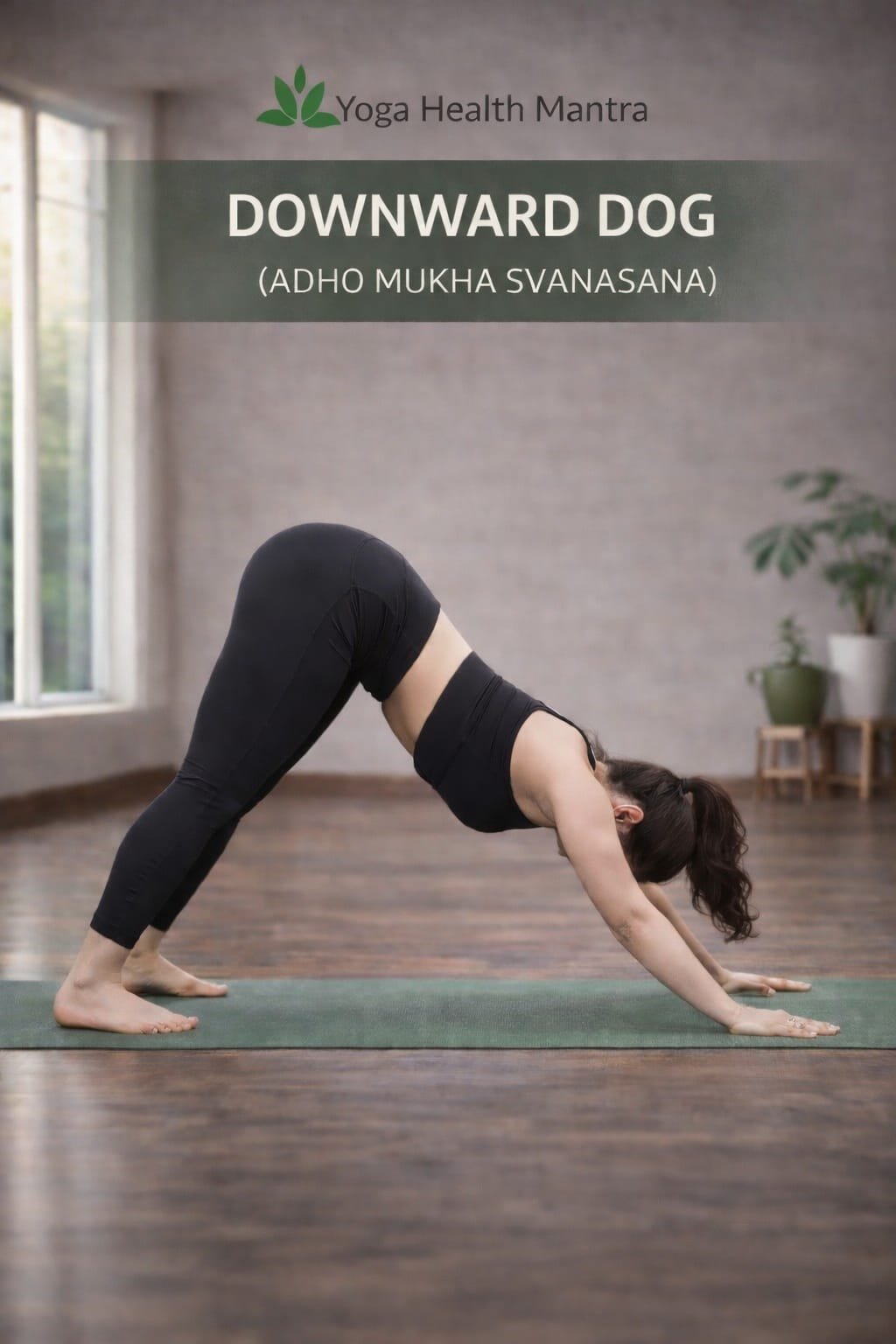
4. Downward Facing Dog (Adho Mukha Svanasana)
How to Perform
Begin in a tabletop position with your hands under your shoulders and knees under
your hips. Tuck your toes under and slowly lift your hips upward and backward,
forming an inverted “V” shape with your body. Press your palms firmly into the mat,
keep your arms straight, and lengthen your spine. You may keep a slight bend in
your knees to maintain proper alignment and avoid strain.
Key Benefits
- Strengthens the arms, shoulders, and legs
- Provides a deep stretch to the hamstrings and calves
- Improves blood circulation and energizes the body
Downward Facing Dog is a foundational yoga pose that enhances overall body strength,
flexibility, and posture while also promoting a sense of calm and focus.
5. Cobra Pose (Bhujangasana)
How to Perform
Lie flat on your stomach with your legs extended and the tops of your feet pressing
into the mat. Place your palms under your shoulders, keeping your elbows close to
your body. As you inhale, gently lift your chest off the floor by engaging your back
muscles, while maintaining a slight bend in your elbows. Keep your shoulders relaxed
and avoid putting excessive pressure on your lower back.
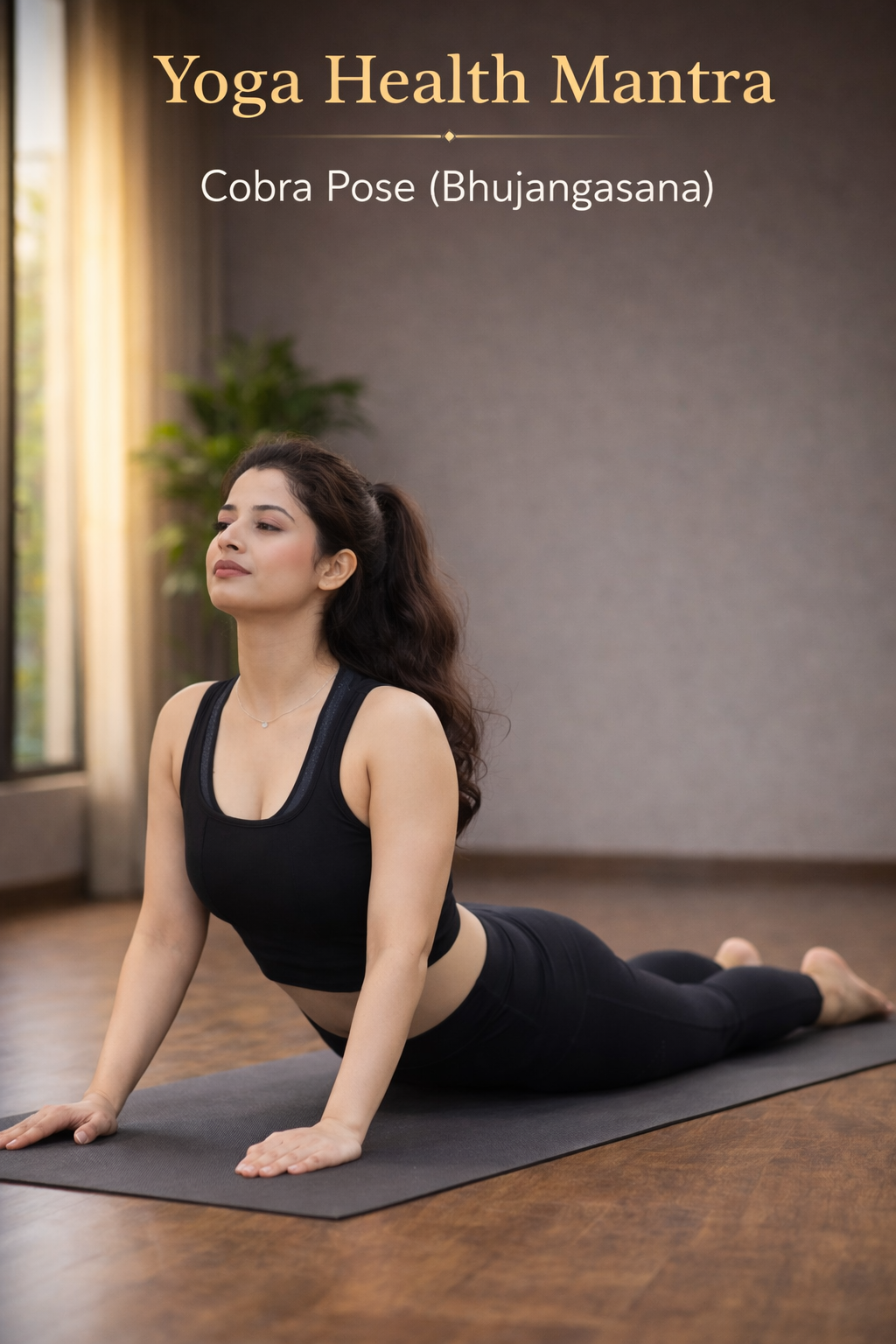
Key Benefits
- Strengthens the spine and lower back muscles
- Opens the chest and improves lung capacity
- Enhances posture and reduces stiffness
Cobra Pose is an effective backbend that helps counteract the effects of prolonged
sitting, making it especially beneficial for improving posture and spinal health.
6. Tree Pose (Vrikshasana)
How to Perform
Stand tall in a stable position and shift your weight onto one leg. Place the sole
of your opposite foot on your inner calf or thigh (avoid placing it directly on the knee).
Bring your palms together in a prayer position at your chest. Keep your spine straight,
shoulders relaxed, and gaze fixed on a single point to maintain balance. Breathe slowly
and steadily while holding the posture.
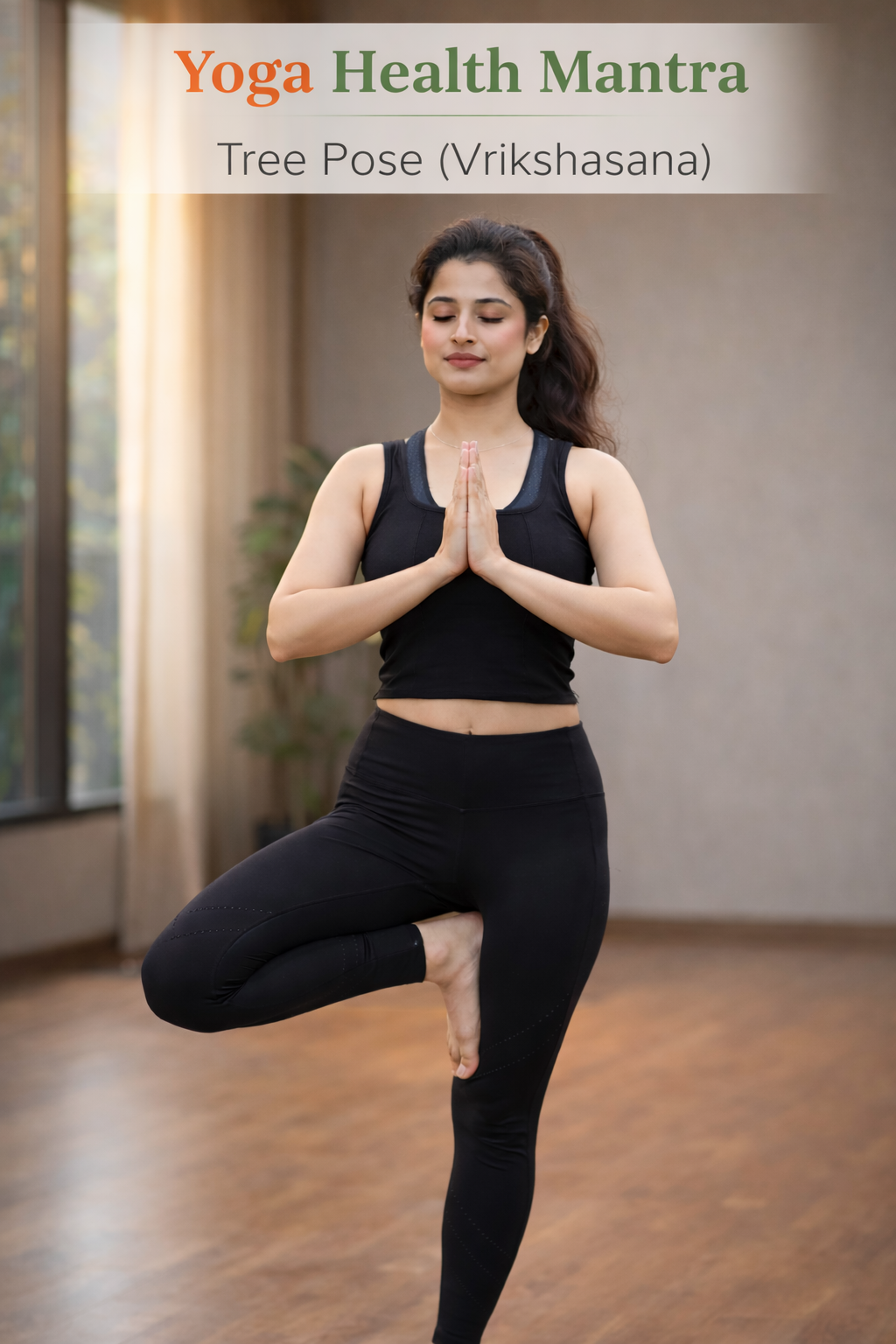
Key Benefits
- Improves balance and stability
- Enhances concentration and mental focus
- Strengthens the legs and core muscles
Tree Pose helps develop both physical balance and mental steadiness, making it an
essential posture for improving coordination and mindfulness.
7. Seated Forward Bend (Paschimottanasana)
How to Perform
Sit upright with your legs extended straight in front of you and feet flexed.
Lengthen your spine and, as you exhale, hinge forward from your hips rather than
rounding your back. Reach your hands toward your feet, ankles, or shins—wherever
is comfortable—while keeping your spine as long as possible. Relax your neck and
breathe deeply, allowing the stretch to deepen gradually.
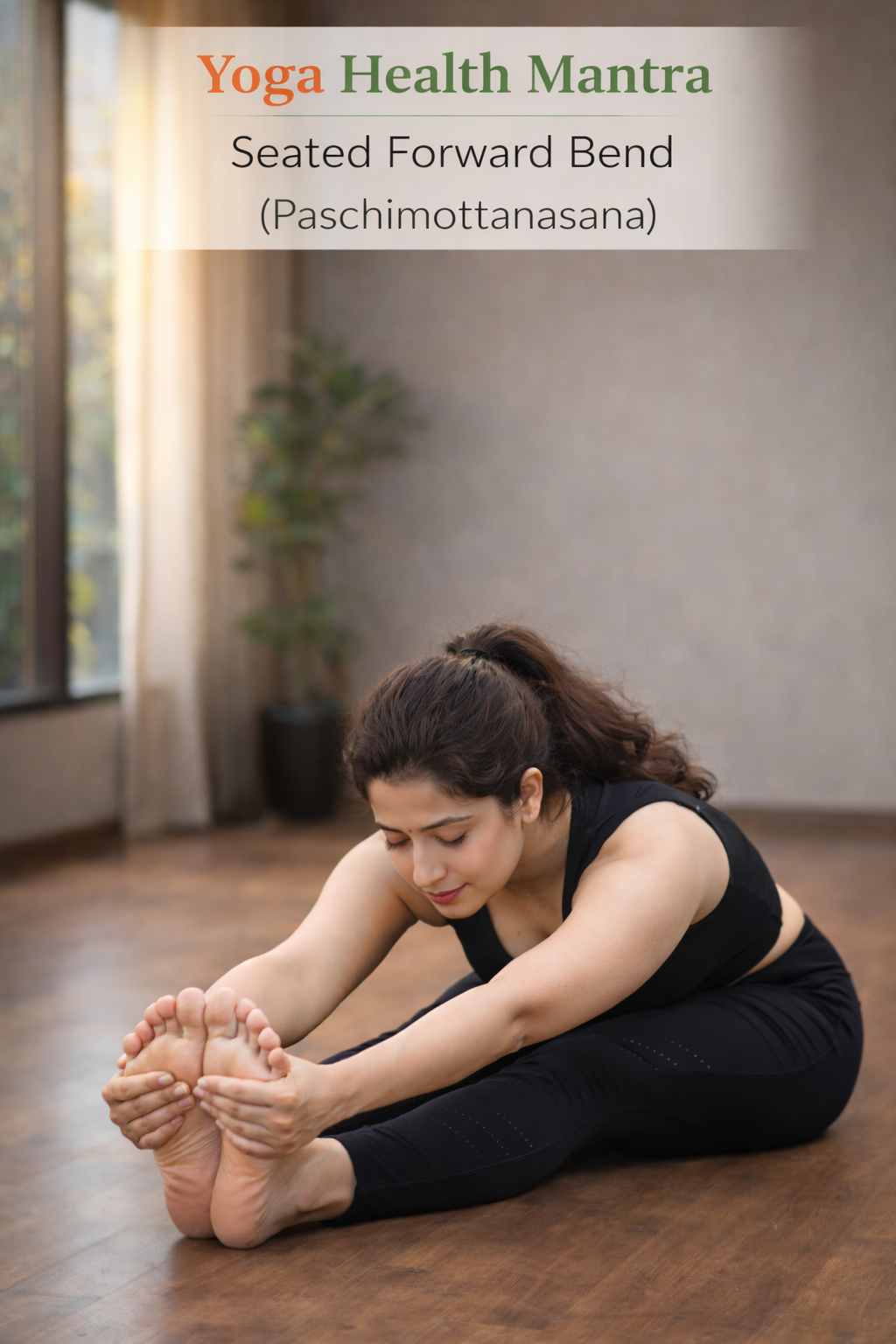
Key Benefits
- Provides a deep stretch to the hamstrings and lower back
- Calms the mind and reduces stress
- Supports healthy digestion
Seated Forward Bend is a calming posture that encourages flexibility and
introspection, making it ideal for relaxation and improving overall body mobility.
8. Bridge Pose (Setu Bandhasana)
How to Perform
Lie on your back with your knees bent and feet flat on the floor, placed hip-width apart.
Keep your arms alongside your body with palms facing down. As you inhale, press your feet
and arms firmly into the ground and gently lift your hips upward. Keep your thighs and knees
aligned, and avoid turning them outward. Maintain a steady breath while holding the position,
ensuring that your neck remains relaxed and supported.
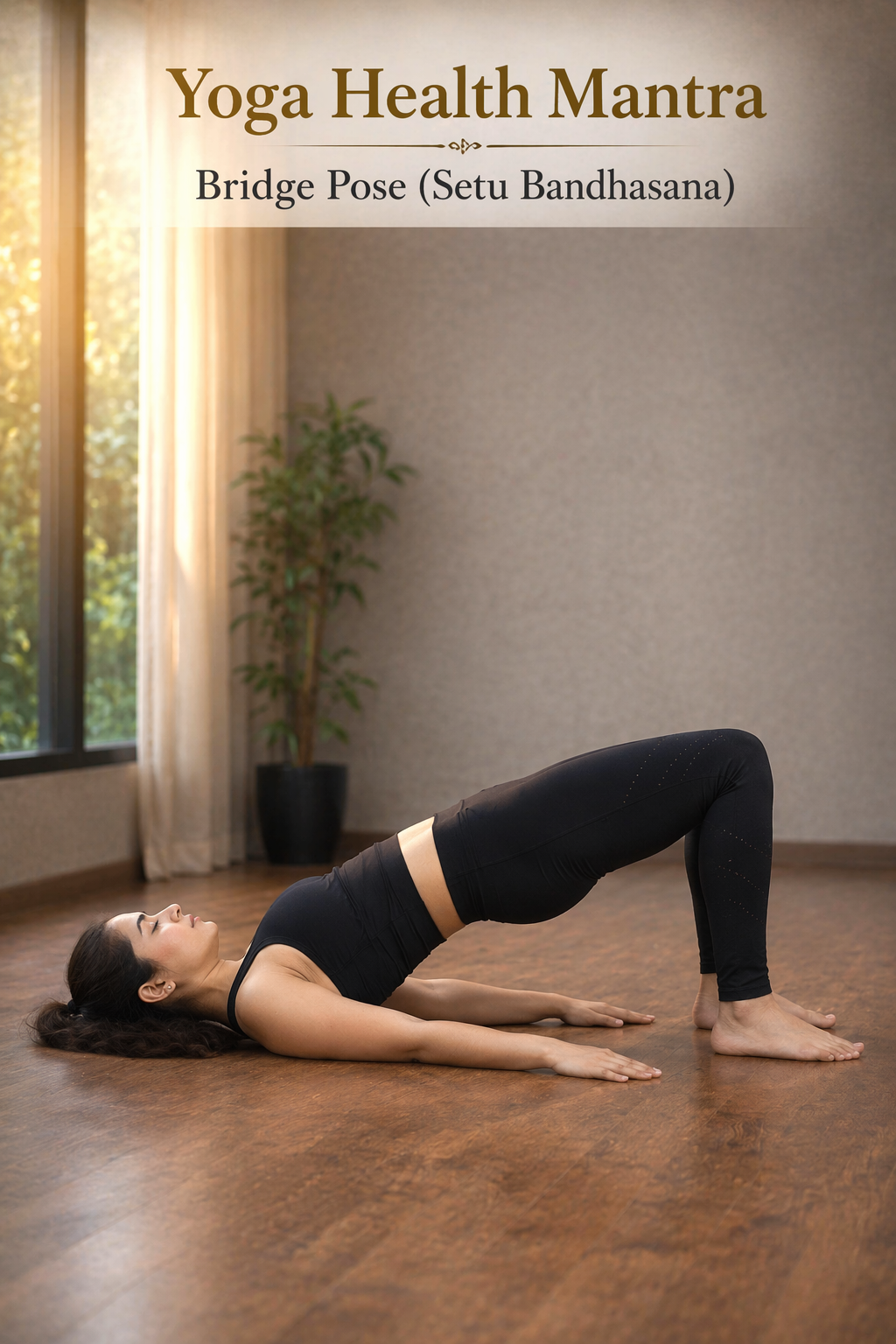
Key Benefits
- Strengthens the back, glutes, and core muscles
- Opens the chest and improves lung capacity
- Helps relieve mild lower back discomfort
Bridge Pose is a gentle backbend that improves spinal flexibility and posture while also
promoting relaxation and reducing stress.
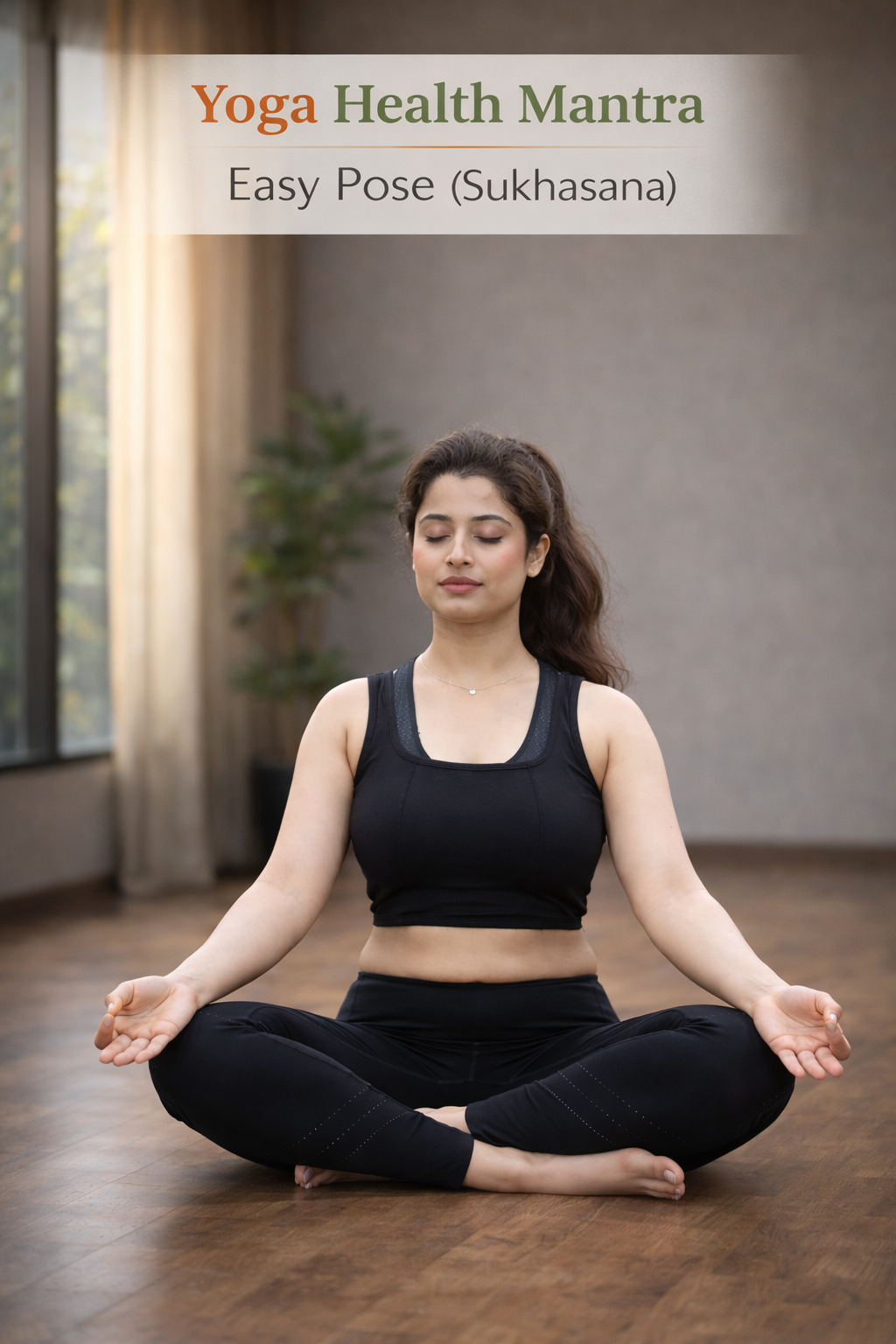
9. Easy Pose (Sukhasana)
How to Perform
Sit comfortably in a cross-legged position with your spine upright and shoulders relaxed.
Rest your hands gently on your knees, palms facing upward or downward as preferred.
Keep your head aligned with your spine and close your eyes if comfortable. Focus on slow,
deep breathing, allowing your body and mind to relax gradually.
Key Benefits
- Encourages meditation and mindfulness
- Improves posture and spinal alignment
- Helps reduce stress and mental tension
Easy Pose is a foundational seated posture ideal for meditation and breathing practices,
helping to create a sense of calm, balance, and inner awareness.
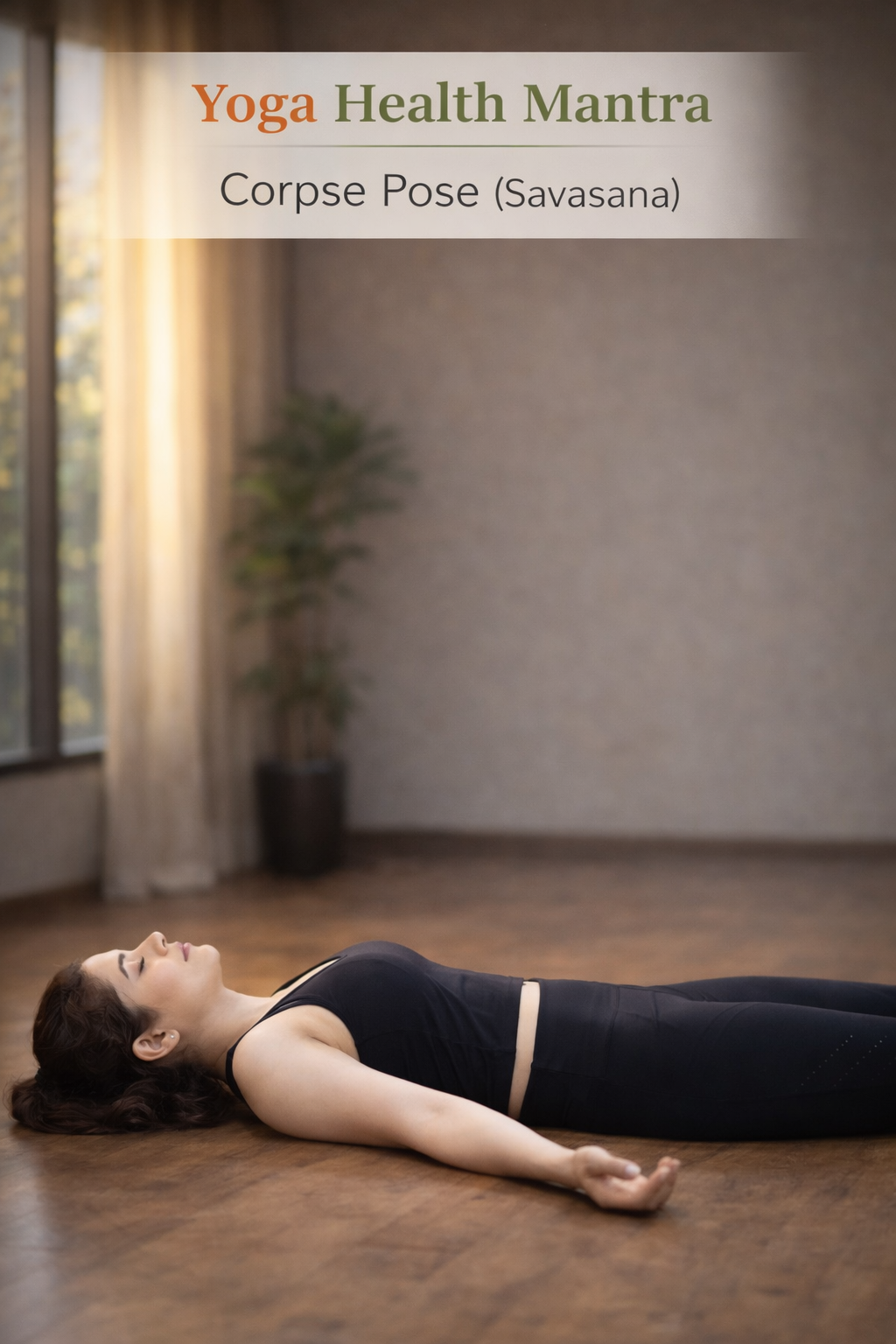
10. Corpse Pose (Savasana)
How to Perform
Lie flat on your back with your legs slightly apart and arms relaxed by your sides,
palms facing upward. Allow your body to completely release any tension. Close your
eyes and maintain a natural, effortless breathing pattern. Keep your mind calm and
bring gentle awareness to your breath, letting your body sink into deep relaxation.
Key Benefits
- Promotes deep physical and mental relaxation
- Helps reduce stress and anxiety
- Restores energy and balances the nervous system
Savasana is one of the most important poses in yoga practice. It allows the body
to fully absorb the benefits of all previous postures, leaving you feeling refreshed,
balanced, and rejuvenated. Skipping this pose may reduce the overall effectiveness
of your practice.
Beginner Yoga Practice Tips
Start Slowly
Begin with short and manageable sessions of 15–20 minutes daily rather than
practicing for long hours once a week. Consistency is more important than intensity,
especially for beginners.
Focus on Breathing
Breathing is the foundation of yoga. It connects your movements with awareness
and helps maintain balance throughout the practice. Always breathe steadily and
avoid holding your breath during any pose.
Avoid Comparison
Yoga is a personal journey, and every body is different. Avoid comparing yourself
with others and focus on your own progress. Improvement happens gradually with
regular and mindful practice.
Use a Comfortable Space
Practice in a quiet, clean, and comfortable environment where you can focus without
distractions. A peaceful space enhances both concentration and relaxation.
Common Mistakes Beginners Should Avoid
- Forcing flexibility too quickly, which may lead to injury
- Ignoring proper breathing techniques during poses
- Skipping warm-up or relaxation (Savasana)
- Practicing without awareness or proper alignment
Benefits of Practicing Yoga Regularly
With consistent practice, beginners can experience noticeable improvements in
flexibility, posture, and overall body strength. Yoga also helps reduce stress levels,
enhances mental clarity, and promotes emotional balance. In addition, regular practice
improves sleep quality and boosts energy levels throughout the day, contributing to a
healthier and more balanced lifestyle.
For those interested in understanding structured yoga practices and globally accepted
training standards, guidelines from Yoga Alliance are widely recognized within the professional yoga community.
To explore the philosophy, history, and traditional roots of yoga in more detail,
you may refer to Wikipedia – Yoga, which provides a comprehensive overview of the subject.
Additionally, guided breathing techniques, meditation practices, and wellness programs
offered by platforms such as the Art of Living Foundation can support a more structured and balanced approach to yoga practice.
Conclusion
Starting yoga does not require perfection — it only requires patience, awareness,
and consistency. These 10 easy yoga poses provide a safe and effective foundation
for beginners to build strength, flexibility, and inner calm.
With regular practice, you will begin to notice positive changes not only in your body
but also in your mindset. Yoga promotes balance, mindfulness, and self-care — essential
qualities that enhance your overall quality of life.
Begin today with small, consistent steps. Breathe deeply, stay present, and allow yoga
to become a natural and enriching part of your daily wellness routine.