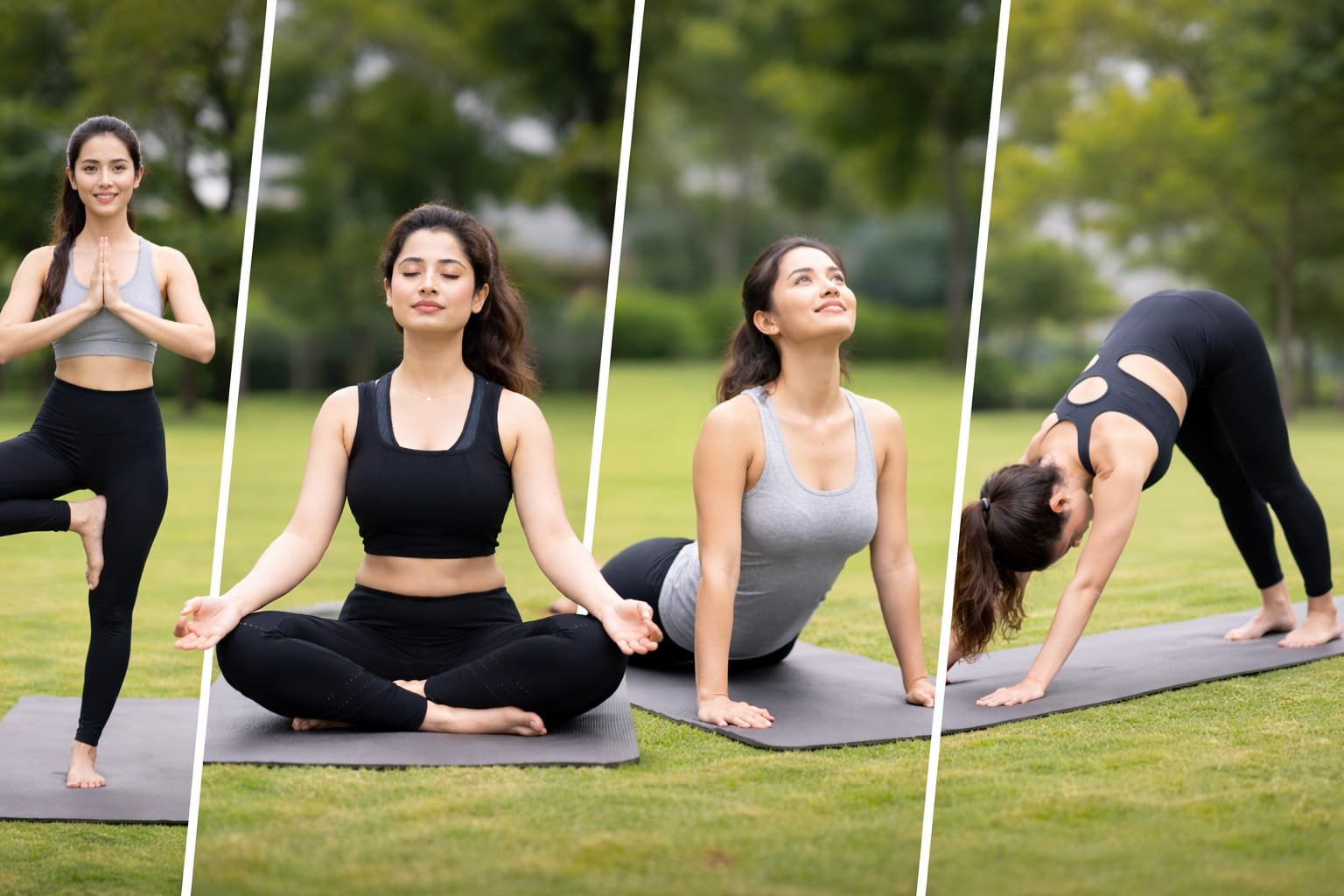
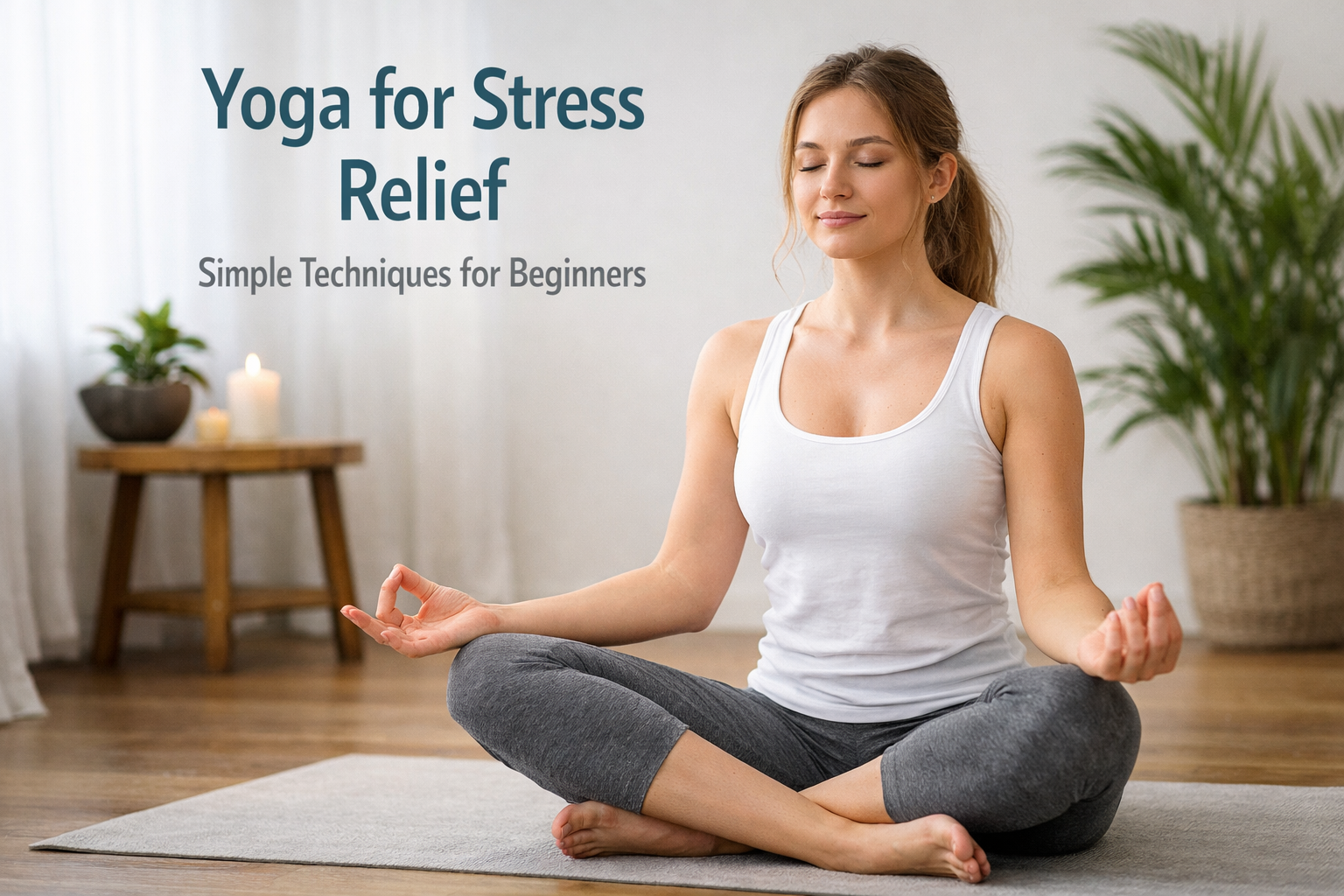
In today’s fast-moving world, stress has become a common part of everyday life. From work pressure to personal responsibilities and constant digital distractions, it’s easy to feel overwhelmed. The good news is that yoga for stress relief offers a simple and natural way to slow down, relax the body, and calm the mind.
According to American Psychological Association, managing stress through healthy habits like physical activity and relaxation techniques can significantly improve overall mental well-being.
This beginner-friendly guide will help you understand how easy yoga techniques can fit into your daily routine and support better stress management in a gentle and effective way.
Why Yoga Helps Reduce Stress
Yoga is more than just physical exercise—it’s a gentle way to bring your body and mind back into balance. By combining simple movements, steady breathing, and mindful awareness, yoga helps you slow down and feel more grounded.
When practiced regularly, yoga can support your mental and emotional well-being in several ways:
- Helps reduce stress by calming the body’s natural response to pressure
- Supports a more relaxed and peaceful state of mind
- Improves emotional balance and overall mood
- Enhances focus and clarity in daily life
Even a few minutes of daily practice can help you feel more relaxed, refreshed, and better prepared to handle everyday stress.
Simple Yoga Poses for Stress Relief
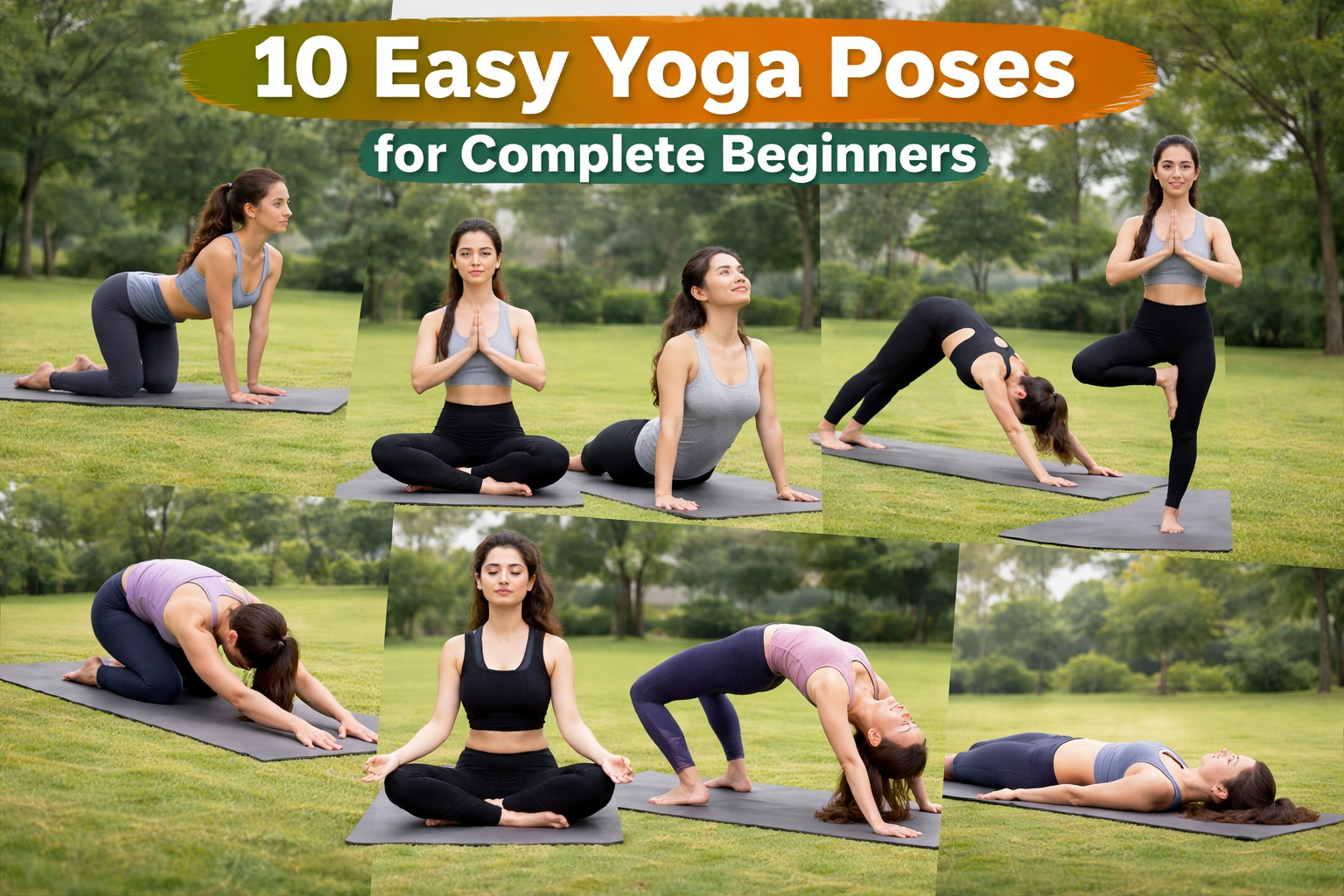
If you’re just getting started, these simple and beginner-friendly poses can help release tension, relax your body, and bring a sense of calm to your mind.
1. Child’s Pose (Balasana)
Child’s Pose (Balasana) is a deeply calming yoga posture that helps the body relax and the mind slow down. This gentle resting position releases tension from the back, shoulders, and hips, making it ideal for reducing stress and promoting a sense of inner calm.
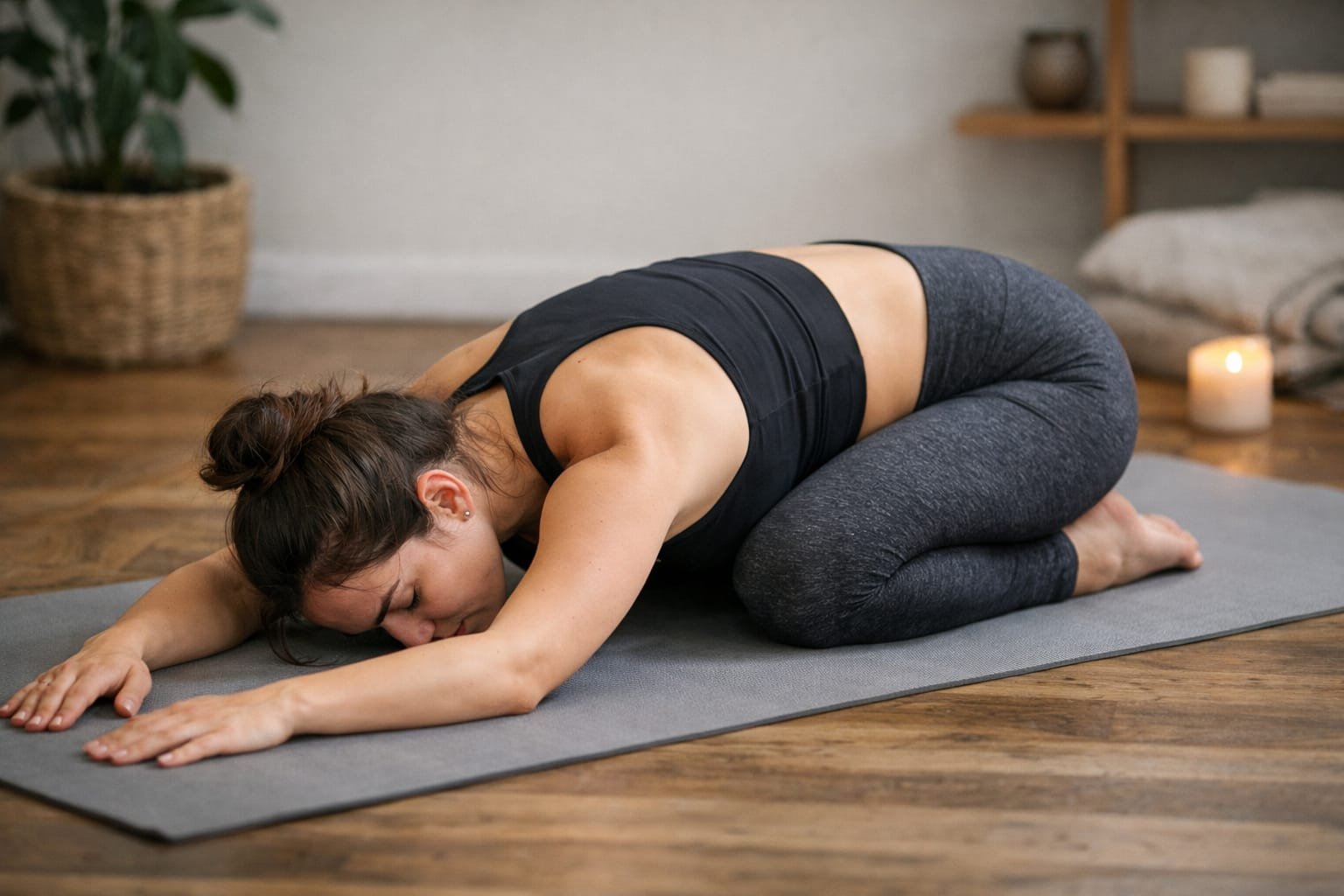
How to Do Child’s Pose:
- Kneel on the floor and sit back on your heels
- Slowly bend forward and rest your forehead on the mat
- Stretch your arms forward or keep them relaxed beside your body
- Close your eyes and focus on slow, deep breathing
- Hold the pose for 1–3 minutes
Benefits:
- Reduces stress and mental tension
- Calms the nervous system
- Relieves tightness in the back and shoulders
- Promotes deep relaxation and emotional balance
2. Cat-Cow Pose (Marjaryasana–Bitilasana)
Cat–Cow Pose is a gentle, flowing movement that helps release tension from the spine and encourages mindful breathing. This simple sequence improves flexibility and promotes a calming effect on the mind, making it ideal for stress relief.
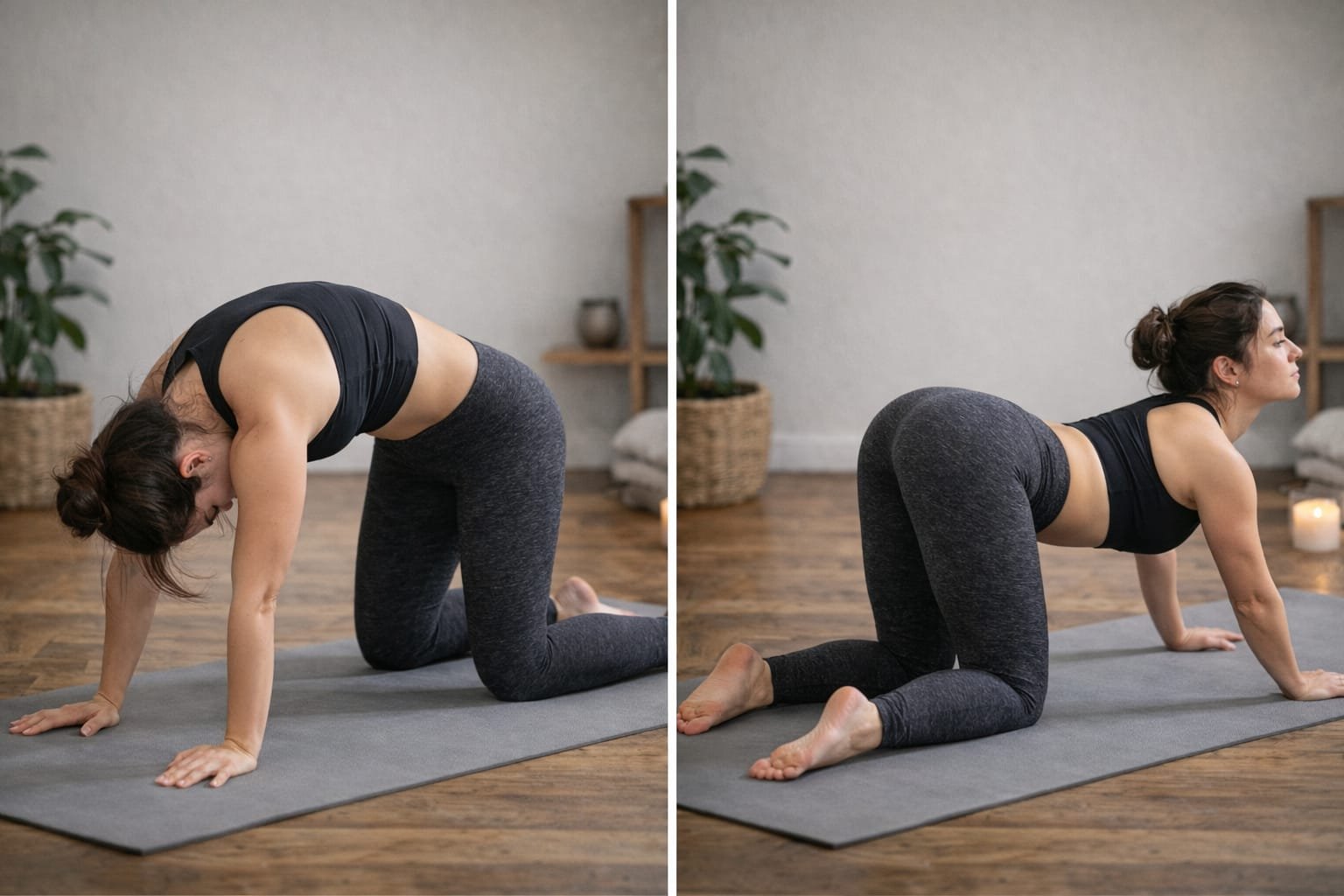
How to Do Cat–Cow Pose:
- Start on your hands and knees with wrists under shoulders and knees under hips
- Inhale as you drop your belly, lift your chest, and look slightly upward (Cow Pose)
- Exhale as you round your spine, tuck your chin, and draw your navel inward (Cat Pose)
- Move slowly with your breath, flowing between the two positions
- Repeat for 8–10 rounds in a steady rhythm
Benefits:
- Releases tension from the spine and back muscles
- Improves flexibility and posture
- Encourages deep, mindful breathing
- Helps calm the mind and reduce stress
3. Standing Forward Bend (Uttanasana)
Standing Forward Bend (Uttanasana) is a calming yoga posture that helps release tension from the body and quiet the mind. By gently folding forward, this pose encourages relaxation and improves blood flow to the head, supporting mental clarity and stress relief.
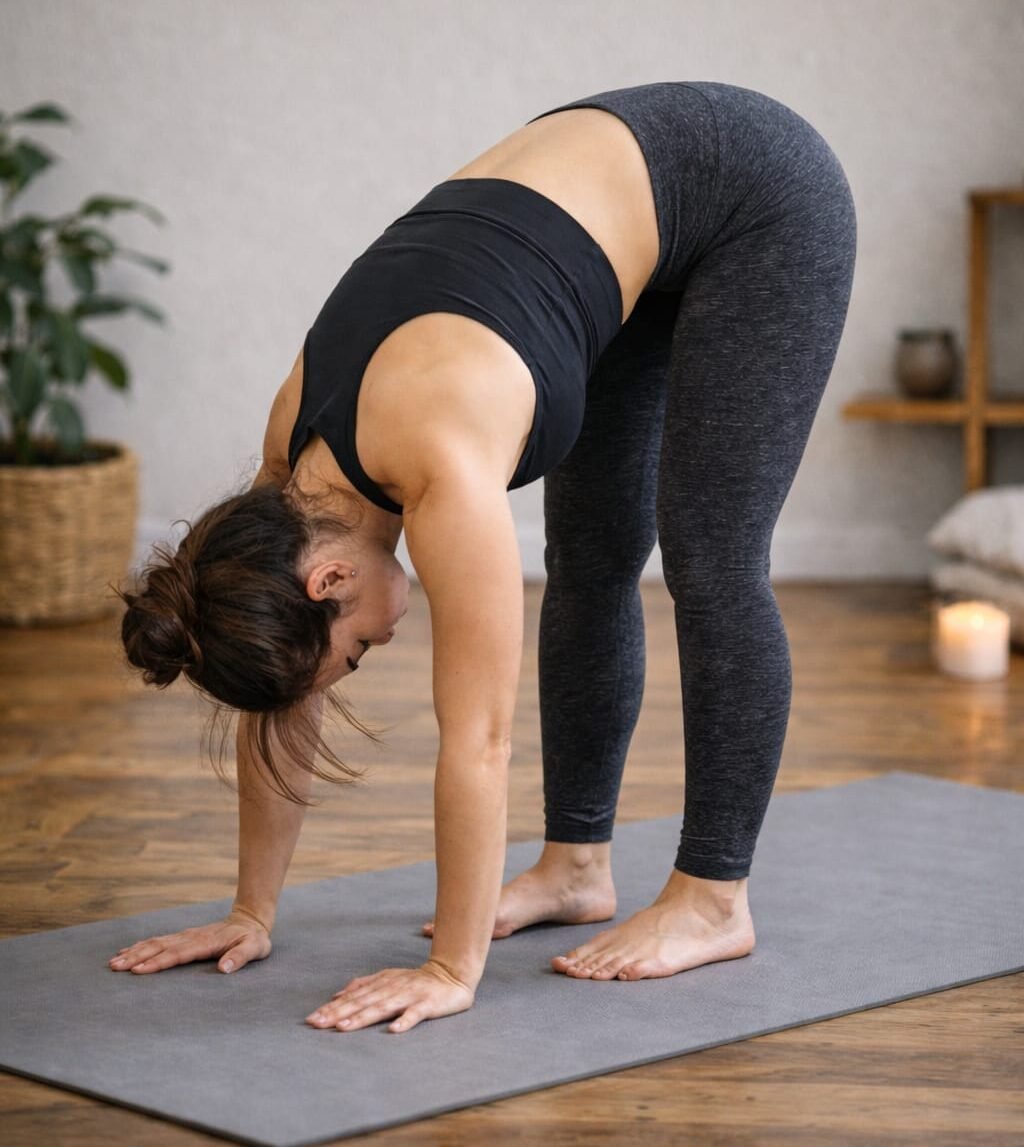
How to Do Standing Forward Bend:
- Stand upright with your feet hip-width apart
- Inhale deeply, then exhale as you slowly bend forward from your hips
- Allow your head and neck to relax completely
- Keep a slight bend in your knees if needed to avoid strain
- Let your hands rest on the floor, ankles, or shins
- Hold the pose for 30–60 seconds while breathing slowly
Benefits:
- Reduces stress and mental tension
- Calms the mind and nervous system
- Improves blood circulation to the brain
- Gently stretches the spine and hamstrings
4. Legs-Up-The-Wall Pose (Viparita Karani)
Legs-Up-The-Wall Pose (Viparita Karani) is a beginner-friendly restorative posture that helps reduce stress and relax the entire body. This pose is simple yet highly effective for calming the mind and releasing built-up tension.
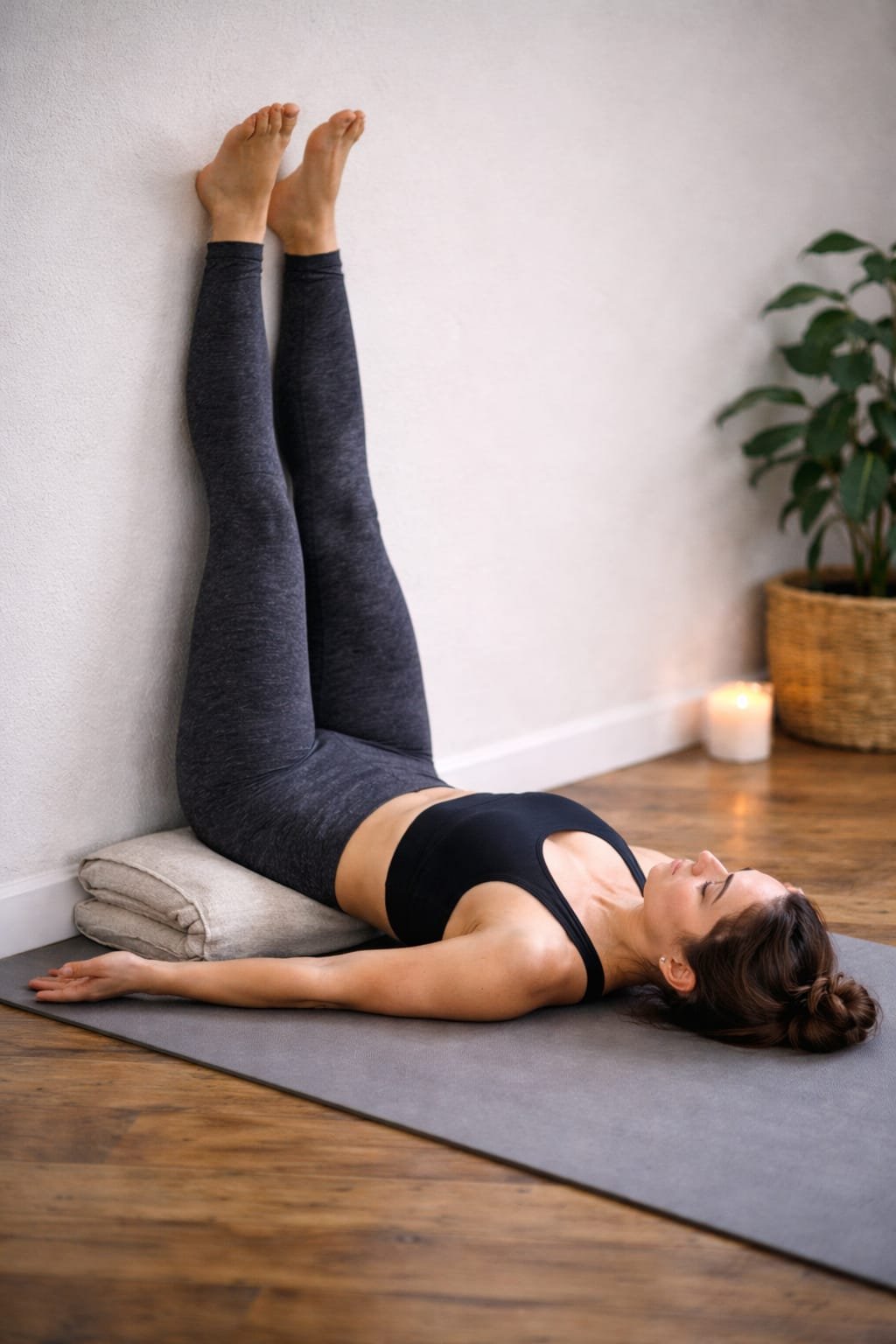
How to Do Legs-Up-The-Wall Pose:
- Sit close to a wall with one side of your body touching it
- Gently lie back and swing your legs up against the wall
- Keep your arms relaxed by your sides, palms facing upward
- Close your eyes and focus on slow, deep breathing
- Stay in this position for 5–10 minutes
Benefits:
- Reduces stress and mental fatigue
- Promotes deep relaxation
- Improves blood circulation
- Calms the nervous system
5. Corpse Pose (Savasana)
Corpse Pose (Savasana) is a simple yet powerful relaxation posture that helps release physical and mental tension. It is commonly practiced at the end of a yoga session to calm the mind and bring the body into a state of deep rest.
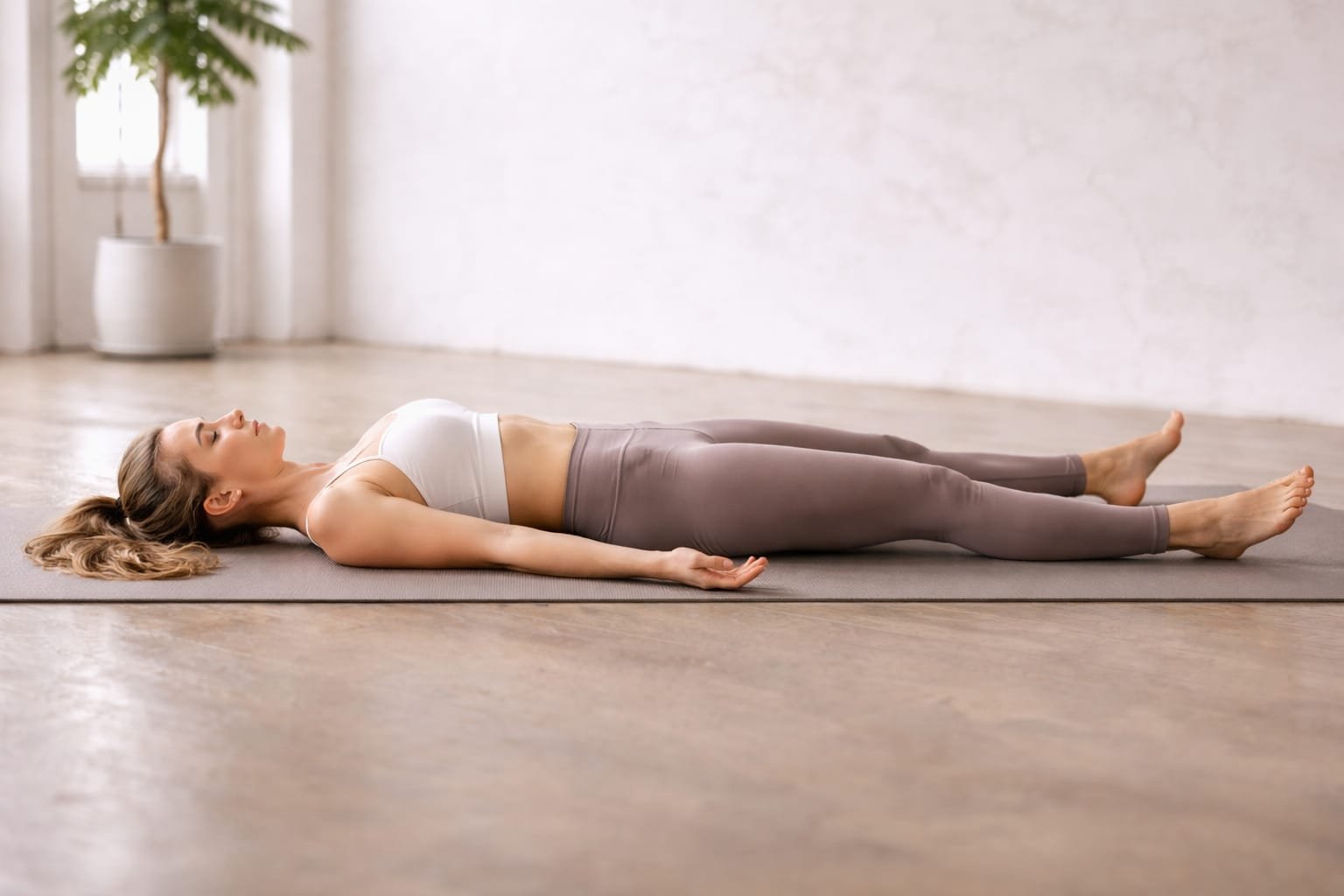
How to Do Savasana:
- Lie flat on your back with your arms relaxed by your sides, palms facing upward
- Keep your legs slightly apart and allow your feet to fall naturally outward
- Close your eyes and focus on slow, deep breathing
- Gently relax each part of your body, from your toes to your head
- Stay in this position for 5–10 minutes
Benefits:
- Reduces stress and anxiety
- Promotes deep relaxation
- Calms the nervous system
- Improves focus and mental clarity
Breathing Techniques for Stress Relief
Along with yoga poses, breathing exercises are highly effective for calming the nervous system:
1. Diaphragmatic Breathing (Belly Breathing)
- Sit or lie comfortably with one hand on your chest and the other on your belly.
- Inhale deeply through your nose, expanding your abdomen.
- Exhale slowly through your mouth, letting your belly fall.
- Repeat for 5–10 minutes daily.
2. Alternate Nostril Breathing (Nadi Shodhana)
- Sit comfortably with your spine straight.
- Use your right thumb to close your right nostril and inhale through your left.
- Close your left nostril with your ring finger, release the right nostril, and exhale through the right.
- Repeat the cycle for 5–10 minutes to balance the nervous system.
3. 4-7-8 Breathing Technique
The 4-7-8 breathing technique is a simple and effective way to calm the mind and reduce stress. By following a steady breathing pattern, it helps slow down your thoughts and relax the body.
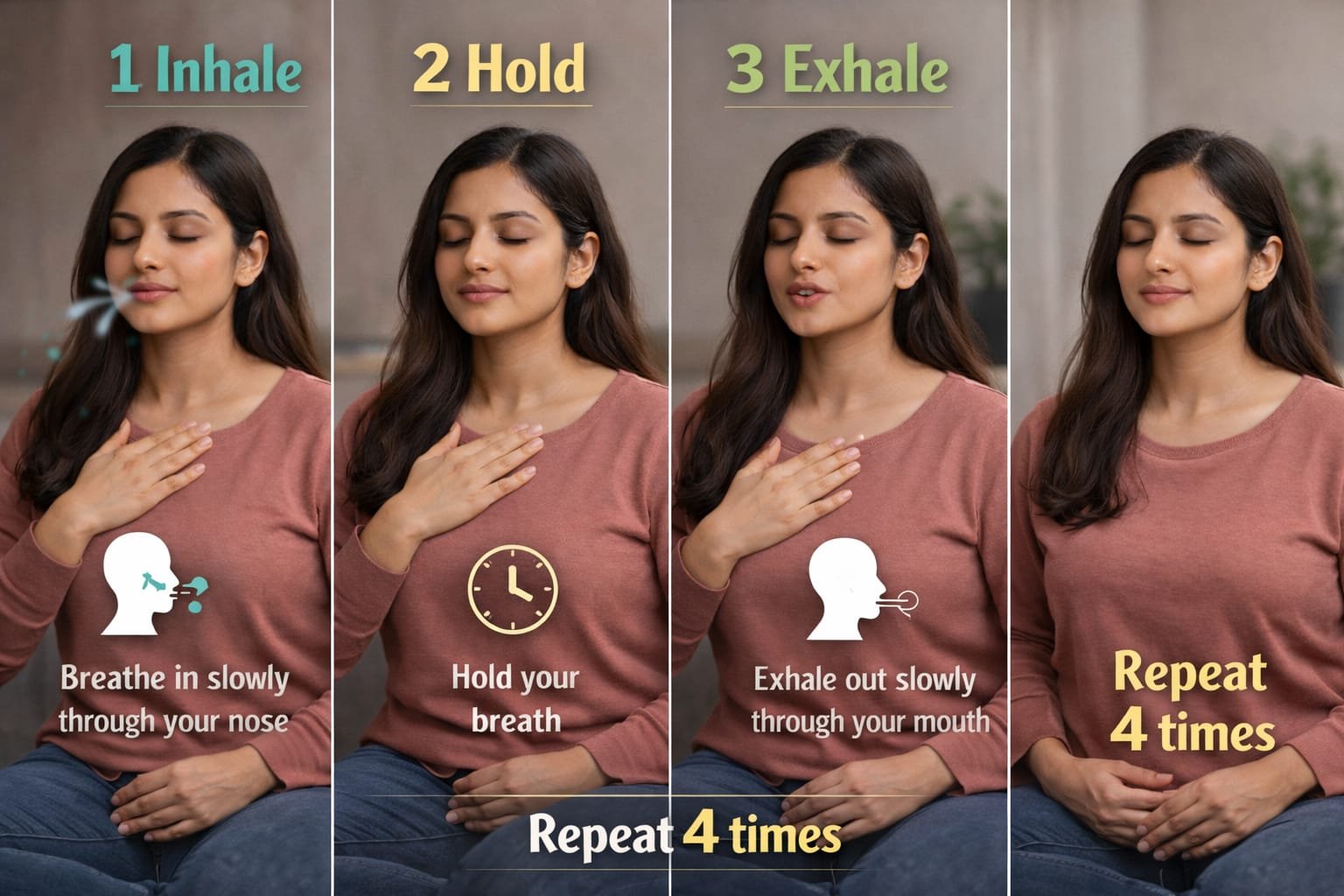
How to Practice 4-7-8 Breathing:
- Sit or lie down in a comfortable position
- Inhale quietly through your nose for 4 seconds
- Hold your breath for 7 seconds
- Exhale slowly through your mouth for 8 seconds
- Repeat this cycle for 4–6 rounds
Benefits:
- Reduces stress and anxiety
- Calms the nervous system
- Helps slow down the heart rate
- Promotes deep relaxation and better sleep
Creating a Daily Stress-Relief Yoga Routine
Consistency is key. Here’s a beginner-friendly 15-minute routine combining poses and breathing. If you’re new, you can first understand the basics from this complete beginner’s guide to yoga.
- Start with Diaphragmatic Breathing for 2 minutes.
- Do Cat-Cow Pose 8–10 rounds.
- Move into Child’s Pose for 2–3 minutes.
- Perform Standing Forward Bend for 1–2 minutes.
- Finish with Legs-Up-The-Wall Pose or Savasana for 5 minutes.
Do this routine daily, preferably in the morning or evening, to see noticeable improvements in your stress levels and overall mental clarity. You may also follow this daily yoga routine for beginners for a more structured approach.
Scientific research also suggests that breathing exercises and relaxation techniques can significantly help in reducing stress and improving mental well-being, as explained in this research-based article on stress management.
Additional Tips for Stress Management
- Maintain a balanced diet rich in fruits, vegetables, and whole grains.
- Stay hydrated and get at least 7–8 hours of sleep daily.
- Limit screen time, especially before bedtime.
- Practice mindfulness techniques explained in this pranayama guide.
- Take short nature walks to disconnect from stress triggers.
Benefits You Can Expect
By regularly practicing yoga for stress relief, you may experience:
- Reduced anxiety and tension
- Improved focus and productivity
- Better sleep quality
- Enhanced mood and emotional balance
- Greater overall sense of wellbeing
Conclusion
Stress is inevitable, but with consistent yoga practice and mindful breathing, you can manage it effectively. These simple techniques are beginner-friendly, safe, and can be done at home without any special equipment.
Start small, stay consistent, and gradually notice how your mind and body become calmer, healthier, and more balanced. You can also explore this complete stress relief guide for deeper understanding.