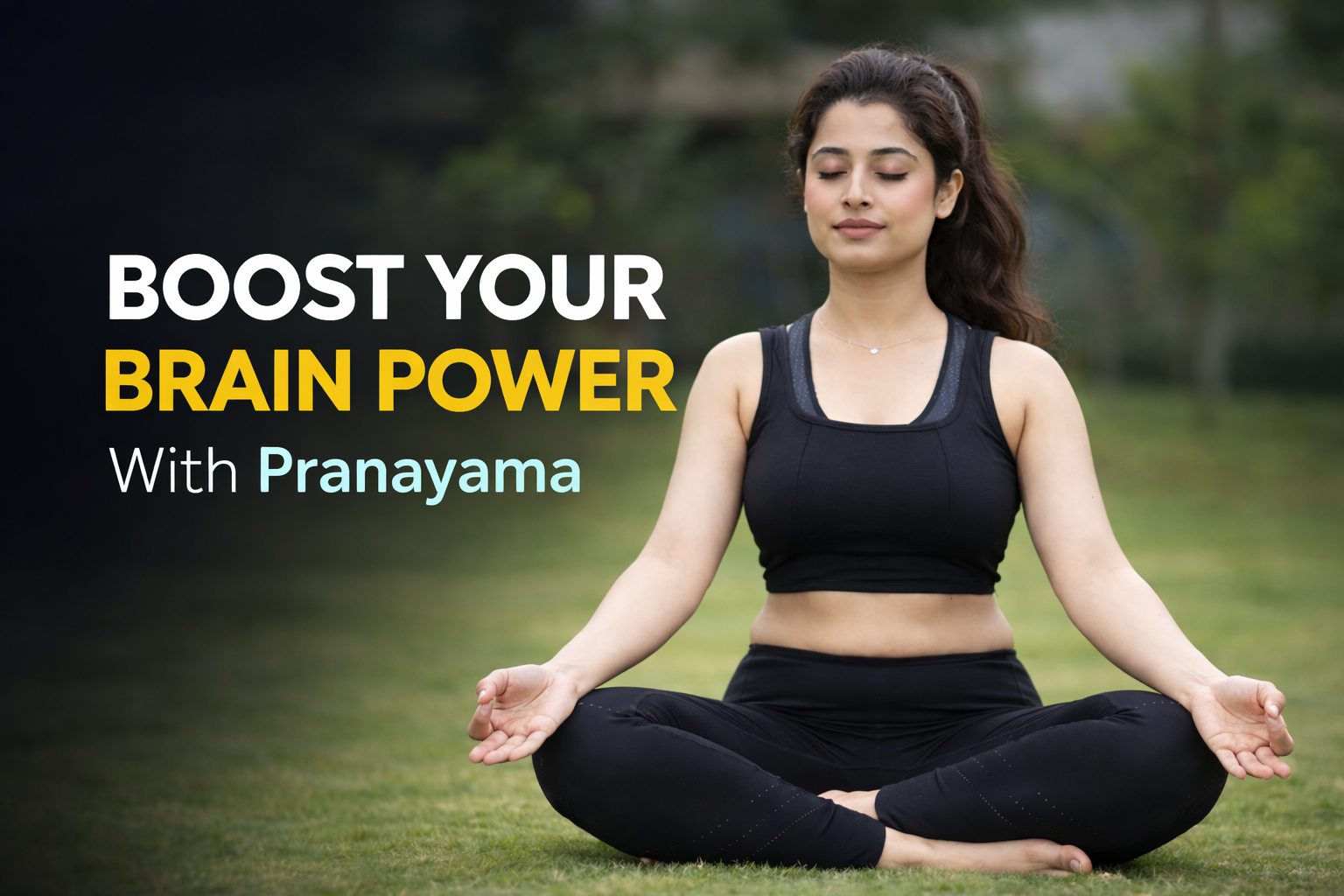
Introduction: The Forgotten Power of Your Breath
You breathe approximately 22,000 times a day. Yet, like most people, you likely pay no attention to this automatic, life-sustaining act. What if you were told that by simply changing how you breathe, you could lower your blood pressure, reduce anxiety, sharpen your mind, boost your immune system, and even slow down the aging process? This is not a new-age fantasy; it is the ancient science of Pranayama.
In the yogic tradition, breath is not just air. It is prana – the vital life force energy that permeates the entire universe. Pranayama (from Sanskrit: prana = life force, ayama = extension or control) is the practice of consciously regulating your breath to influence the flow of this energy within your body. While modern science is only recently catching up, the benefits of pranayama have been known to yogis and sages for thousands of years.
This comprehensive guide will take you deep into the world of pranayama. You will learn what it is, the science behind why it works, detailed instructions for powerful techniques, and how to integrate this transformative practice into your daily life. Whether you are a beginner or an experienced practitioner, this blog will serve as your complete reference for harnessing the power of your own breath.
Part 1: What is Pranayama? Beyond Just Breathing
To understand pranayama, we must first distinguish it from ordinary breathing. Normal breathing is an involuntary, reflexive process controlled by the autonomic nervous system. You don’t think about it; it just happens. Pranayama, on the other hand, is voluntary, conscious, and controlled breathing.
The word itself has deep meaning. Prana is the subtle energy that animates all living beings. It is the force behind every heartbeat, every thought, every cellular process. Ayama means to stretch, extend, or regulate. Therefore, pranayama is not merely about inhaling and exhaling; it is about extending and directing your life force.
In traditional yoga philosophy, as described in the Yoga Sutras of Patanjali, pranayama is the fourth limb of the eight-limbed path (Ashtanga Yoga). It sits between the physical postures (asana) and the withdrawal of the senses (pratyahara). This placement is crucial: pranayama is the bridge that connects the external, physical body to the internal, subtle mind. By mastering the breath, you gain mastery over the mind.
Part 2: The Science of Breath – How Pranayama Works on Your Body
Modern research has demystified many of the claims of ancient yogis. We now have concrete, measurable evidence for how pranayama affects human physiology.
2.1 The Autonomic Nervous System (ANS)
Your Autonomic Nervous System has two main branches: the sympathetic nervous system (SNS) – the “fight or flight” response – and the parasympathetic nervous system (PNS) – the “rest and digest” response. Chronic stress keeps the SNS constantly activated, leading to high blood pressure, anxiety, insomnia, and weakened immunity.
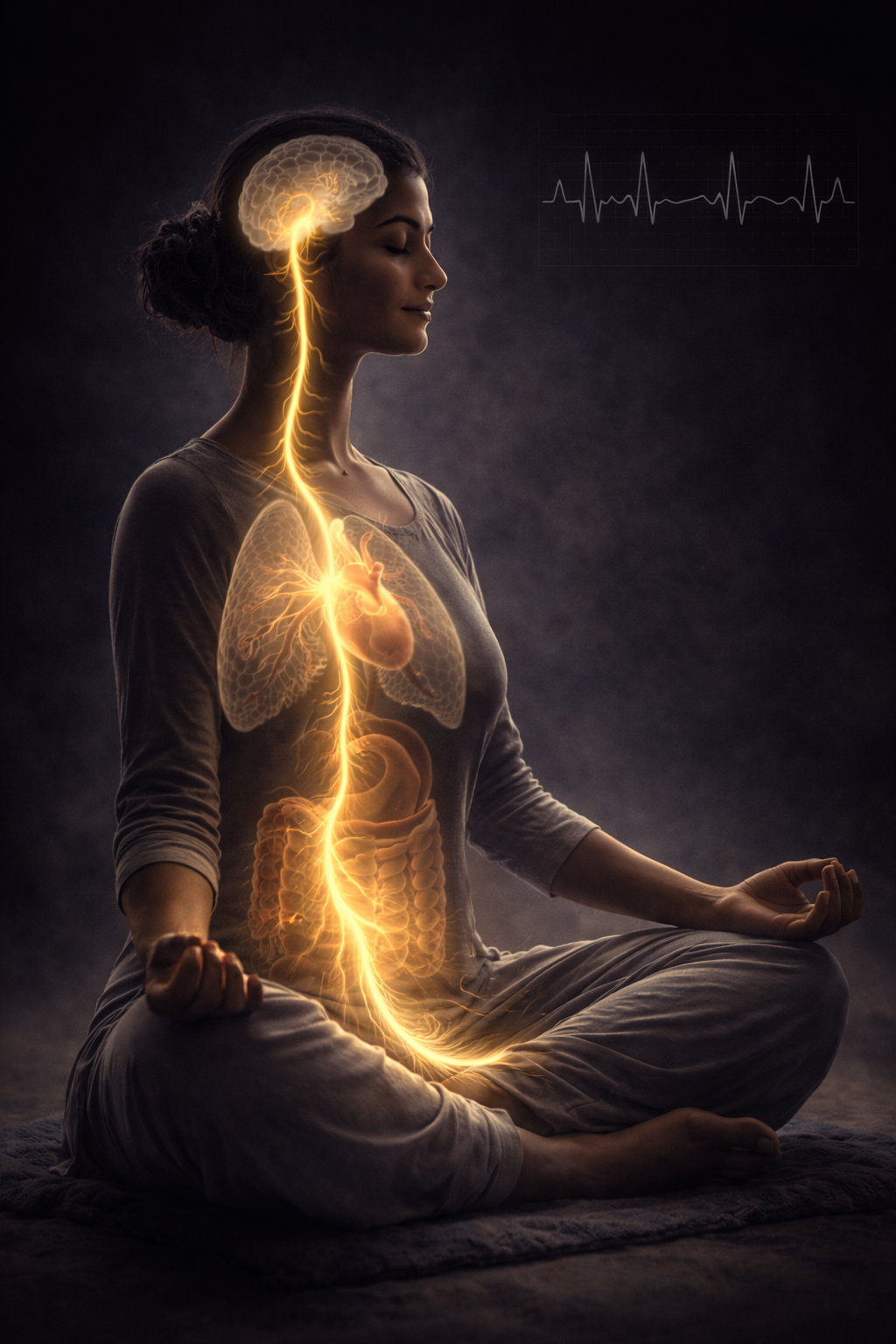
Pranayama is one of the most powerful tools to activate the PNS. Slow, deep, rhythmic breathing stimulates the vagus nerve, the primary highway of the parasympathetic system. This lowers heart rate, reduces blood pressure, and triggers a state of calm, as supported by scientific studies on the autonomic nervous system and the vagus nerve.
2.2 Respiratory Sinus Arrhythmia (RSA)
A healthy heart is not a metronome; it speeds up slightly when you inhale and slows down when you exhale. This natural phenomenon is called RSA. A higher RSA variability (also called heart rate variability or HRV) is a marker of good health and resilience to stress, with strong evidence from heart rate variability (HRV) research. Pranayama techniques, especially those with prolonged exhalations, significantly improve HRV.
2.3 Brainwave States
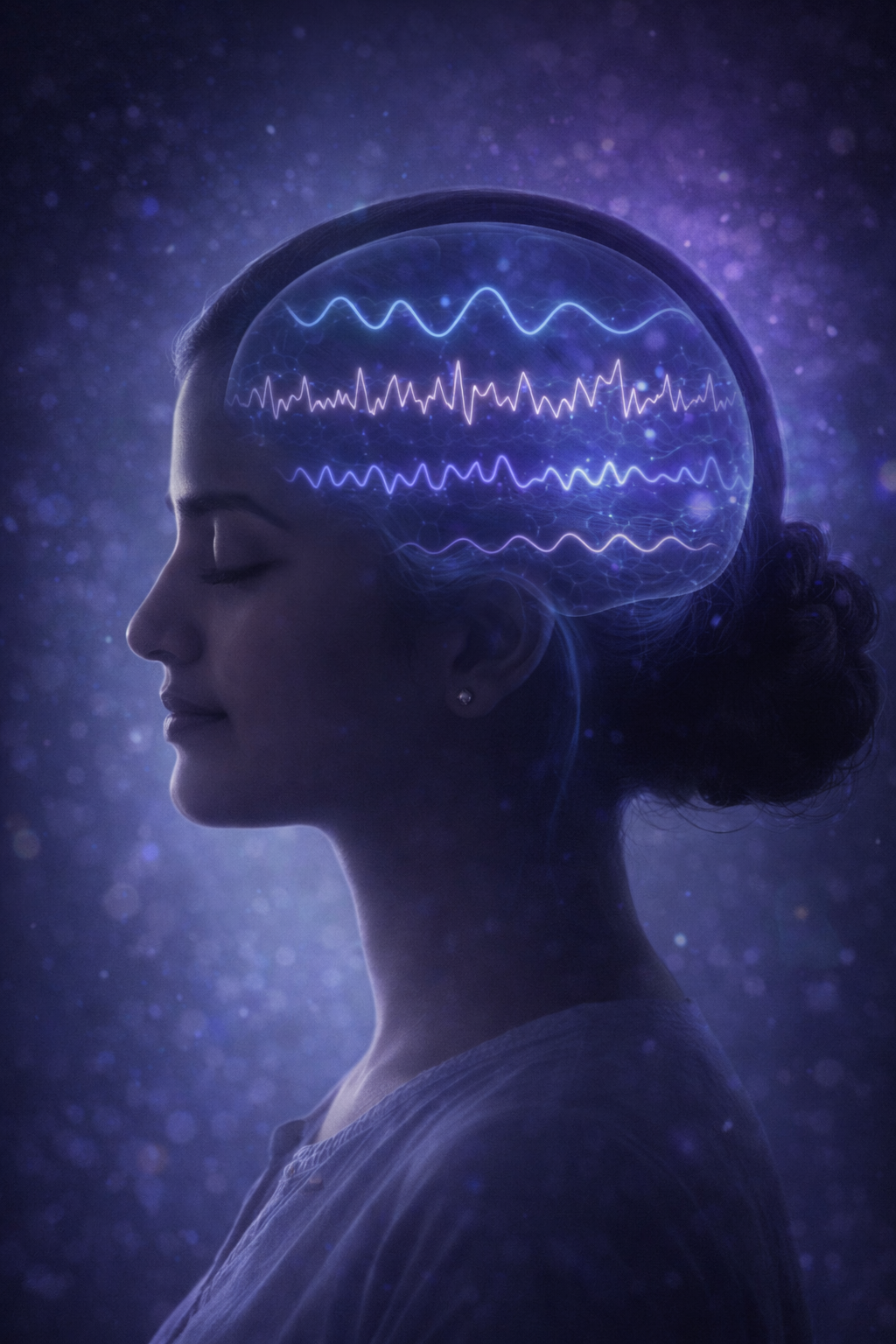
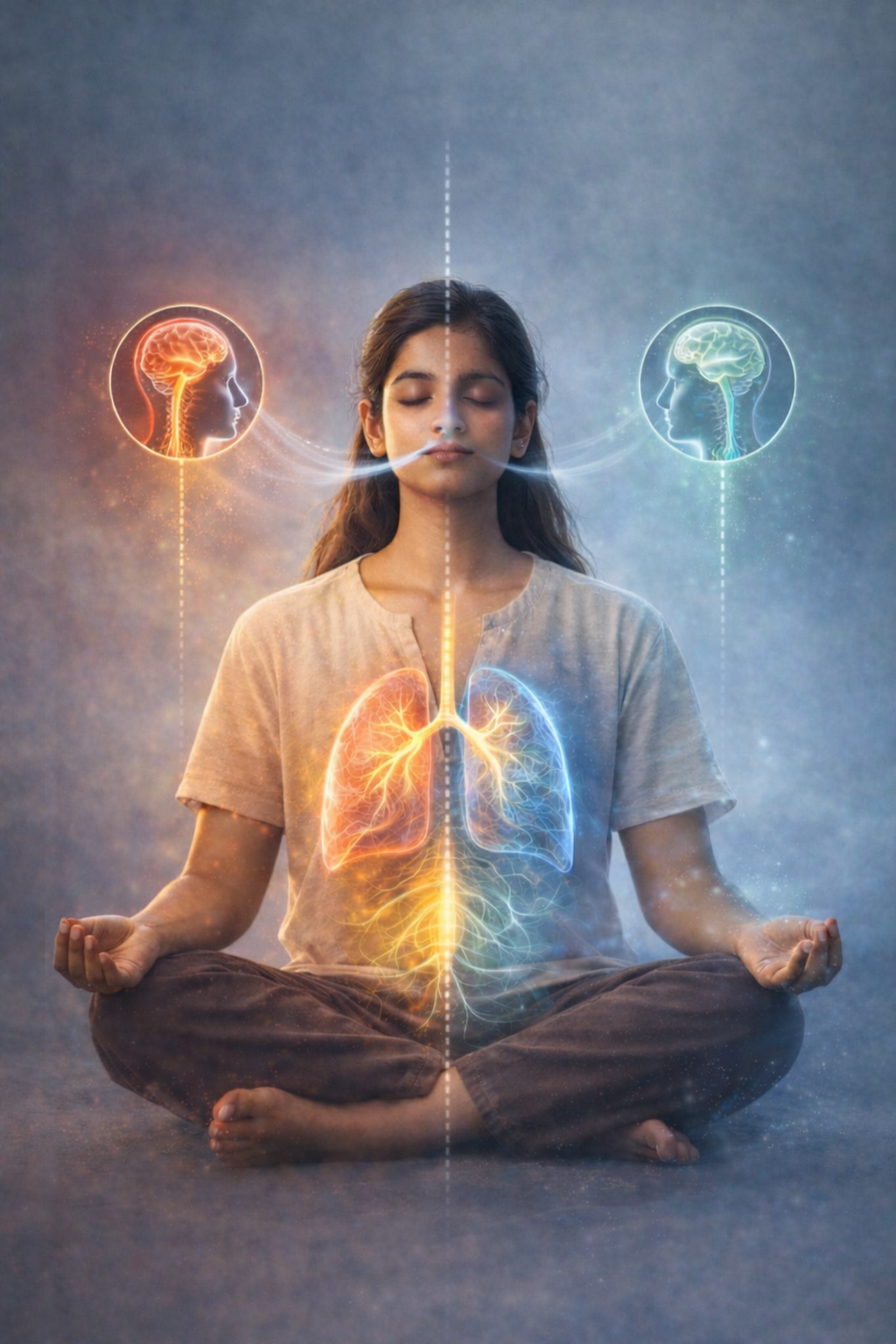
Electroencephalogram (EEG) studies show that different pranayama techniques produce different brainwave patterns. Slow, calming breaths (like Bhramari or Nadi Shodhana) increase alpha waves, which are associated with relaxed alertness and creativity. More energetic techniques (like Kapalbhati) can increase beta waves, linked to focus and concentration. Over time, advanced practitioners can even enter theta and delta states, usually seen only in deep meditation or sleep.
2.4 Blood Gas Chemistry and pH Balance
How you breathe directly affects the levels of oxygen (O2) and carbon dioxide (CO2) in your blood. Contrary to popular belief, CO2 is not just a waste product; it plays a crucial role in releasing oxygen from hemoglobin through the Bohr effect.
Many people chronically over-breathe (hyperventilate), which lowers CO2 levels, leading to anxiety, dizziness, and poor oxygen delivery to tissues. Pranayama techniques, especially those that involve breath retention (kumbhaka), help normalize CO2 levels and optimize oxygenation.
Part 3: Foundational Principles Before You Begin
Before diving into specific techniques, you must understand the basics. Pranayama is safe for most people, but it should be practiced with respect and awareness.
3.1 When and Where to Practice
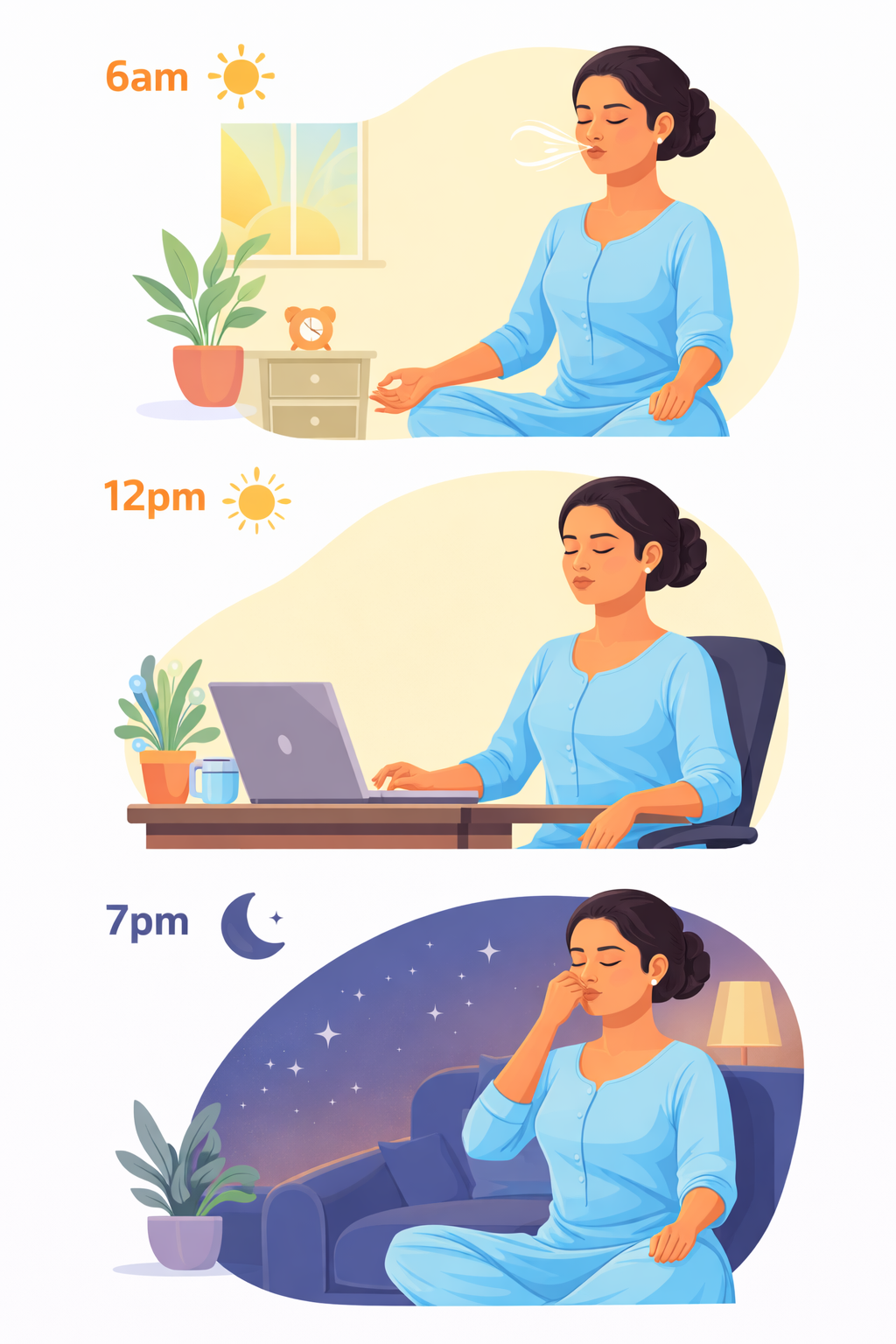
Best time: Early morning (around sunrise) is ideal because the mind is naturally calm and the air is pure. You can also practice in the evening before dinner to unwind, especially when combined with an evening yoga routine for relaxation and better sleep.
Empty stomach: Practice at least 3-4 hours after a heavy meal or 1-2 hours after a light snack. A full stomach can cause discomfort and interfere with diaphragmatic movement.
Quiet, clean space: Choose a well-ventilated, peaceful spot where you won’t be disturbed.
3.2 Posture
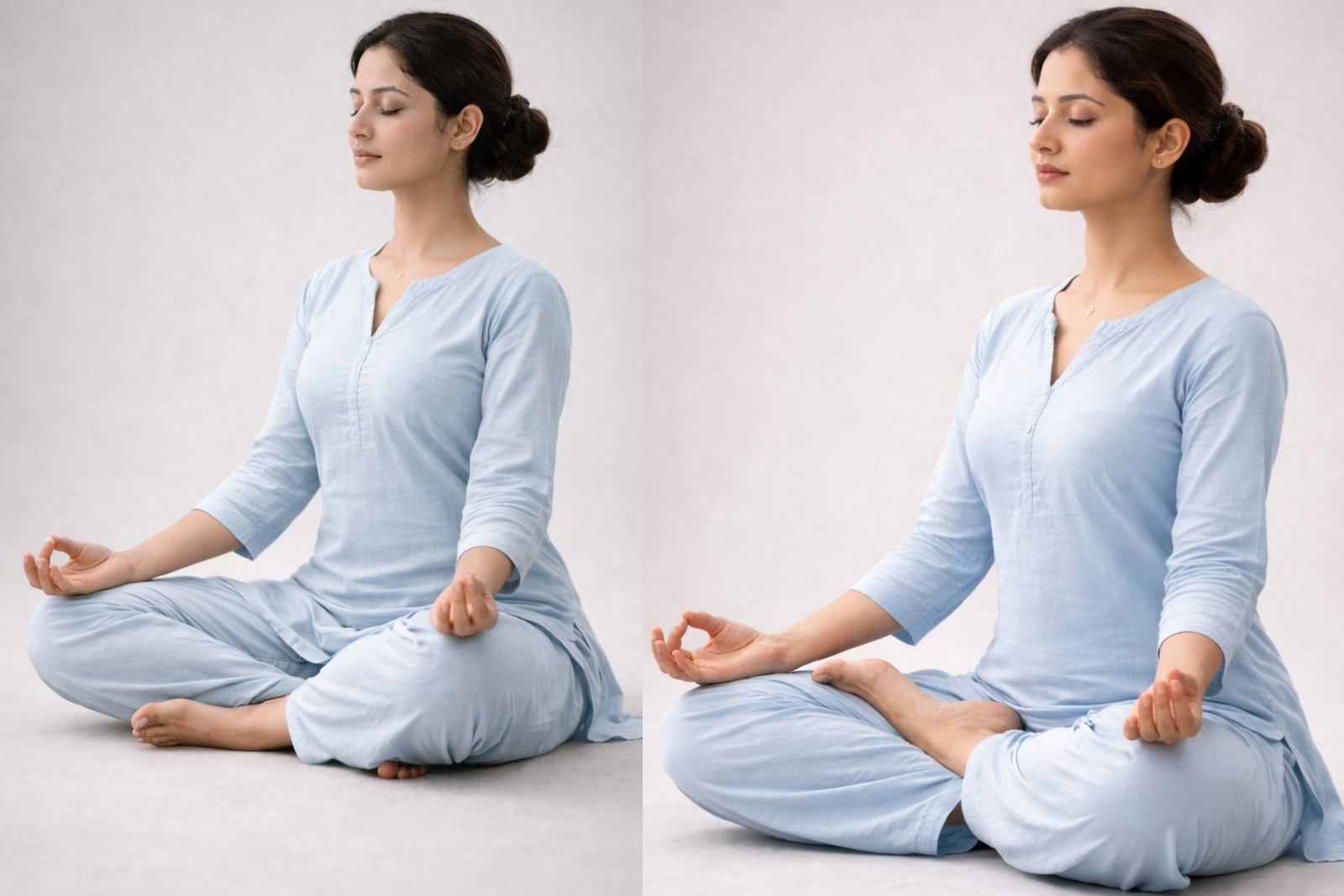
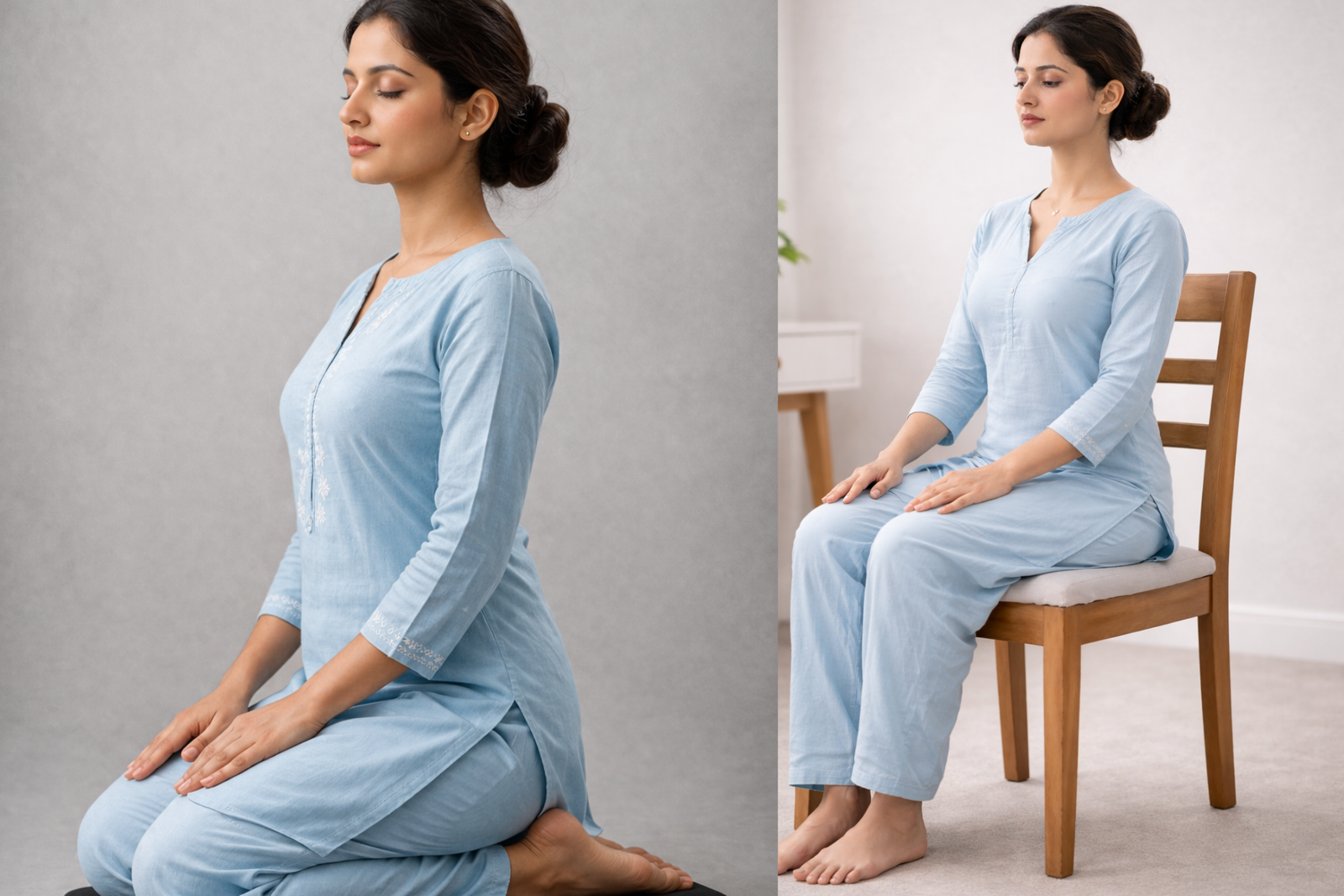
Sit in a comfortable, upright position. Ideal postures include:
Sukhasana (Easy Pose) – cross-legged on a folded blanket.
Padmasana (Lotus Pose) – if you are advanced.
Vajrasana (Thunderbolt Pose) – kneeling on your heels.
Sitting on a chair – with feet flat on the floor and spine erect.
The key is to keep your spine straight, shoulders relaxed, and chest open. This allows for maximum lung expansion and unobstructed energy flow. Keep your eyes closed or half-closed, gazing softly downward. Beginners can also benefit from following a daily yoga routine for beginners to improve posture and consistency.
3.3 Contraindications and Cautions
Pranayama is powerful. Please observe these precautions:
If you have high blood pressure, heart disease, epilepsy, hernia, glaucoma, or retinal detachment, avoid breath retention (kumbhaka) and vigorous techniques like Kapalbhati.
Pregnant women should avoid strong abdominal contractions and breath retention. Gentle Nadi Shodhana and Bhramari are safe.
Never force your breath. If you feel dizzy, lightheaded, or panicked, stop immediately and return to normal, natural breathing.
Always learn from a qualified teacher in person if possible, especially for advanced techniques.
Part 4: Major Pranayama Techniques – Detailed Instructions
We will now explore the most important and effective pranayama techniques. Practice each one slowly, with full attention.
4.1 Nadi Shodhana – Alternate Nostril Breathing (The Balancer)
Meaning: Nadi = energy channel, Shodhana = purification. This technique purifies the subtle energy channels (nadis) and balances the left and right hemispheres of the brain.
Benefits: Reduces anxiety, improves cardiovascular function, lowers heart rate, enhances mental clarity, and prepares the mind for meditation.
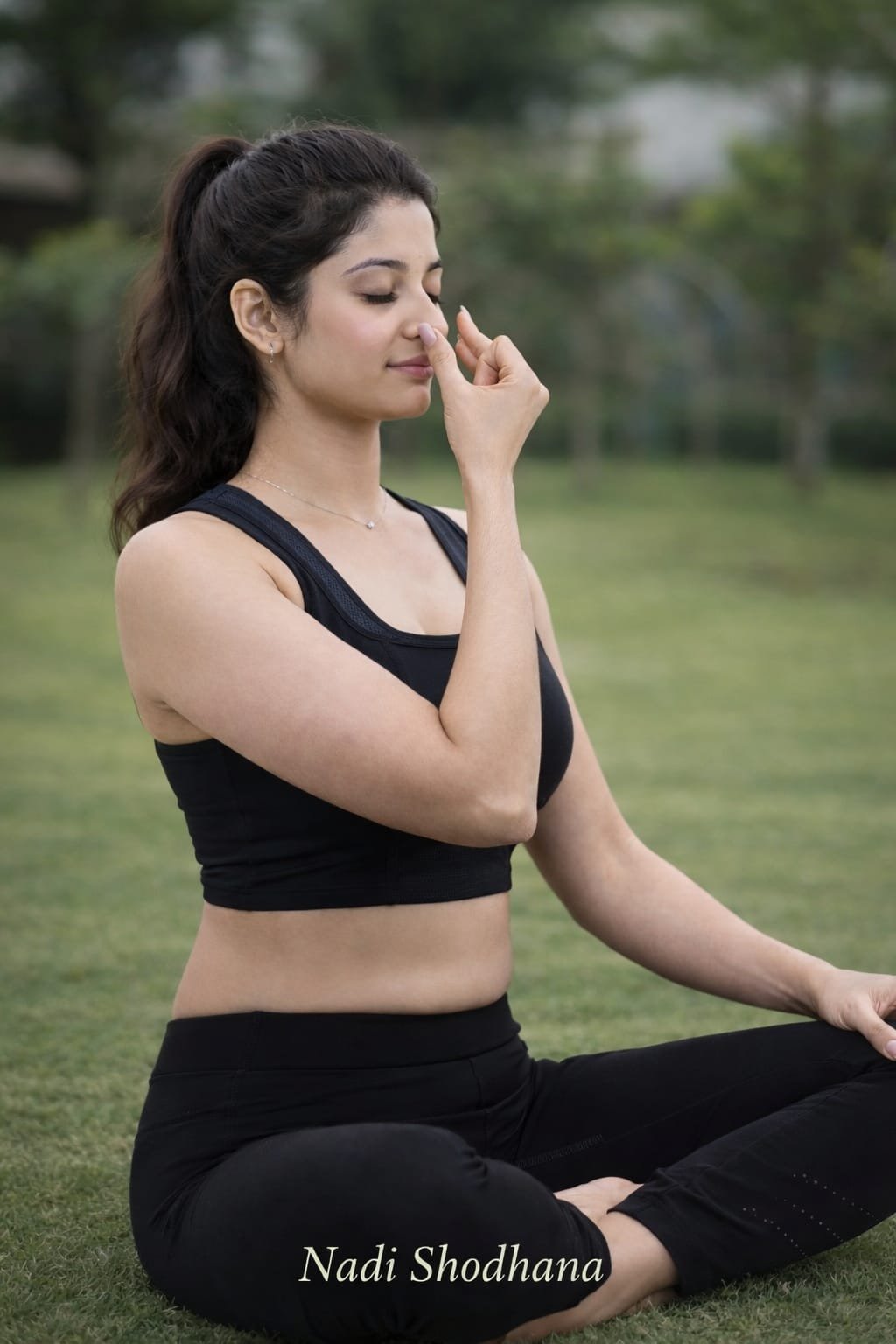
Step-by-Step Instructions:
Sit comfortably with a straight spine.
Place your left hand on your left knee, palm open or in Gyan Mudra (index finger touching thumb).
Bring your right hand up. Curl your index and middle fingers toward your palm, leaving your thumb, ring finger, and little finger extended. This is Vishnu Mudra.
Close your right nostril with your right thumb. Inhale slowly, deeply, and without force through your left nostril. Count to 4.
Close both nostrils by placing your ring finger on your left nostril (while keeping your thumb on the right). Hold your breath for a moment.
Release your thumb from the right nostril. Exhale slowly and completely through the right nostril. Count to 6 (exhalation longer than inhalation).
Inhale through the right nostril (count to 4). Close both nostrils. Hold.
Release the ring finger from the left nostril. Exhale through the left nostril (count to 6).
This completes one round. Continue for 5–10 minutes.
Tip: Always start with an exhale through the left nostril and end with an exhale through the left nostril. Keep the breath smooth, without any jerks.
4.2 Bhramari Pranayama – Humming Bee Breath (The Calmer)
Meaning: Bhramari = black Indian bee. The humming sound produced resembles the gentle buzzing of a bee.
Benefits: Instantly calms the mind, relieves anger and anxiety, lowers blood pressure, reduces migraines, and improves concentration. It is especially effective before sleep.
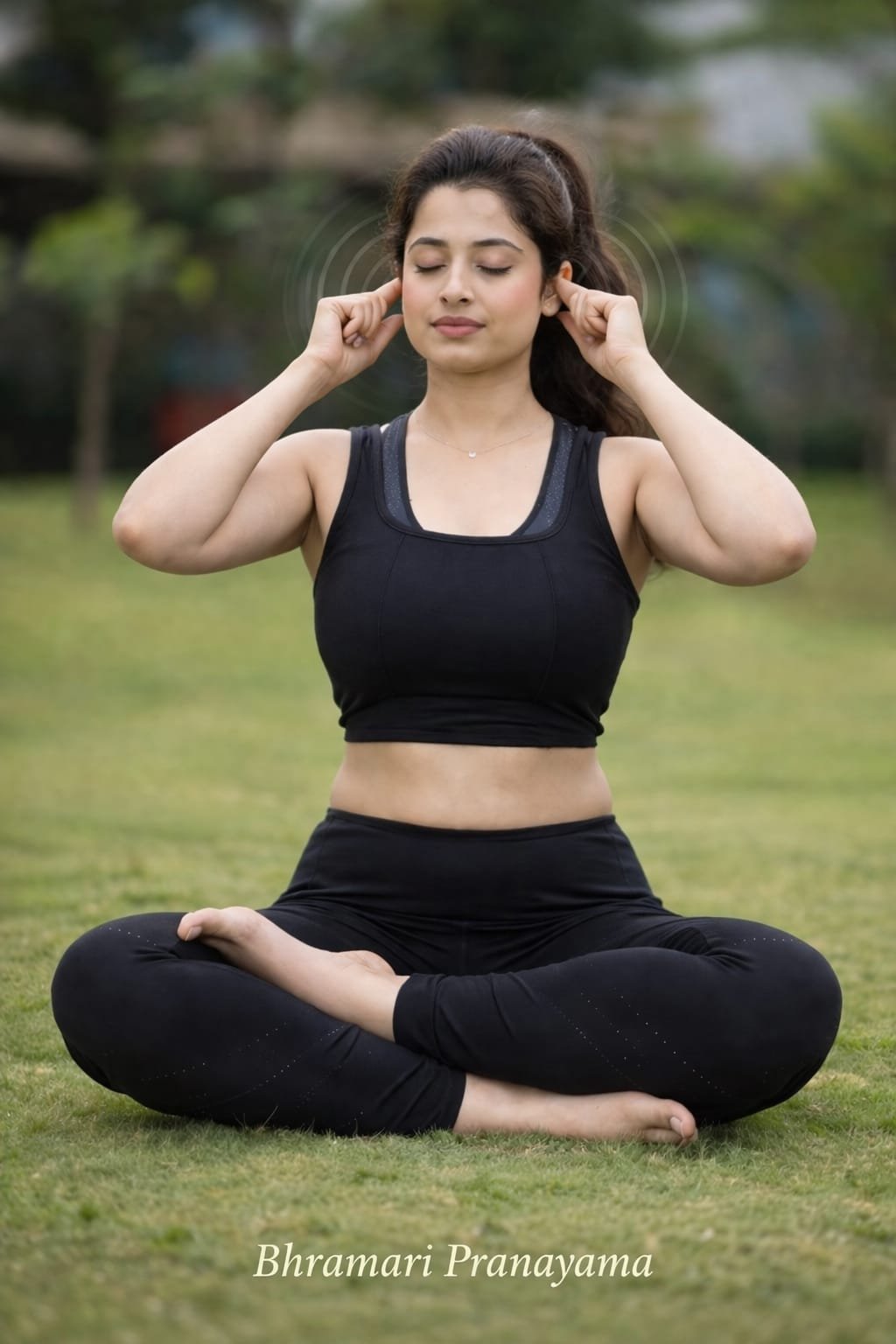
Step-by-Step Instructions:
Sit in any comfortable posture. Close your eyes. Relax your whole body.
Place your thumbs on the tragus (the small cartilage flap) of your ears. Press gently to block external sound.
Place your index fingers on your forehead just above your eyebrows (third eye area). Your other fingers can rest gently over your closed eyes.
Take a deep breath in through your nose.
As you exhale slowly, make a steady, low-pitched humming sound like a bee – “Mmmmmmmm…” The sound should be soft and continuous.
Feel the vibration resonating in your head, throat, and chest.
Inhale again deeply. Repeat the humming exhale.
Do 5 to 10 rounds initially, gradually increasing to 15-20.
Variation: You can also do Bhramari without blocking your ears, just by humming softly. This is excellent for children or when lying down.
4.3 Kapalbhati – Skull-Shining Breath (The Energizer)
Meaning: Kapal = skull, Bhati = to shine. This technique cleanses the frontal sinuses and energizes the brain.
Benefits: Increases oxygen supply to the brain, boosts metabolism, strengthens diaphragm and abdominal muscles, clears nasal passages, and improves focus. It is excellent for morning practice.
Important Note: Kapalbhati is a cleansing kriya (action), not strictly a pranayama. It involves active exhalations and passive inhalations. Do not do it if you are pregnant, have high blood pressure, heart disease, hernia, or recent abdominal surgery.
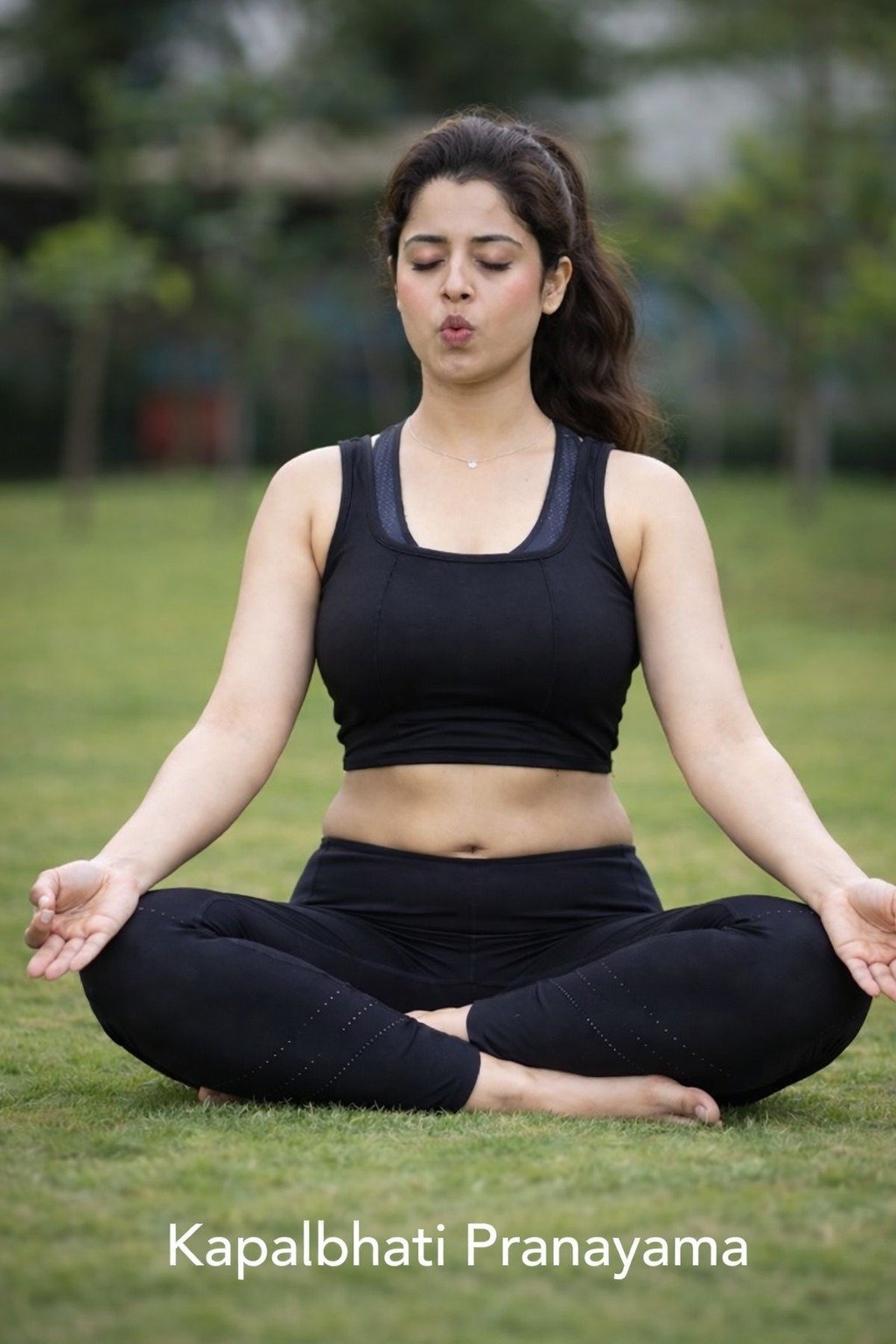
Step-by-Step Instructions:
Sit upright in a comfortable pose.
Place your hands on your knees, palms up.
Take a normal, relaxed inhalation.
Exhale forcefully and quickly by contracting your lower belly (navel region) sharply inward and upward toward the spine. The exhalation should be short, sharp, and audible (like a “puff”).
The inhalation will happen automatically and passively as you relax your belly. Do not actively inhale.
Continue this rapid, rhythmic breathing: a forceful exhale, a passive inhale. Aim for one breath cycle per second.
Start with 30 breaths per round. After each round, breathe normally for 30 seconds.
Gradually work up to 3-5 rounds of 60-120 breaths each.
What you should feel: A slight warmth in the forehead, a sense of lightness, and increased alertness.
4.4 Ujjayi Pranayama – Victorious Breath (The Focuser)
Meaning: Ujjayi = to conquer or to be victorious. Also known as “ocean breath” or “Darth Vader breath” because of the soft hissing sound produced.
Benefits: Increases internal body heat, calms the nervous system, improves concentration, regulates blood pressure, and is often used during asana practice to maintain rhythm and focus.
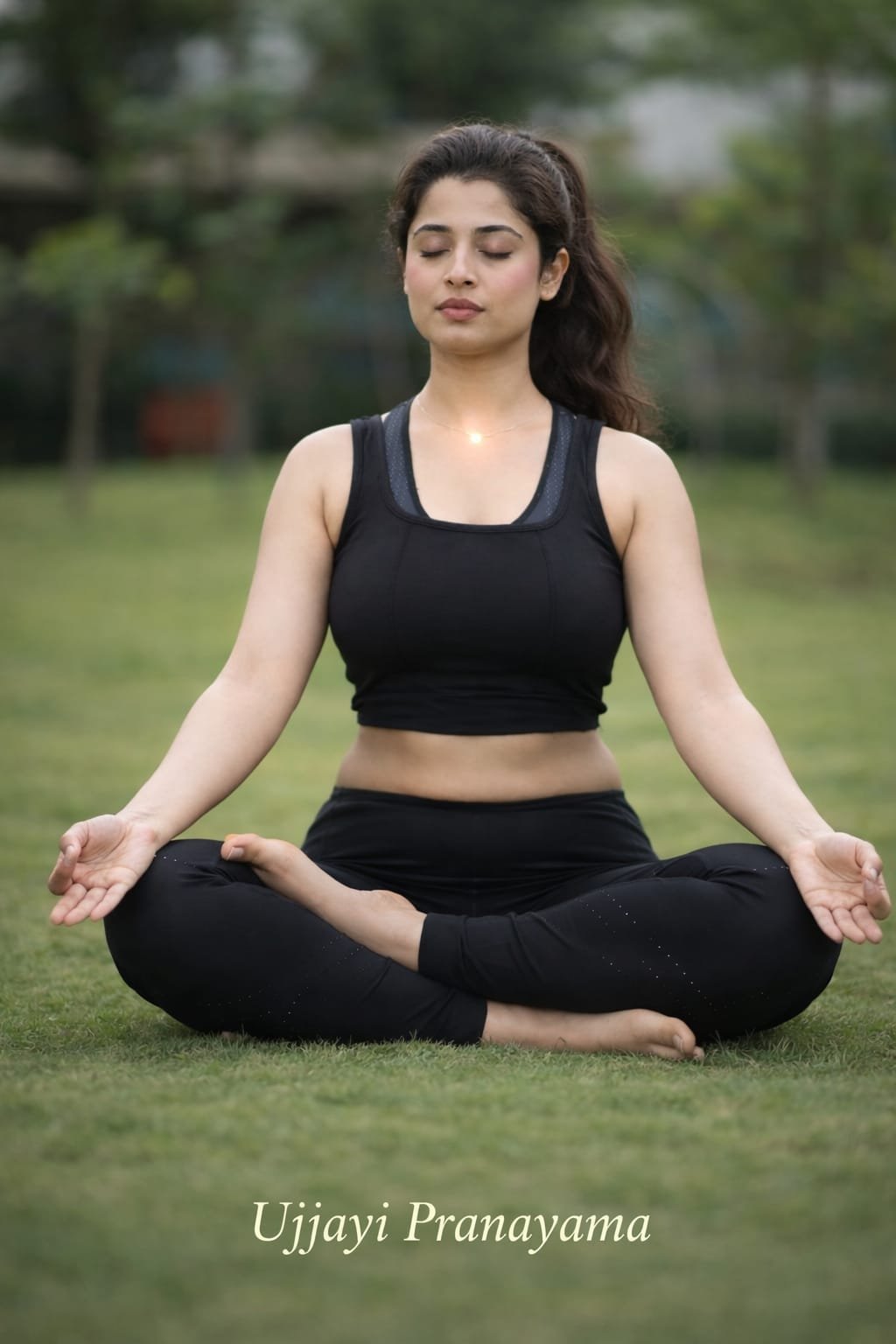
Step-by-Step Instructions:
Sit comfortably. Close your eyes.
Take a few normal breaths to settle in.
Gently constrict the back of your throat (the glottis), as if you are whispering “haaaa” or fogging up a pair of glasses. You should feel a slight narrowing.
Keeping your mouth closed, inhale through your nose. The constricted throat will produce a soft, whispering, oceanic “saaa” sound.
Exhale through your nose, maintaining the same throat constriction. The exhalation will sound like “haaaa”.
Your breath should be long, smooth, and controlled. The sound should be gentle – loud enough for you to hear, but not loud enough to disturb someone next to you.
Practice for 5–10 minutes. You can also do Ujjayi throughout your yoga asana practice.
Tip: If you have trouble finding the constriction, try opening your mouth and exhaling “haaaa” loudly. Then try the same sound with your mouth closed. That is Ujjayi.
4.5 Bhastrika – Bellows Breath (The Purifier)
Meaning: Bhastrika = bellows, like the bellows used by a blacksmith to stoke a fire.
Benefits: This is a more intense version of Kapalbhati. It increases vitality, improves lung capacity, burns toxins, and clears the mind. It is very energizing.
Contraindications: Same as Kapalbhati – high BP, heart disease, epilepsy, hernia, glaucoma, pregnancy. Also avoid during menstruation.
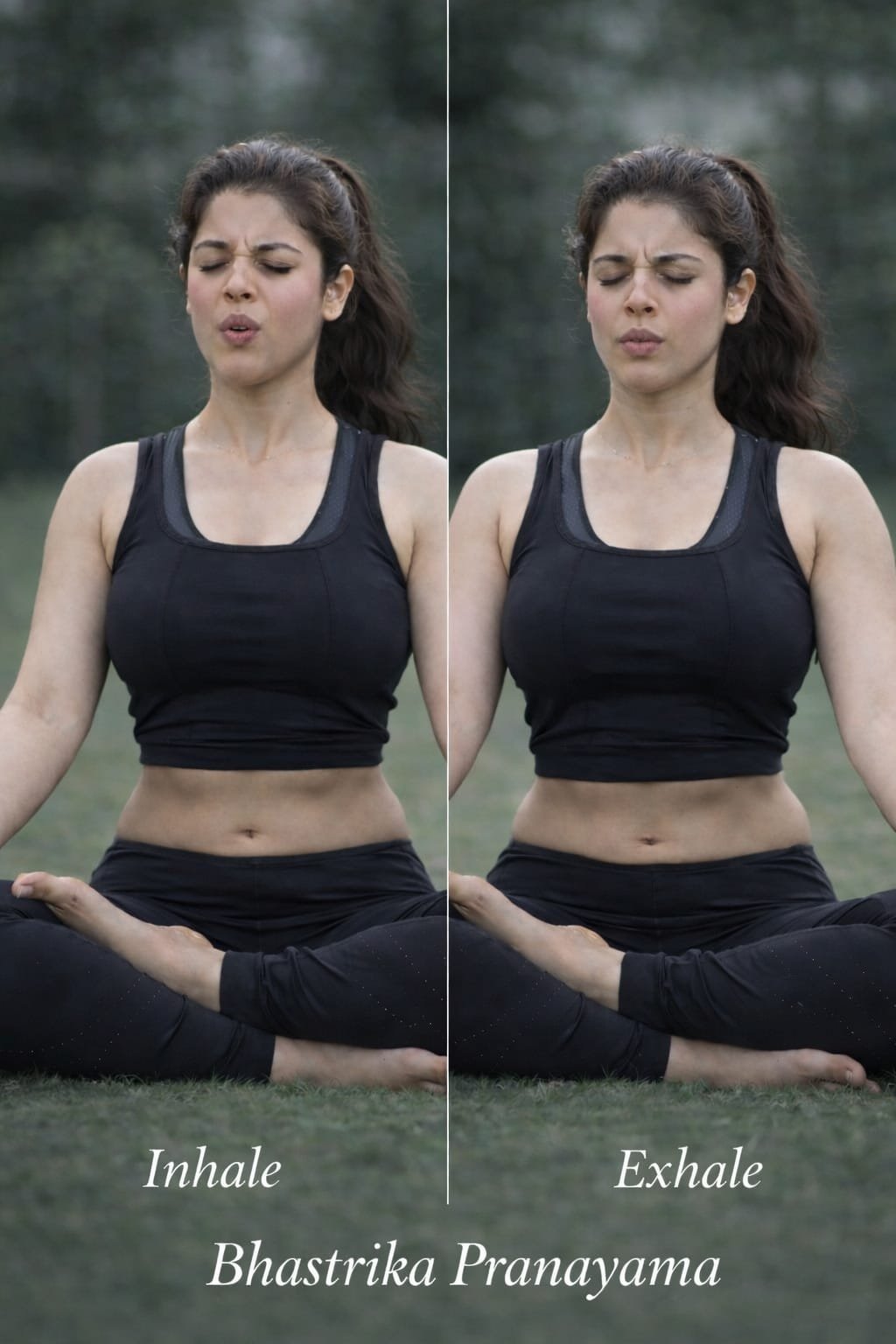
Step-by-Step Instructions:
Sit in a comfortable position with a straight spine.
Close your mouth. Take a deep breath in and out to prepare.
Inhale forcefully and actively through both nostrils while expanding your diaphragm (belly comes out).
Exhale forcefully and actively through both nostrils while contracting your abdominal muscles (belly goes in).
Both inhalation and exhalation are active, equal in force, and equal in duration. The breath is rapid, like a bellows.
Start with 10 breaths per round. After each round, take a deep breath in, hold for a few seconds, and exhale slowly. Rest for 30 seconds.
Gradually increase to 3 rounds of 20–30 breaths.
Caution: Do not exceed your capacity. Dizziness or ringing in the ears means you have overdone it. Stop and rest.
4.6 Sheetali and Sheetkari – Cooling Breaths
Meaning: Sheetali = cooling, Sheetkari = hissing. These techniques lower body temperature and reduce excess heat (pitta) in the body.
Benefits: Reduces high blood pressure, cools the body, reduces anger and thirst, improves digestion, and helps with hot flashes.
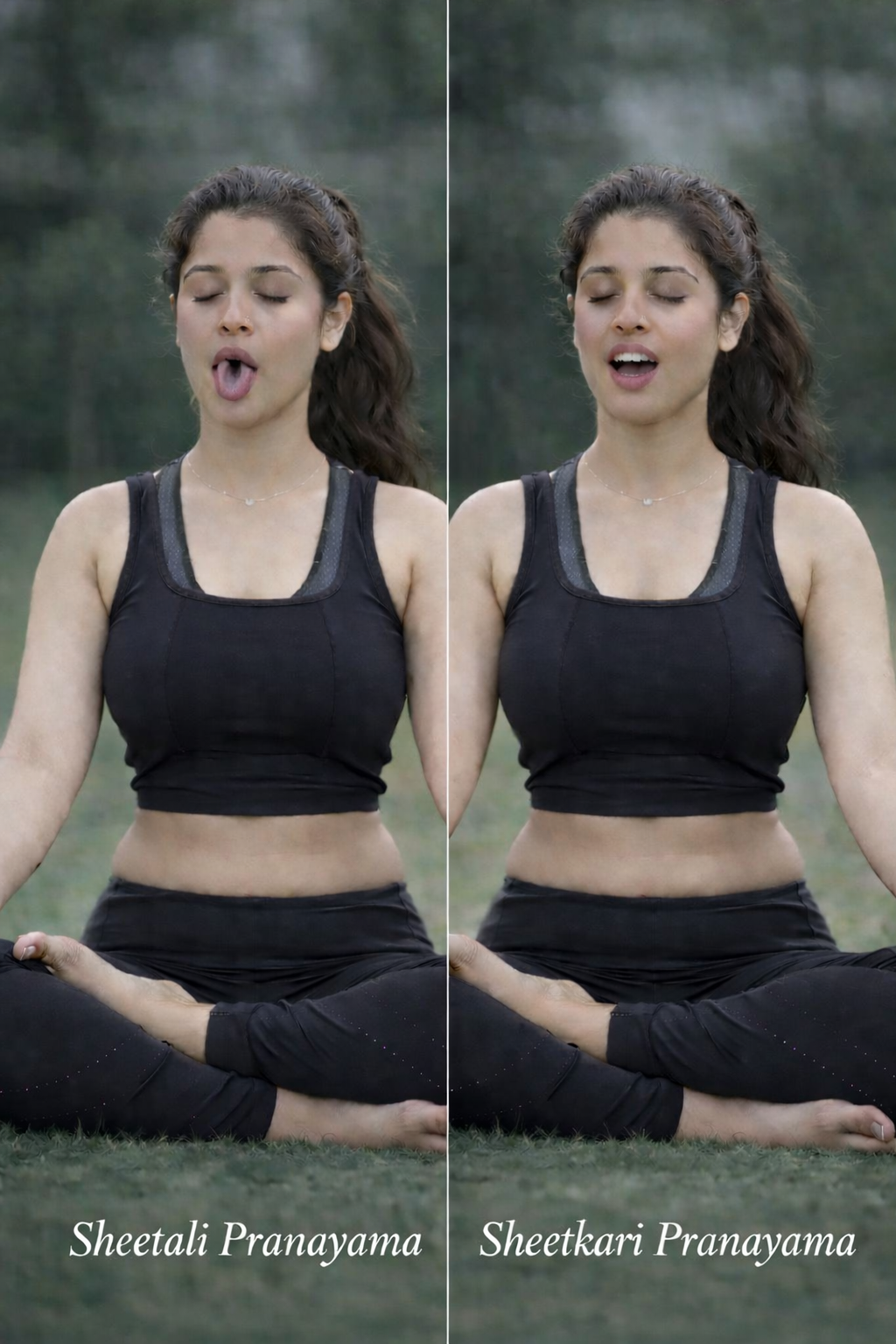
Sheetali Instructions:
Sit comfortably. Open your mouth slightly.
Curl the sides of your tongue inward to form a tube (like a straw). Not everyone can do this – if you cannot, use Sheetkari instead.
Inhale slowly and deeply through the tube of your tongue. Feel the cool air on your tongue and throat.
Close your mouth and exhale slowly through both nostrils.
Repeat for 5–10 minutes.
Sheetkari Instructions (for those who cannot curl their tongue):
Bring your upper and lower teeth together. Open your lips wide so your teeth are exposed.
Press the tip of your tongue against the back of your upper front teeth.
Inhale slowly through the gaps between your teeth. You will hear a hissing “sssss” sound. Feel the cool air.
Close your mouth and exhale through your nose.
Repeat.
Note: Never do cooling breaths in cold weather or if you have a cold or cough.
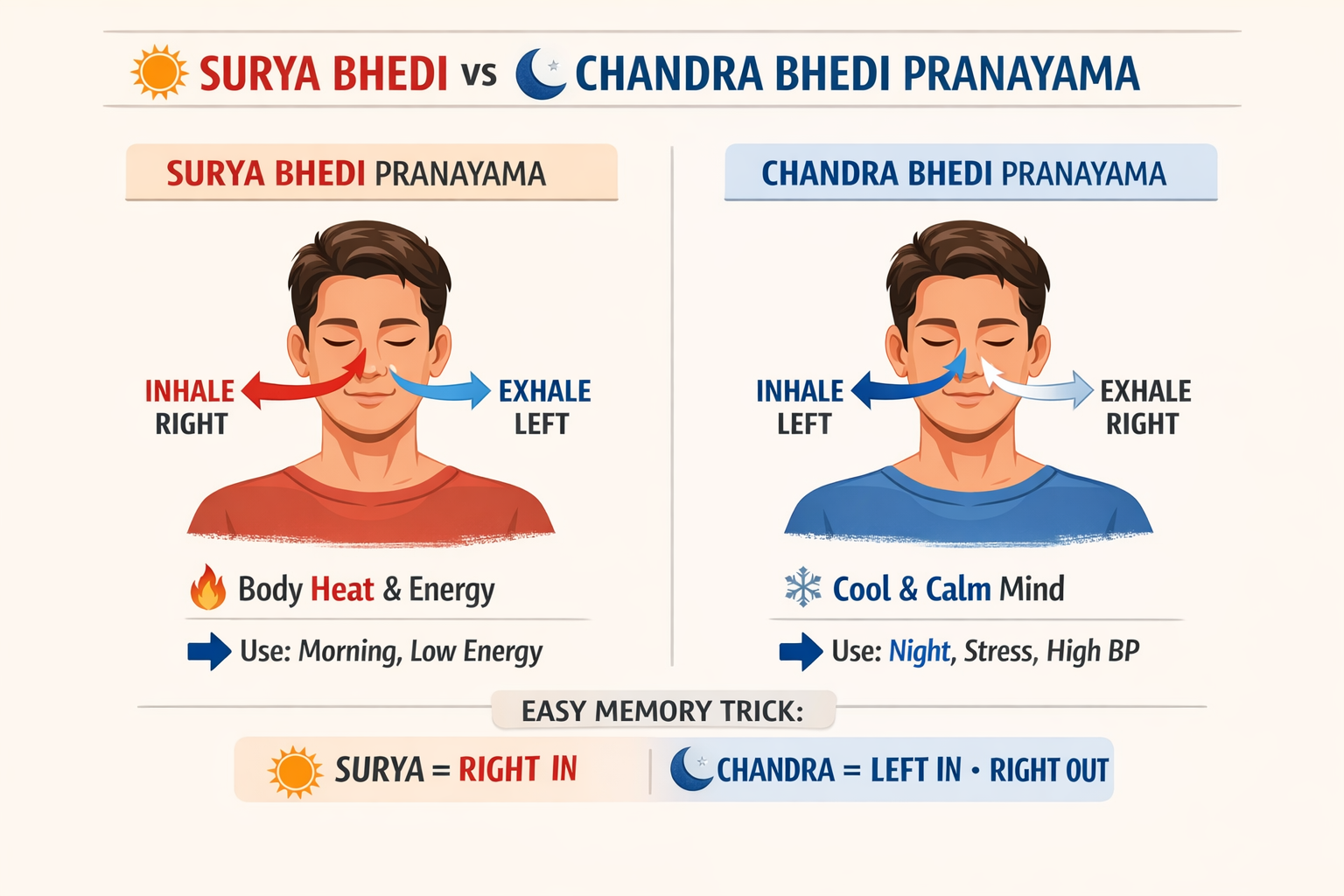
4.7 Surya Bhedana – Right Nostril Breathing (The Activator)
Meaning: Surya = sun, Bhedana = piercing. This technique activates the solar (heating) energy channel, Pingala Nadi.
Benefits: Increases physical energy, body heat, and mental alertness. It is good for low energy, depression, and low blood pressure. Best done in the morning.
Instructions:
Sit comfortably.
Use Vishnu Mudra with your right hand.
Close your left nostril with your ring finger.
Inhale slowly and deeply through your right nostril.
Close both nostrils (right nostril with thumb, left with ring finger). Hold for a few seconds if comfortable.
Open your left nostril and exhale slowly through it.
Inhale through the left nostril? No. For Surya Bhedana, you always inhale through the right and exhale through the left.
Repeat for 5–10 minutes.
4.8 Chandra Bhedana – Left Nostril Breathing (The Calmer)
Meaning: Chandra = moon, Bhedana = piercing. This activates the cooling, calming energy channel, Ida Nadi.
Benefits: Calms an overactive mind, reduces stress, lowers body temperature, and is excellent for insomnia or anxiety. Best done in the evening.
Instructions:
Same as Surya Bhedana, but reverse the nostrils.
Close your right nostril with your thumb.
Inhale slowly and deeply through your left nostril.
Close both nostrils. Hold if desired.
Open your right nostril and exhale through it.
Repeat. Always inhale left, exhale right.
Inhale through the right nostril? No. For Chandra Bhedana, you always inhale through the left and exhale through the right.
- Repeat for 5–10 minutes.
Part 5: The Profound Benefits of Regular Pranayama Practice
The benefits of pranayama are not just anecdotal; they are supported by hundreds of scientific studies. Here is what consistent practice can do for you:
5.1 Mental and Emotional Benefits
- Reduces anxiety and depression: A 2017 systematic review published in the Journal of Clinical Psychiatry found that slow breathing techniques significantly reduce symptoms of anxiety and depression. Pranayama regulates GABA (a calming neurotransmitter) levels in the brain and can be further supported by avoiding common yoga mistakes beginners should avoid.
- Improves focus and concentration: Techniques like Nadi Shodhana and Ujjayi increase alpha brain waves, leading to a state of relaxed alertness ideal for studying or working, especially when combined with simple yoga techniques for stress relief.
- Enhances memory: By reducing cortisol and increasing oxygen to the brain, pranayama improves both short-term and long-term memory.
- Better stress resilience: Regular practitioners show lower baseline cortisol levels and faster recovery from stressful events.
5.2 Physical Health Benefits
Cardiovascular health: Pranayama lowers blood pressure, reduces heart rate, and improves heart rate variability (HRV), a key marker of heart health.
Respiratory health: Kapalbhati and Bhastrika strengthen the lungs, clear mucus, and can be beneficial for asthma, bronchitis, and allergies. (Always consult a doctor first.)
Digestive health: The abdominal contractions in Kapalbhati and Bhastrika massage the internal organs, improving digestion and reducing bloating and constipation, especially when combined with yoga practices for gas relief.
Pain management: Pranayama increases pain tolerance and reduces the perception of chronic pain by activating descending inhibitory pathways in the brain.
Boosts immunity: Controlled breathing reduces inflammation in the body and increases the activity of natural killer (NK) cells, which fight viruses and tumors.
5.3 Spiritual and Energetic Benefits
Balances chakras: Each pranayama technique is associated with specific energy centers. Nadi Shodhana balances all chakras; Bhramari activates Ajna (third eye); Ujjayi stimulates Vishuddhi (throat chakra), and can be further explored through chakra energy healing practices.
Prepares for meditation: A calm, steady breath leads to a calm, steady mind. Pranayama is the essential preparation for deeper states of meditation (dhyana).
Increases prana: Practitioners report higher energy levels, greater vitality, and a sense of inner lightness.
Part 6: Pranayama Routines for Different Needs
Here are ready-to-use routines tailored to your goals. Each session should begin with a few minutes of natural, mindful breathing (observe your breath without changing it).
6.1 Morning Energizing Routine (10 minutes)
Goal: Wake up your brain, boost metabolism, and prepare for a productive day.This routine can be effectively combined with a structured morning yoga routine for better energy and consistency.
Kapalbhati – 3 rounds of 30 breaths, with 30 seconds normal breath between rounds (3 minutes)
Bhastrika – 1 round of 20 breaths (1 minute)
Surya Bhedana – 5 minutes (inhale right, exhale left)
End with 3 deep sighs: Inhale fully, exhale with a loud “haaaa” sound.
6.2 Midday Focus Routine (5 minutes)
Goal: Overcome the afternoon slump, sharpen concentration for work or study.
Ujjayi – 5 minutes (continuous, smooth oceanic breath)
Optional: 2 minutes of Kapalbhati if you feel drowsy.
6.3 Evening Calming Routine (15 minutes)
Goal: Unwind from stress, reduce anxiety, prepare for restful sleep.
Nadi Shodhana – 10 minutes (slow, with 4:6 ratio – inhale 4 counts, exhale 6)
Bhramari – 10 rounds (3 minutes)
Chandra Bhedana – 5 minutes (inhale left, exhale right)
End with 5 minutes of natural breath observation.
6.4 Quick Stress Buster (2 minutes – can be done anywhere, even at your desk)
Extended exhale: Inhale for 2 seconds, exhale for 4 seconds. Repeat for 1 minute.
Then Inhale for 2 seconds, exhale for 6 seconds. Repeat for 1 minute.
Notice how your heart rate slows and your mind clears.
Part 7: Common Mistakes and How to Avoid Them
Even with the best intentions, beginners often make mistakes. Here are the most common pitfalls:
| Mistake | Correction |
|---|---|
| Forcing the breath | Your breath should never be strained or uncomfortable. Reduce duration or intensity. |
| Holding breath too long (kumbhaka) | Do not attempt breath retention until you have practiced simple inhalation and exhalation for some time. |
| Incorrect posture | Slouching compresses the lungs. Sit tall, lift your chest, and relax your shoulders. |
| Breathing from the chest only | Use diaphragmatic (belly) breathing. Your belly should rise on inhale and fall on exhale. |
| Irregular rhythm | Keep your breathing smooth and steady, like pouring oil in a continuous flow. |
| Expecting instant results | Pranayama is a gradual practice. Benefits come with consistency over time. |
Part 8: Integrating Pranayama into Your Daily Life
The true power of pranayama unfolds when it becomes a daily habit, not a once-in-a-while activity. Here is how to make it stick:
Anchor it to an existing habit: Do pranayama right after brushing your teeth in the morning or just before your shower.
Start small: Commit to just 5 minutes a day. It is better to do 5 minutes every day than 30 minutes once a week.
Use a timer: Set a gentle alarm so you don’t have to watch the clock.
Keep a journal: Note how you feel before and after each session. You will quickly see patterns (e.g., “After Nadi Shodhana, my headache disappeared”).
Combine with asana and meditation: The ideal sequence is: Asanas (10-20 min) → Pranayama (10-15 min) → Meditation (10-20 min).
Practice during stressful moments: Do not limit pranayama to your mat. When you feel angry, anxious, or overwhelmed, take three conscious deep breaths. This is pranayama in action.
Part 9: Pranayama for Specific Conditions – Evidence-Based
While I am not a doctor, the following uses of pranayama have been studied and found beneficial. Always consult your healthcare provider.
9.1 For High Blood Pressure
Best technique: Slow Nadi Shodhana (inhale 4 sec, exhale 6 sec). Avoid Kapalbhati, Bhastrika, and breath retention.
Study: A 2014 study in the Journal of Alternative and Complementary Medicine found that 15 minutes of slow breathing (6 breaths per minute) lowered systolic BP by 10-15 mmHg. a finding supported by broader research on breathing and cardiovascular health available on PubMed database
9.2 For Insomnia
Best techniques: Bhramari, Chandra Bhedana, and extended exhalation (1:2 ratio). Practice in bed, lying down.
Protocol: 10 rounds of Bhramari followed by 5 minutes of breathing with an exhale twice as long as the inhale.
9.3 For Asthma (under medical supervision)
Best techniques: Gentle Ujjayi and slow Nadi Shodhana. Avoid vigorous techniques that may trigger bronchospasm.
Note: Never stop your asthma medication. Pranayama can be an adjunct therapy.
9.4 For Anxiety and Panic Attacks
Best techniques: Bhramari and Nadi Shodhana. For acute panic, use the 4-7-8 breath (inhale 4, hold 7, exhale 8).
Why it works: The long exhale activates the vagus nerve, signaling safety to the brain.
Part 10: Frequently Asked Questions
Q: Can anyone do pranayama?
A: Yes, with modifications. Children can do Bhramari and Nadi Shodhana. Elderly people can do slow, gentle breathing without retention. Pregnant women should avoid abdominal contractions and holds. People with serious illnesses should consult their doctor.
Q: How long before I see results?
A: You may feel calmer immediately after one session. For lasting changes in blood pressure, anxiety levels, or lung function, practice daily for at least 8-12 weeks.
Q: Is it safe to do pranayama during COVID-19 or respiratory infections?
A: If you have an active fever, severe cough, or breathing difficulty, rest is more important. Do not practice vigorous techniques like Kapalbhati. Gentle Ujjayi and Nadi Shodhana may help, but listen to your body.
Q: Can pranayama replace medication?
A: Absolutely not. Do not stop any prescribed medication without your doctor’s approval. Pranayama is a complementary practice, not a replacement.
Q: Why do I feel dizzy or tingly?
A: This is often due to over-breathing (hyperventilation) or a sudden change in blood gases. Stop immediately. Return to normal breathing. Next time, reduce the force, speed, or duration. Dizziness should never be “pushed through.”
Q: Should I breathe through my nose or mouth during pranayama?
A: Almost all traditional pranayama techniques use nasal breathing (except Sheetali and Sheetkari, which use the mouth for inhalation). Nasal breathing filters, warms, and humidifies the air and releases nitric oxide, which dilates blood vessels.
Conclusion: Your Breath is Your Anchor
In a chaotic world, your breath is always with you. It is the most accessible, portable, and powerful tool for healing and transformation. Pranayama is not about mastering complicated techniques or contorting your body; it is about returning to the most fundamental, intimate relationship you have – the relationship with your own breath.
Every time you inhale, you draw in new energy, new life. Every time you exhale, you release what no longer serves you – toxins, tension, worries. By practicing pranayama, you become the conscious master of this sacred cycle.
Start today. Not tomorrow. Not next week. Right now, take three deep, conscious breaths. Inhale slowly. Exhale slowly. Notice the space between them. That is the beginning of your pranayama journey.
Over the next 30 days, commit to just 10 minutes daily. You will notice your mind becoming clearer, your reactions becoming calmer, and your body feeling more alive. The ancient yogis said that where the breath goes, the mind follows. And where the mind goes, the entire life follows.
Breathe well. Live fully.
Thank you for reading this comprehensive guide on Pranayama. If you found it helpful, please share it with someone who could benefit from the healing power of breath. Remember to consult a healthcare professional before beginning any new practice, especially if you have pre-existing conditions.