

Yoga for Back Pain Relief at Home – A Natural Way to Heal Your Spine
Back pain has become one of the most common health problems in modern life.
Whether you sit for long hours at a desk, use mobile devices frequently,
or struggle with poor posture, your spine is constantly under stress.

Many people rely on medicines for quick relief, but natural approaches such as yoga
focus on long-term wellness and overall body balance. Regular practice can help
support the body without depending entirely on temporary solutions.
According to research published by World Health Organization (WHO),
low back pain is one of the leading causes of disability worldwide. This highlights
the importance of adopting sustainable and safe practices that support spinal health
instead of only managing symptoms.
Yoga is more than just physical exercise—it is a holistic system that helps strengthen
muscles, improve flexibility, support posture, and promote relaxation of the nervous system.
With consistent practice, it may help reduce discomfort and support long-term back health.
If you are new to yoga, you may first understand the basics through this guide: What Is Yoga? Complete Beginner’s Guide.
Why Back Pain Is So Common Today
Modern lifestyle habits play a major role in the increasing cases of back pain.
Unlike earlier generations, many people now spend long hours sitting, which can
reduce spinal flexibility and weaken core muscles over time.
Common Causes of Back Pain
- Prolonged sitting and sedentary lifestyle
- Poor posture while working or using mobile devices
- Weak core muscles
- Lack of physical activity
- Improper lifting techniques
- Stress and muscle tension
- Sleeping in incorrect positions
Many beginners may also experience discomfort due to incorrect yoga techniques.
Learning proper alignment and safe practice methods is essential. You can avoid
common mistakes by reading: Yoga Mistakes Beginners Should Avoid.
How Yoga Helps Relieve Back Pain Naturally
Yoga works on both the physical and mental aspects of discomfort. Rather than
offering temporary relief, it focuses on improving the underlying factors that
contribute to back pain.
1. Strengthens Core Muscles
A strong core helps support the spine and reduces pressure on the lower back.
Yoga poses gently activate abdominal and back muscles, which contribute to better
stability.
2. Improves Flexibility
Tight muscles around the hips and hamstrings can place additional strain on the
lower back. Yoga helps stretch these areas gradually, allowing more natural and
comfortable movement.
3. Corrects Posture
Poor posture is a common contributor to ongoing discomfort. Yoga encourages body
awareness and alignment, which can help maintain a healthier spinal position.
4. Reduces Stress and Muscle Tension
Stress can lead to muscle tightness, particularly in the neck and lower back.
Yoga combines breathing techniques and relaxation practices that may help release
this tension over time.
You can also explore calming techniques that support relaxation: Yoga for Stress Relief – Simple Techniques for Beginners.
Safety Guidelines Before Starting Yoga for Back Pain
Before beginning yoga for back pain, it is important to follow basic safety
guidelines. Practicing with proper awareness can help prevent unnecessary strain.
Important Safety Tips
- Consult a healthcare professional if you have severe or chronic pain
- Start slowly with beginner-friendly poses
- Avoid sudden or jerky movements
- Do not force your body into uncomfortable positions
- Use a comfortable yoga mat for support
- Practice on a flat and stable surface
- Maintain slow and steady breathing
Medical guidance from National Institute of Neurological Disorders and Stroke (NINDS)
also highlights the importance of gentle stretching and strengthening exercises
as a supportive approach for managing back discomfort.
Best Yoga Poses for Back Pain Relief at Home
The following yoga poses are beginner-friendly and can be practiced at home.
Perform them slowly and mindfully to support comfort and stability.
1. Cat-Cow Pose (Marjaryasana-Bitilasana)

Cat-Cow Pose is one of the most effective warm-up poses
for spinal flexibility. It gently stretches the spine
and improves mobility.
How to Do It
- Start on hands and knees
- Inhale and lift your chest (Cow Pose)
- Exhale and round your spine (Cat Pose)
- Repeat slowly for 8–10 breaths
Benefits
- Improves spinal flexibility
- Relieves stiffness
- Reduces lower back tension
2. Child’s Pose (Balasana)
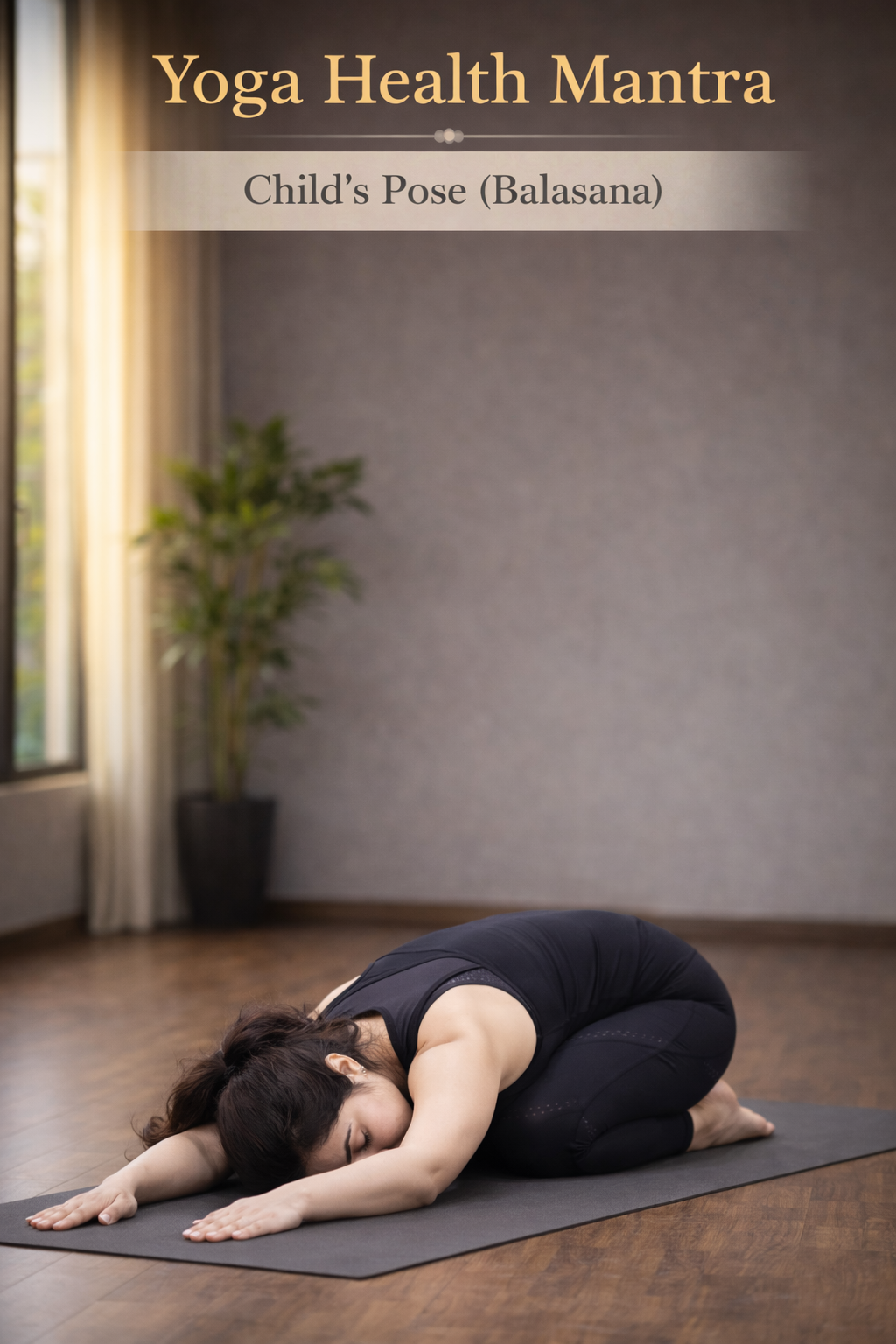
Child’s Pose is a gentle and relaxing stretch that helps release tension
in the lower back and hips, making it suitable for beginners and recovery phases.
How to Do It
- Kneel comfortably on the mat
- Sit back slowly on your heels
- Extend your arms forward along the mat
- Rest your forehead gently on the surface
- Breathe slowly and naturally
Benefits
- Helps relax the spine
- Supports stress reduction
- Encourages gentle flexibility
If you are completely new to yoga, you may begin with simple poses here: 10 Easy Yoga Poses for Complete Beginners.
3. Cobra Pose (Bhujangasana)
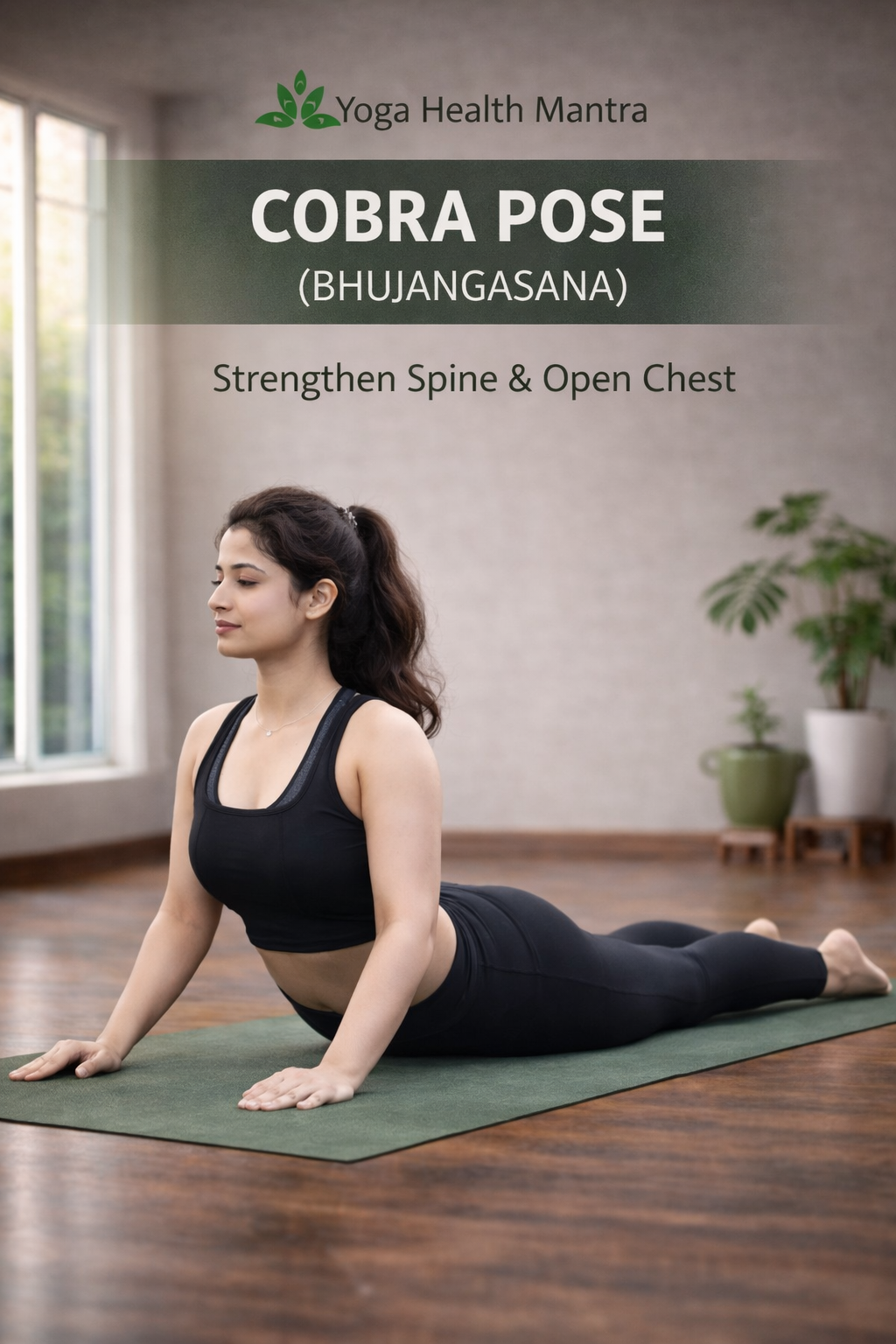
Cobra Pose is one of the most recommended yoga poses for strengthening the lower back
and improving spinal flexibility. It gently stretches the chest, shoulders, and abdomen
while strengthening the muscles that support your spine.
How to Do It
- Lie flat on your stomach with legs extended
- Place palms under your shoulders
- Inhale and slowly lift your chest off the floor
- Keep elbows slightly bent
- Hold the position for 10–20 seconds
- Exhale and slowly return to the floor
Benefits
- Strengthens lower back muscles
- Improves posture
- Reduces stiffness in the spine
- Enhances spinal flexibility
4. Bridge Pose (Setu Bandhasana)
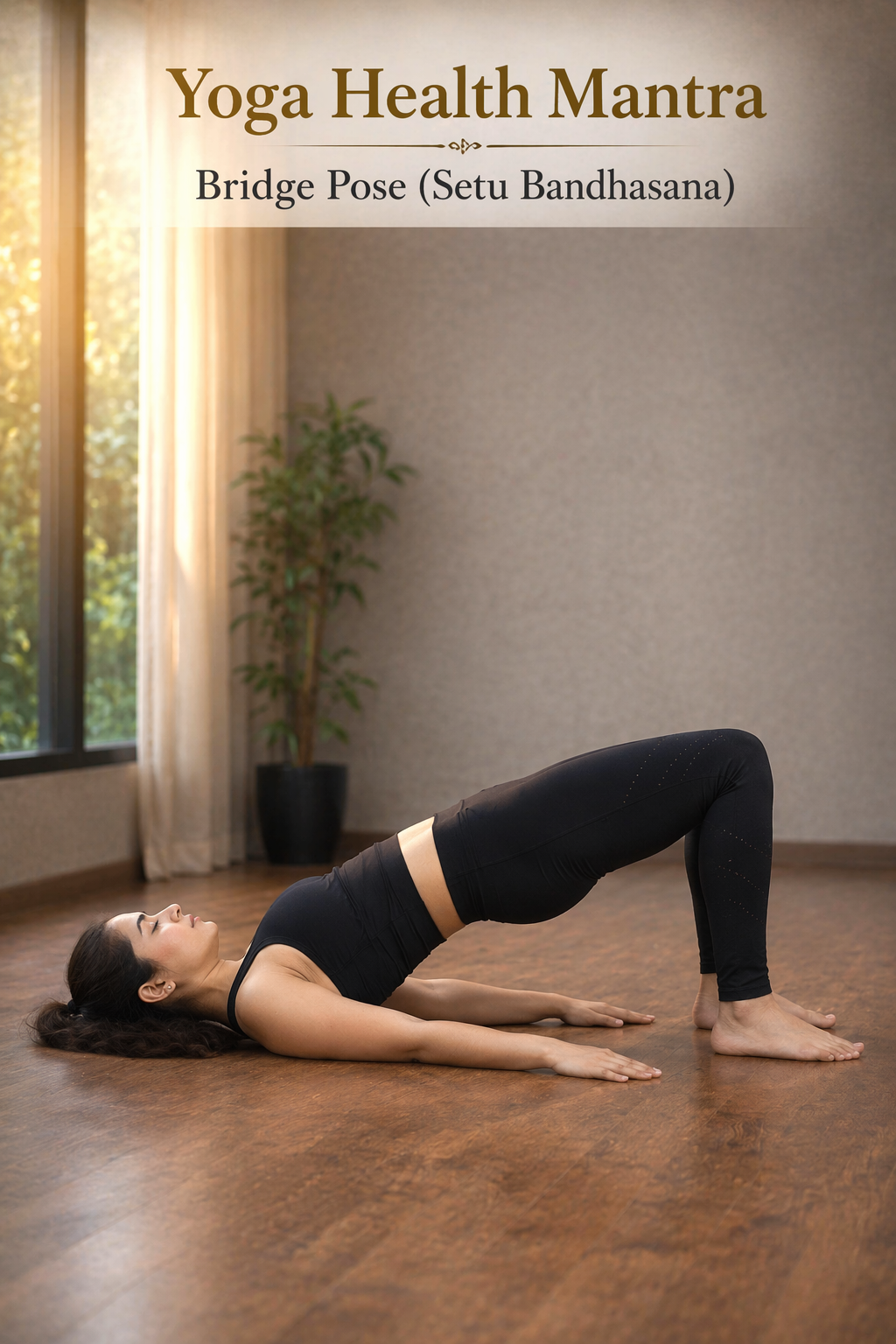
Bridge Pose helps strengthen the spine, hips, and core muscles. It also improves
blood circulation and supports spinal alignment, making it highly beneficial for
people suffering from lower back discomfort.
How to Do It
- Lie on your back with knees bent
- Keep feet flat on the floor
- Place arms beside your body
- Lift hips slowly upward
- Hold the position for 15–20 seconds
- Lower hips gently back to the mat
Benefits
- Strengthens back and core muscles
- Improves spinal alignment
- Relieves mild lower back pain
- Enhances flexibility
5. Downward Facing Dog (Adho Mukha Svanasana)
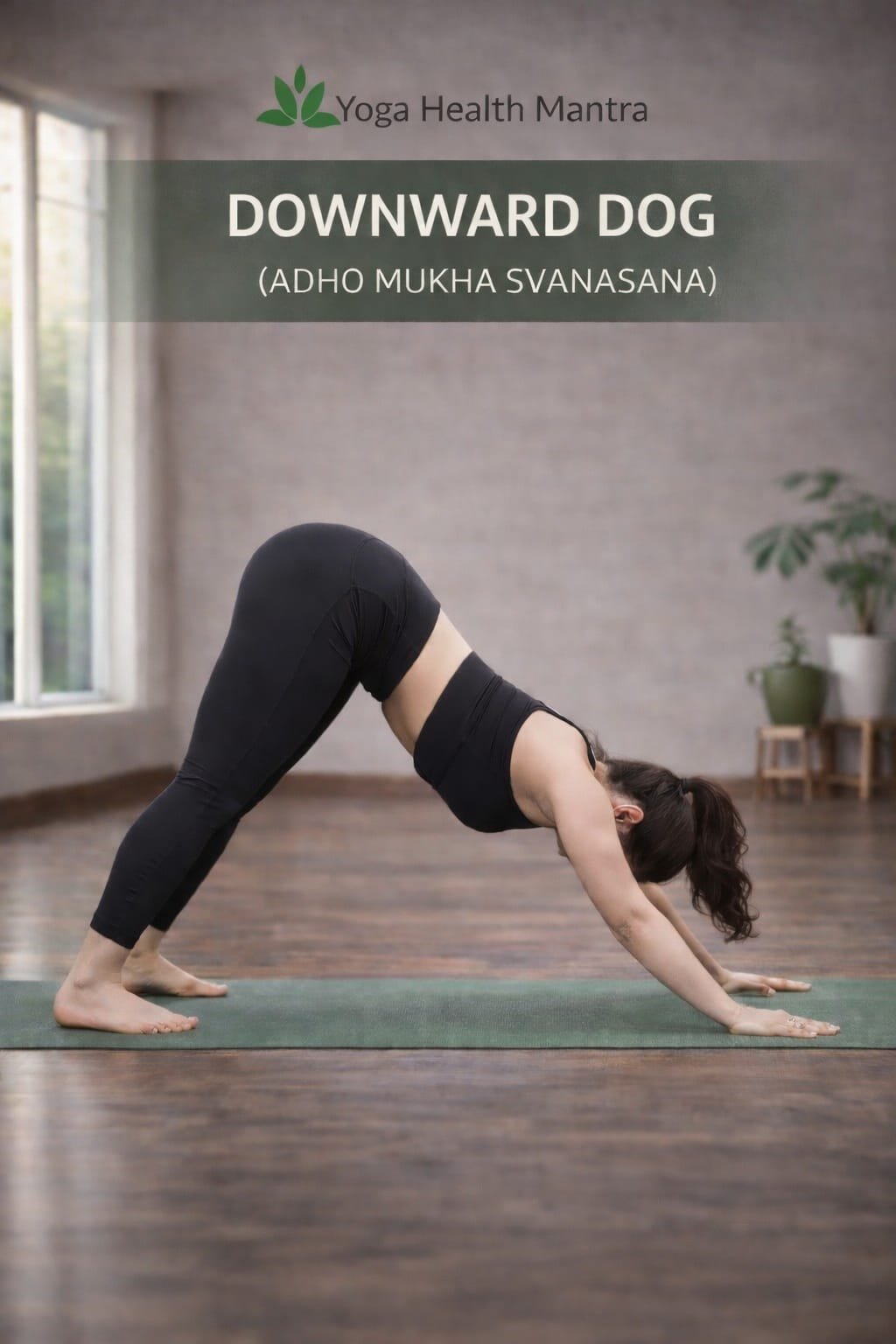
Downward Facing Dog is a full-body stretch that relieves tension in the spine
and improves flexibility in the back and hamstrings.
How to Do It
- Start on hands and knees
- Lift hips toward the ceiling
- Straighten legs gradually
- Keep hands shoulder-width apart
- Hold for 15–30 seconds
Benefits
- Stretches the entire spine
- Improves posture
- Relieves tension in shoulders and lower back
- Boosts blood circulation
6. Supine Spinal Twist (Supta Matsyendrasana)
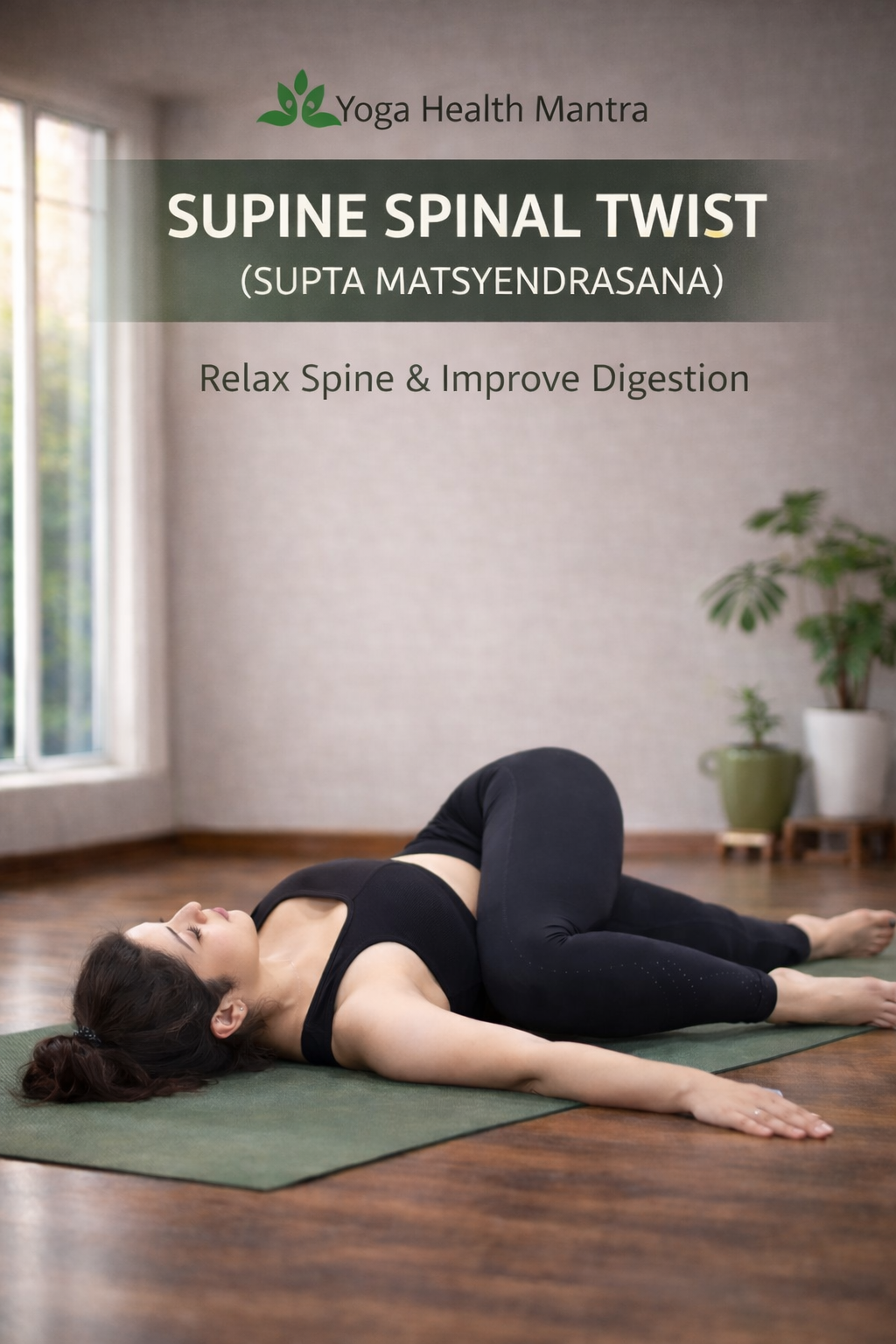
This relaxing pose gently stretches the spine and helps release built-up tension
in the back muscles. It is especially helpful after long sitting hours.
How to Do It
- Lie on your back
- Bend one knee toward your chest
- Twist the knee across your body
- Extend opposite arm outward
- Hold for 20–30 seconds
- Repeat on the other side
Benefits
- Relieves muscle tightness
- Improves spinal mobility
- Enhances relaxation
- Reduces stiffness
Daily Yoga Routine for Back Pain Relief
Consistency plays an important role in supporting long-term relief from back
discomfort. Practicing yoga regularly—even for a short duration—can help improve
flexibility, support comfort, and contribute to overall well-being over time.
If you are looking for a structured and beginner-friendly schedule, you may also explore: Daily Yoga Routine for Beginners.
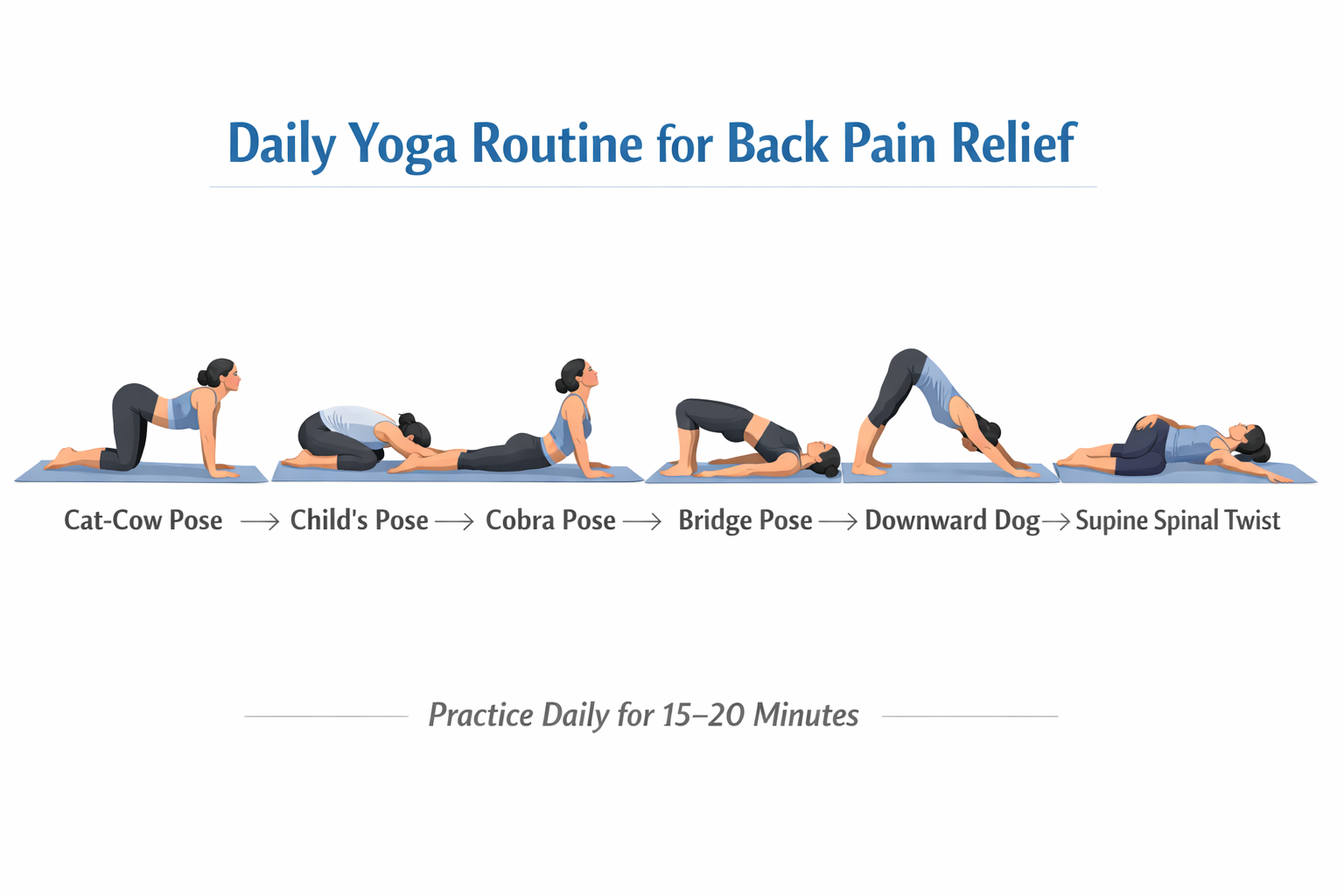
Simple 15–20 Minute Daily Routine
- Cat-Cow Pose – 2 minutes
- Child’s Pose – 2 minutes
- Cobra Pose – 2 minutes
- Bridge Pose – 2 minutes
- Downward Dog – 3 minutes
- Supine Twist – 3 minutes
- Relaxation Pose – 5 minutes
Practicing this routine consistently can significantly reduce back pain
and improve spinal strength within a few weeks.
Morning vs Evening Yoga – Which Is Better?
Both morning and evening yoga sessions offer benefits, but the choice depends
on your lifestyle and body needs.
Morning Yoga Benefits
- Improves flexibility
- Boosts energy levels
- Reduces morning stiffness
- Enhances posture throughout the day
Evening Yoga Benefits
- Relieves stress from daily work
- Reduces muscle tightness
- Promotes better sleep
- Relaxes the nervous system
Correct Sitting Posture to Prevent Back Pain
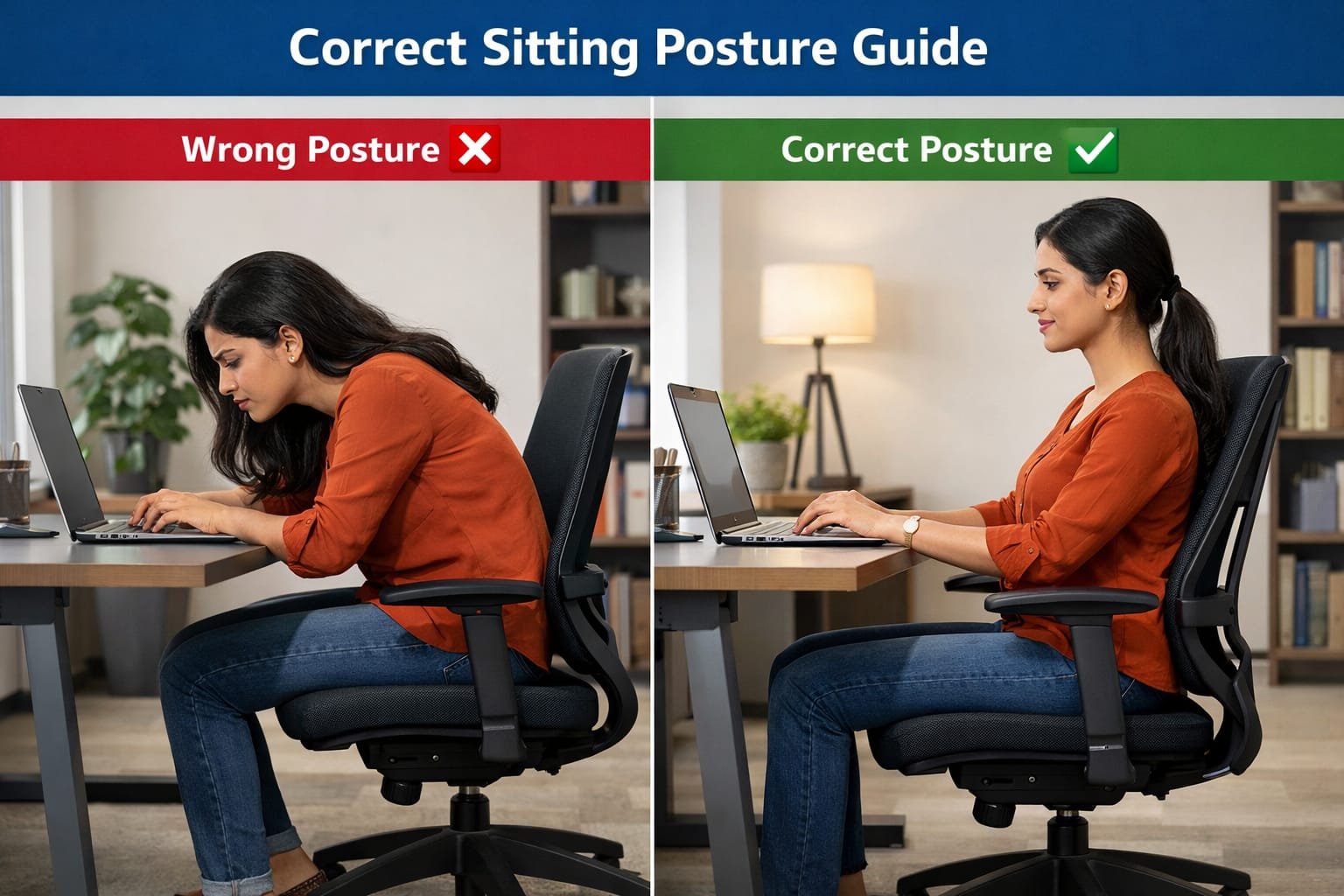
Yoga alone cannot completely solve back pain if poor posture continues.
Maintaining correct posture while sitting and working is equally important.
Ideal Sitting Posture Tips
- Keep your back straight
- Relax your shoulders
- Place feet flat on the floor
- Keep screen at eye level
- Avoid slouching
- Take short breaks every 30–40 minutes
Maintaining good posture not only reduces pain but also improves overall
body alignment and comfort.
Best Sleeping Positions for Back Pain Relief
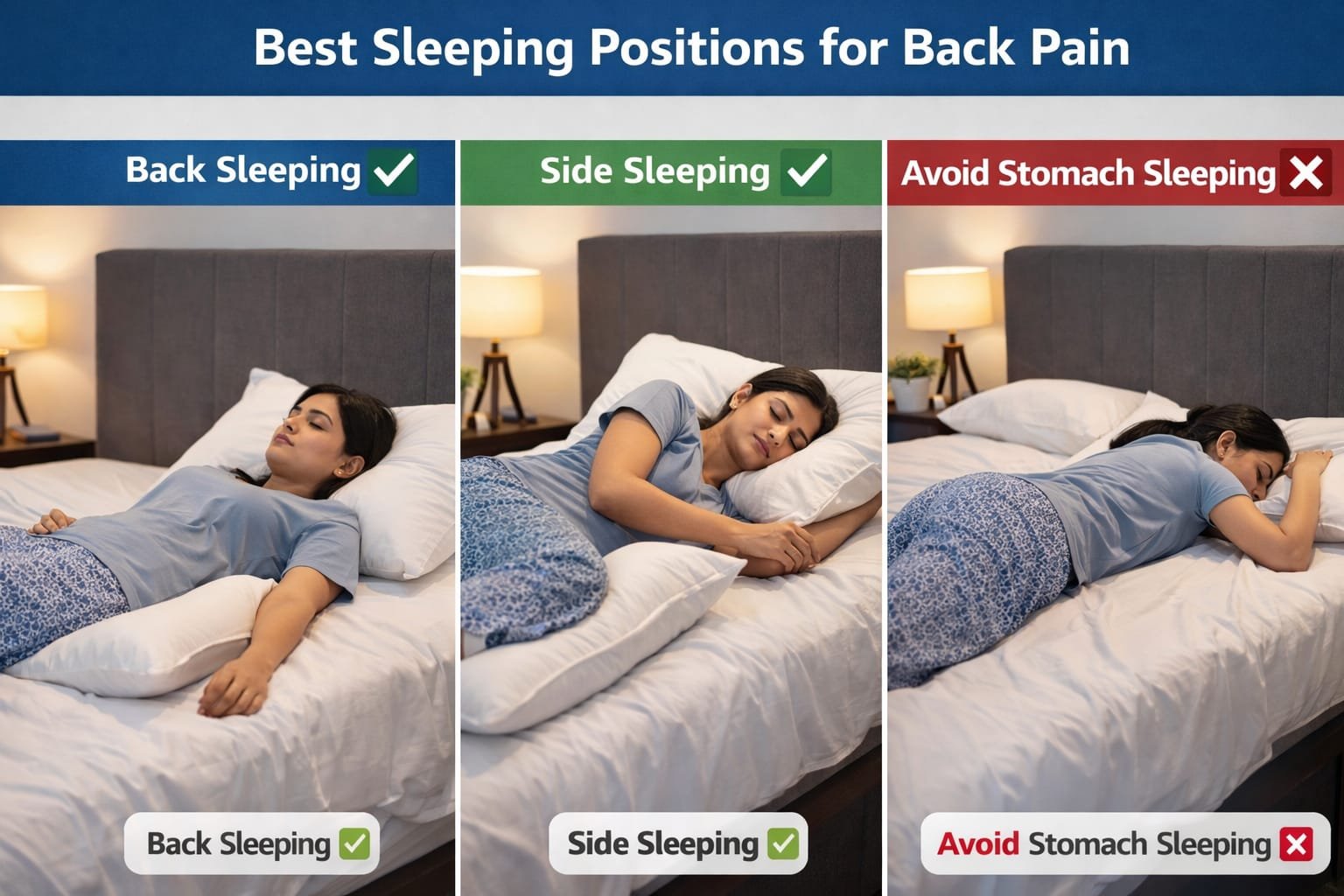
Sleeping posture plays a major role in spinal health. Poor sleeping positions
can worsen back pain even if you practice yoga daily.
Recommended Sleeping Positions
- Sleep on your back with a pillow under knees
- Sleep on your side with a pillow between knees
- Use a medium-firm mattress
- Avoid sleeping on your stomach
These simple adjustments can significantly improve spinal comfort
and reduce pressure on the lower back.
Weekly Yoga Plan for Back Pain Relief
Creating a weekly yoga plan helps maintain consistency and ensures that
your body receives balanced stretching and strengthening. Practicing
different poses throughout the week prevents muscle stiffness and improves
overall spinal health.
7-Day Beginner-Friendly Yoga Plan
- Day 1: Cat-Cow + Child’s Pose + Relaxation
- Day 2: Cobra Pose + Bridge Pose
- Day 3: Downward Dog + Supine Twist
- Day 4: Gentle Stretching + Breathing Exercises
- Day 5: Full Routine Practice
- Day 6: Light Stretch + Relaxation
- Day 7: Rest or Meditation
This balanced routine supports muscle recovery and prevents overuse injuries.
If you are exploring yoga regularly, you may also enjoy learning how yoga
supports overall wellness and natural beauty: Yoga for Glowing Skin – Natural Beauty from Within.
Lifestyle Habits That Support Back Pain Relief
Yoga alone can improve back pain significantly, but combining yoga with
healthy lifestyle habits produces faster and more lasting results.
Small daily changes can prevent discomfort from returning.
Healthy Daily Habits
- Stay physically active throughout the day
- Take short walking breaks between work sessions
- Avoid sitting continuously for long hours
- Use ergonomic chairs and desks
- Maintain a healthy body weight
- Drink enough water
- Practice stress management techniques
Studies published by Mayo Clinic suggest that lifestyle habits such as proper posture, regular movement,
and stretching play a vital role in preventing chronic back pain.
Best Foods That Support Back and Spine Health
Nutrition plays a significant role in muscle strength and bone health.
Consuming the right foods helps reduce inflammation and improves recovery
from back discomfort.
Recommended Foods
- Leafy green vegetables (spinach, kale)
- Dairy products rich in calcium
- Nuts and seeds
- Fatty fish rich in omega-3
- Fresh fruits rich in antioxidants
- Whole grains
Foods to Limit
- Highly processed foods
- Excess sugar
- Deep-fried foods
- Excess caffeine
Combining proper nutrition with yoga enhances flexibility,
improves muscle recovery, and strengthens bones.
Common Mistakes to Avoid While Practicing Yoga for Back Pain
Practicing yoga incorrectly can sometimes worsen discomfort.
Understanding common mistakes helps ensure safe and effective practice.
- Skipping warm-up exercises
- Holding breath during poses
- Overstretching muscles
- Practicing on hard surfaces
- Ignoring body signals
- Moving too quickly between poses
For a detailed guide on avoiding beginner mistakes, you can explore: Yoga Mistakes Beginners Should Avoid – Safe Yoga Tips.
Special Considerations for Women
Women may experience back discomfort during specific life stages,
including menstrual cycles or hormonal changes. Gentle yoga can
support relaxation and reduce discomfort safely.
If you are practicing yoga during menstruation, these safe poses
and tips may be helpful: Yoga During Periods – Safe Poses & Tips.
How Long Does It Take to See Results?
Many beginners wonder how quickly yoga works for back pain relief.
The answer depends on consistency, posture habits, and overall health.
Expected Timeline
- 1 Week: Reduced stiffness
- 2–3 Weeks: Improved flexibility
- 4–6 Weeks: Noticeable pain reduction
- 2–3 Months: Stronger spine and improved posture
Consistency is more important than intensity. Practicing daily,
even for short durations, produces the best long-term results.
Frequently Asked Questions (FAQ)
Can yoga cure back pain completely?
Yoga may not cure every medical condition, but it can significantly
reduce pain, improve flexibility, and prevent future discomfort
when practiced regularly.
Is yoga safe for severe back pain?
People with severe pain should consult a healthcare professional
before starting yoga practice. Gentle stretches are usually safe,
but proper guidance is important.
How often should I practice yoga for back pain?
Practicing yoga at least 4–5 days per week is recommended
for noticeable improvement.
Can beginners practice yoga at home?
Yes, beginners can safely practice yoga at home by starting
with simple poses and following structured routines.
You may also explore beginner-friendly yoga guidance here: 10 Easy Yoga Poses for Complete Beginners.
Does stress increase back pain?
Yes, stress often leads to muscle tension, especially in the
neck and back. Relaxation-based yoga techniques can help
reduce stress-related discomfort.
Preventing Future Back Pain Naturally
Preventing back pain is easier than treating it.
Simple daily habits can protect your spine
and keep muscles strong.
- Practice yoga regularly
- Maintain proper posture
- Lift heavy objects carefully
- Stretch before physical activity
- Avoid prolonged sitting
- Sleep in supportive positions
Final Thoughts – Heal Your Back Naturally with Yoga
Back pain does not have to control your life.
With regular yoga practice, proper posture,
and healthy habits, you can gradually reduce
discomfort and strengthen your spine naturally.
Yoga is more than physical movement—it is a powerful tool
for healing, relaxation, and long-term wellness.
Whether you are a beginner or someone returning to yoga,
starting small and staying consistent can make a remarkable difference.
If you are building a strong yoga foundation, consider exploring
daily practice techniques that help beginners stay consistent: Daily Yoga Routine for Beginners.