
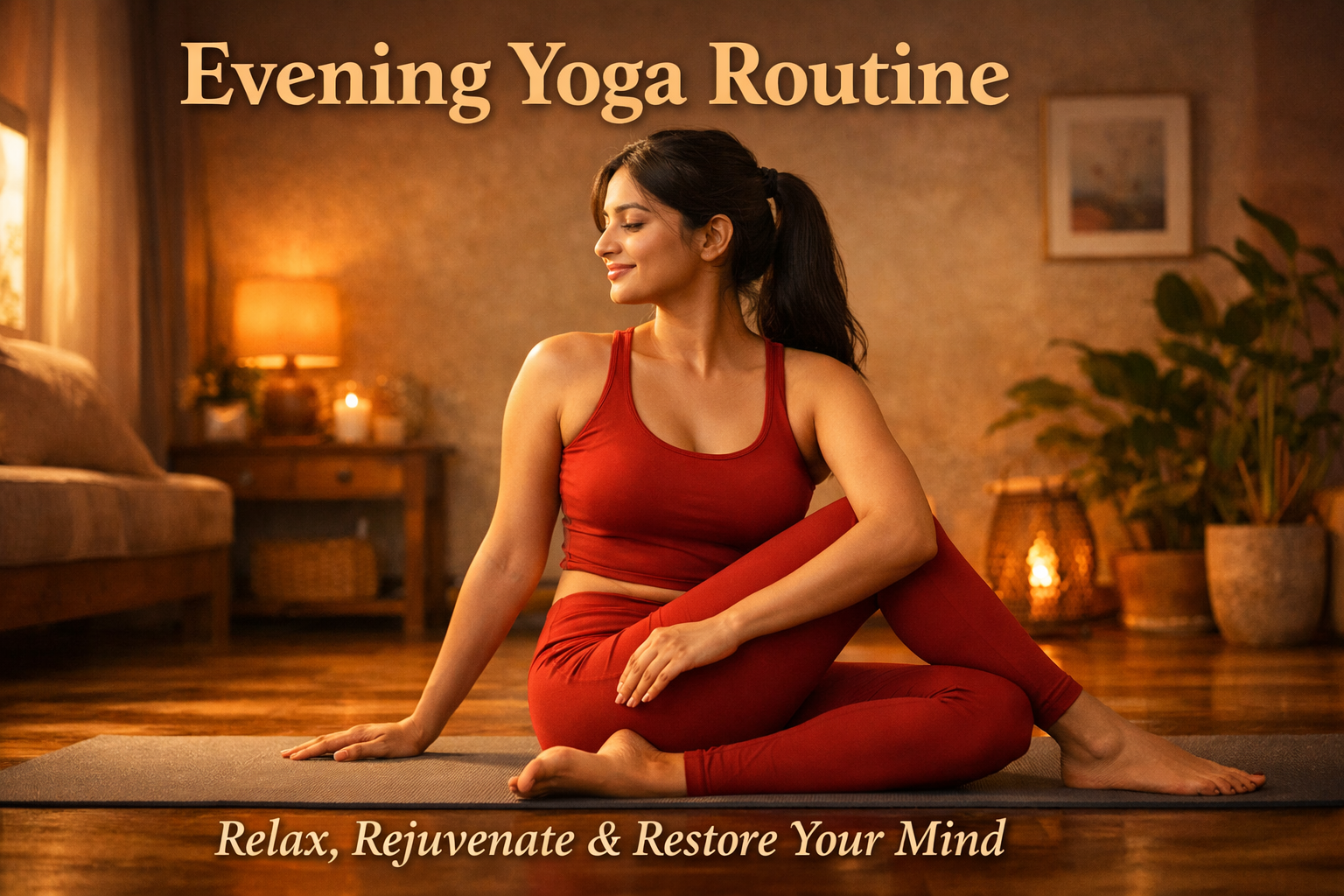
Life today moves at a fast pace. From long working hours to constant screen exposure, the body and mind remain active for most of the day. By evening, many people feel tired, mentally drained, and physically stiff. This is where an evening yoga routine becomes extremely valuable.
Evening yoga is not about intense movement or pushing the body to its limits. Instead, it focuses on slow stretching, controlled breathing, and gentle relaxation. These simple movements help release tension that builds up throughout the day. Over time, this habit supports better sleep, improved flexibility, and emotional balance.
If you are already following a daily yoga routine for beginners, adding an evening session can enhance your overall wellness. It helps the body shift from an active state to a relaxed state, preparing you for restful sleep.
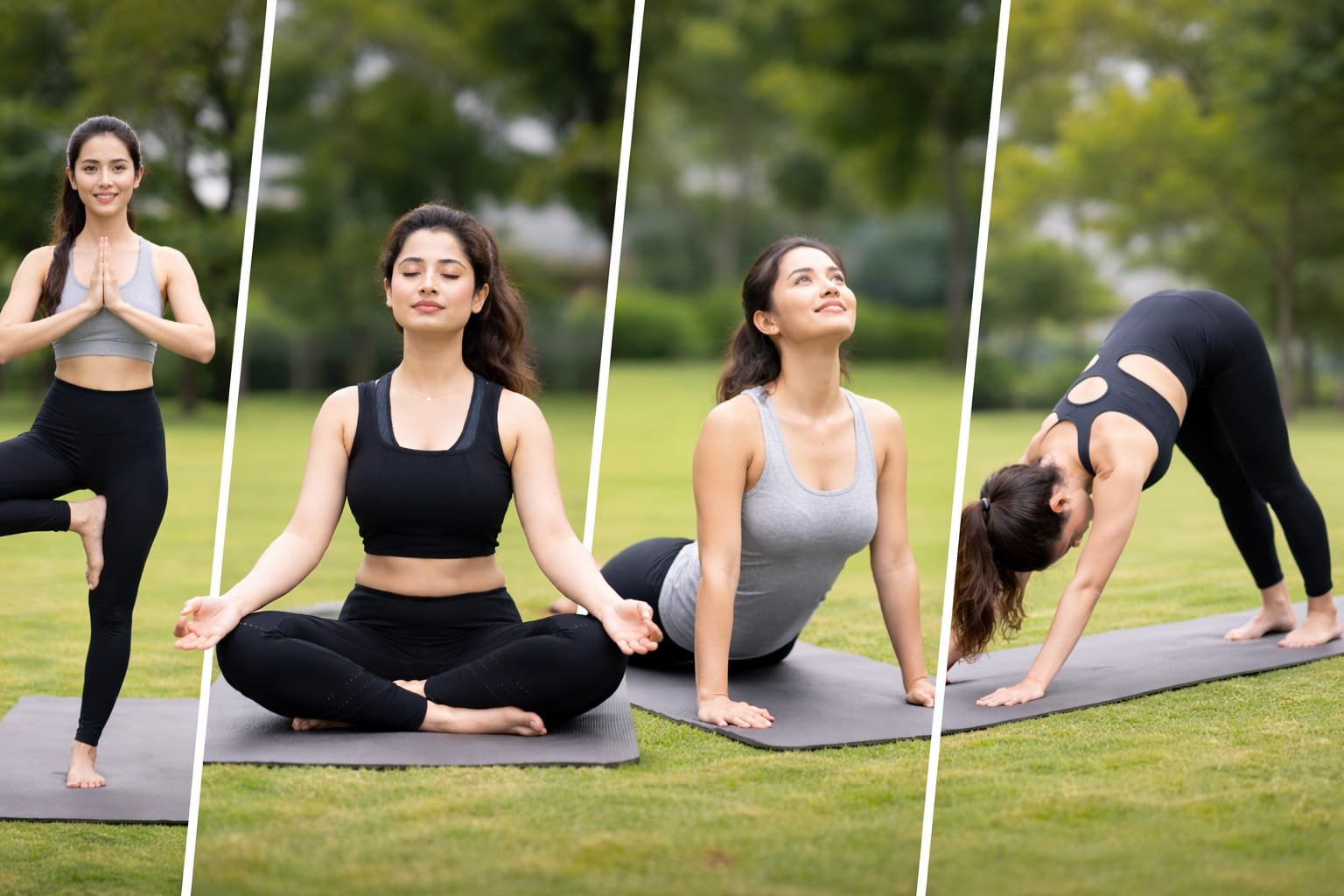
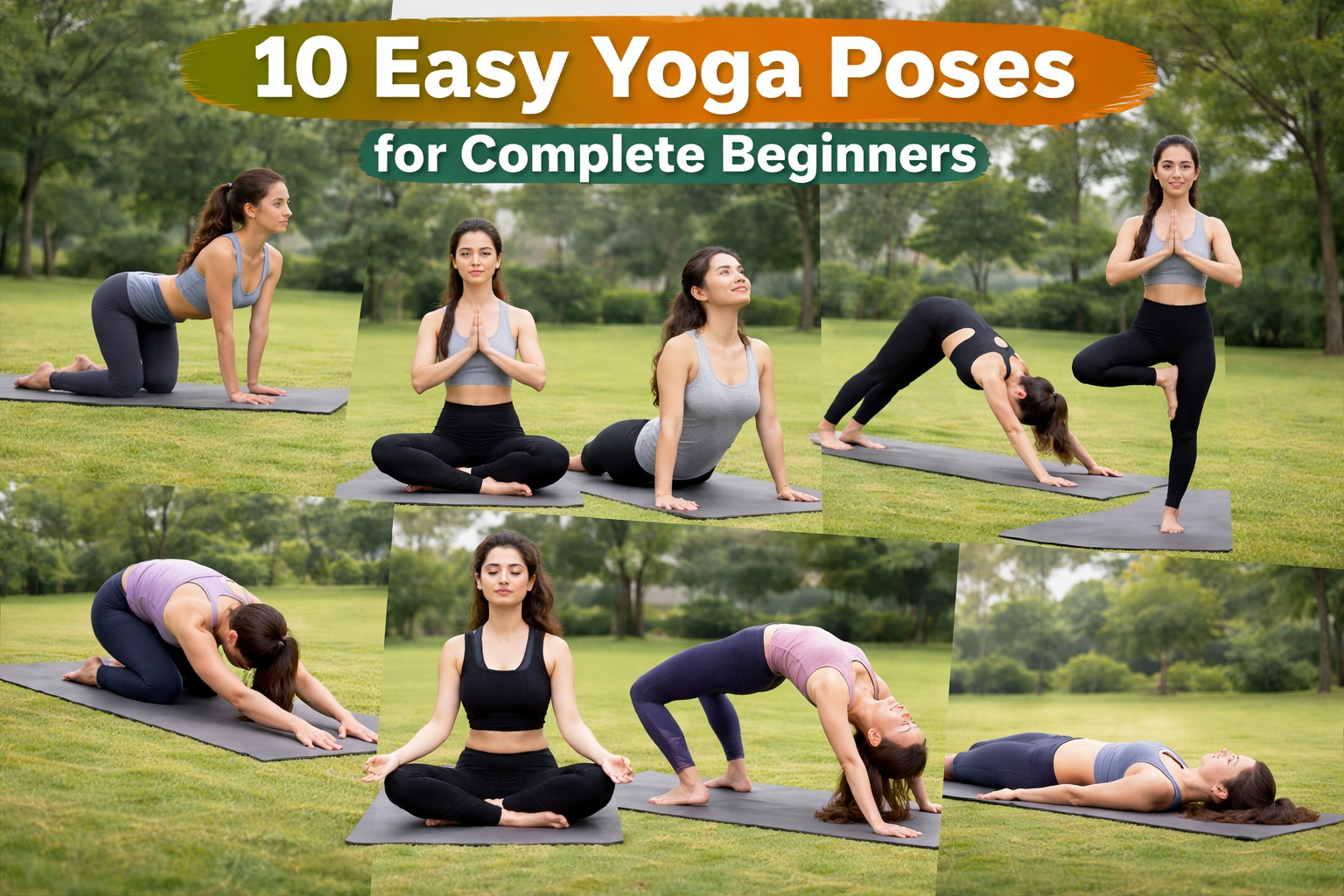
Even those who are new to yoga can begin easily. Many beginners start with simple postures that are explained in easy yoga poses for beginners. Evening yoga complements those practices by focusing more on relaxation than energy-building.
Why Evening Yoga Matters in Modern Lifestyle
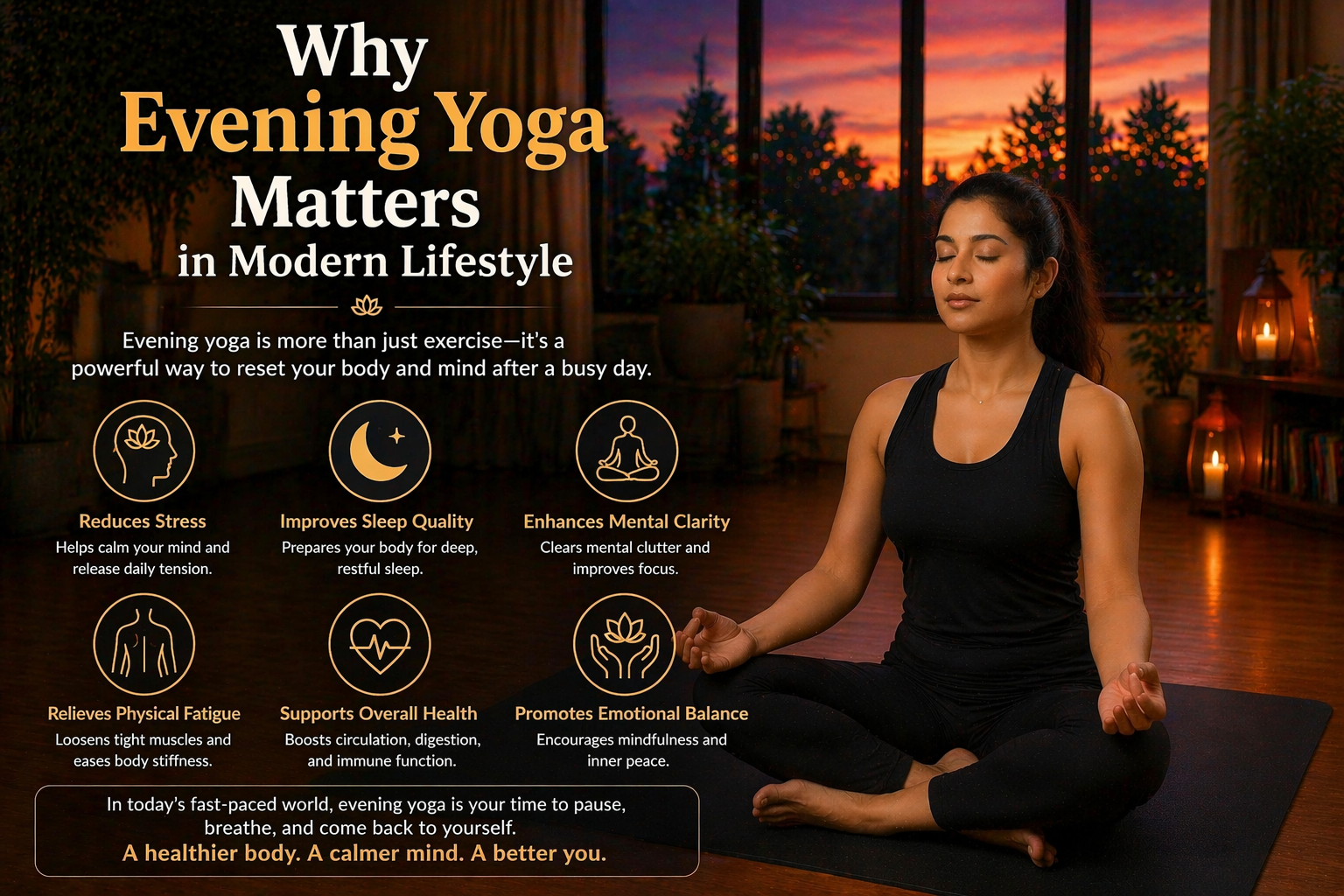
Modern routines often involve long periods of sitting, limited physical activity, and continuous mental pressure. Over time, these habits create tight muscles, poor posture, and mental fatigue. Practicing yoga in the evening helps reverse these effects in a natural way.
During the day, stress hormones remain active as the body handles responsibilities and challenges. Gentle yoga movements in the evening help calm the nervous system and promote relaxation. According to widely accepted wellness research shared by organizations like World Health Organization physical activity guidelines, regular movement supports both mental and physical health.
Evening yoga also helps people disconnect from daily distractions. Instead of carrying stress into the night, the body learns to release tension before bedtime. This leads to improved mood, better posture, and reduced fatigue.
Top Benefits of Practicing Yoga in the Evening
Practicing yoga in the evening provides a wide range of benefits that improve daily comfort and long-term health. These benefits appear gradually, especially when yoga becomes a consistent habit.
- Reduces Stress Levels: Gentle stretches help release tension stored in muscles throughout the day.
- Improves Sleep Quality: Relaxed muscles and calm breathing prepare the body for deeper sleep cycles.
- Enhances Flexibility: Slow stretching increases range of motion and reduces stiffness.
- Supports Mental Calmness: Breathing techniques improve focus and reduce overthinking.
- Improves Blood Circulation: Light movements enhance oxygen flow to muscles and tissues.
- Relieves Back and Neck Tension: Especially useful for people who sit for long hours.
- Balances Energy Levels: Helps transition from work mode to relaxation mode.
If you experience tension in your spine or lower back, combining this routine with guidance from yoga for back pain relief at home can offer additional support.
How Evening Yoga Supports Better Sleep
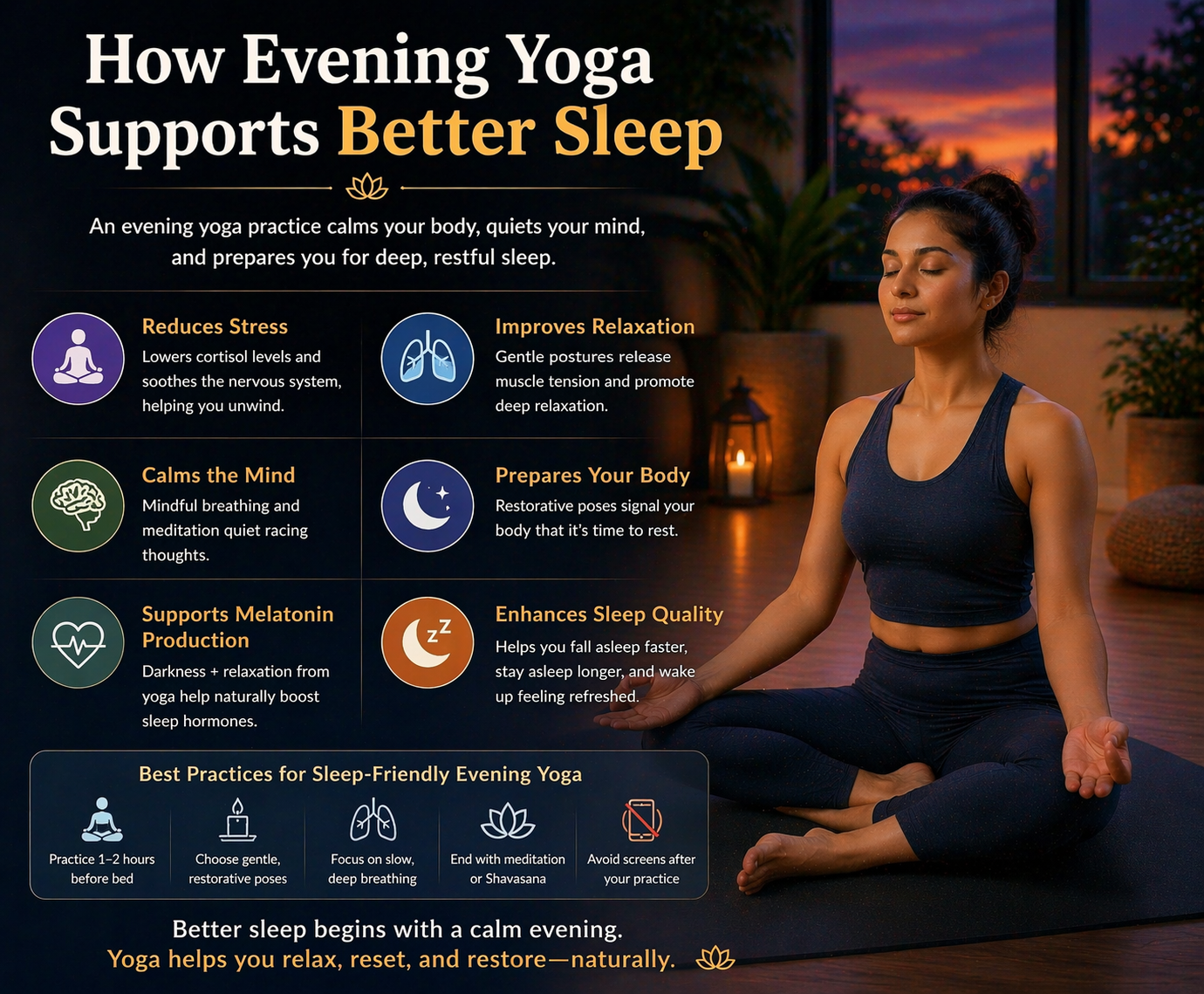
Sleep problems often begin with an overactive mind. When stress remains unresolved, the body struggles to relax at night. Evening yoga encourages deep breathing and muscle relaxation, which are essential for restful sleep.
Slow movements signal the brain that it is time to unwind. This reduces restlessness and promotes natural sleep readiness. People who regularly practice evening yoga often notice fewer sleep disturbances and better morning energy.
If you already practice morning yoga routines, adding an evening session creates a balanced cycle of energy and relaxation.
Best Time to Practice Evening Yoga
The ideal time to practice evening yoga usually falls between 6:00 PM and 8:30 PM. This timing allows the body to release daily tension before bedtime.
However, the exact time depends on individual schedules. Some people prefer practicing after returning home from work, while others choose a short session before dinner.
Here are some practical timing tips:
- Maintain at least 2–3 hours gap after meals
- Choose a quiet environment with minimal distractions
- Practice at the same time daily to build consistency
- Start with short sessions of 10–15 minutes
- Gradually increase session length as comfort improves
Consistency matters more than duration. Even a short daily practice produces noticeable results when maintained regularly.
Preparing Your Space for Evening Yoga
Creating the right environment improves the overall yoga experience. A calm space encourages focus and relaxation, making the session more effective.
You do not need a large room or expensive equipment. A small area with comfortable flooring and soft lighting is enough.
Here are simple ways to prepare your yoga space:
- Use a non-slip yoga mat for comfort and safety
- Keep the room well-ventilated
- Reduce bright lighting and use warm light if possible
- Add indoor plants for a calming atmosphere
- Keep your phone on silent mode
Many beginners struggle with setup mistakes, which can reduce the effectiveness of practice. To avoid common errors, reviewing tips shared in yoga mistakes beginners should avoid can be very helpful.
Who Should Practice Evening Yoga
Evening yoga is suitable for people of all experience levels. It is especially beneficial for individuals who experience stress, muscle stiffness, or sleep difficulties.
People who can benefit the most include:
- Office workers who sit for long hours
- Students with heavy study schedules
- Individuals experiencing mild stress
- People with muscle tightness
- Beginners exploring gentle yoga routines
If you are new to yoga and want to understand the foundation first, reading what is yoga complete beginners guide provides a strong starting point.
How Evening Yoga Helps Manage Daily Stress
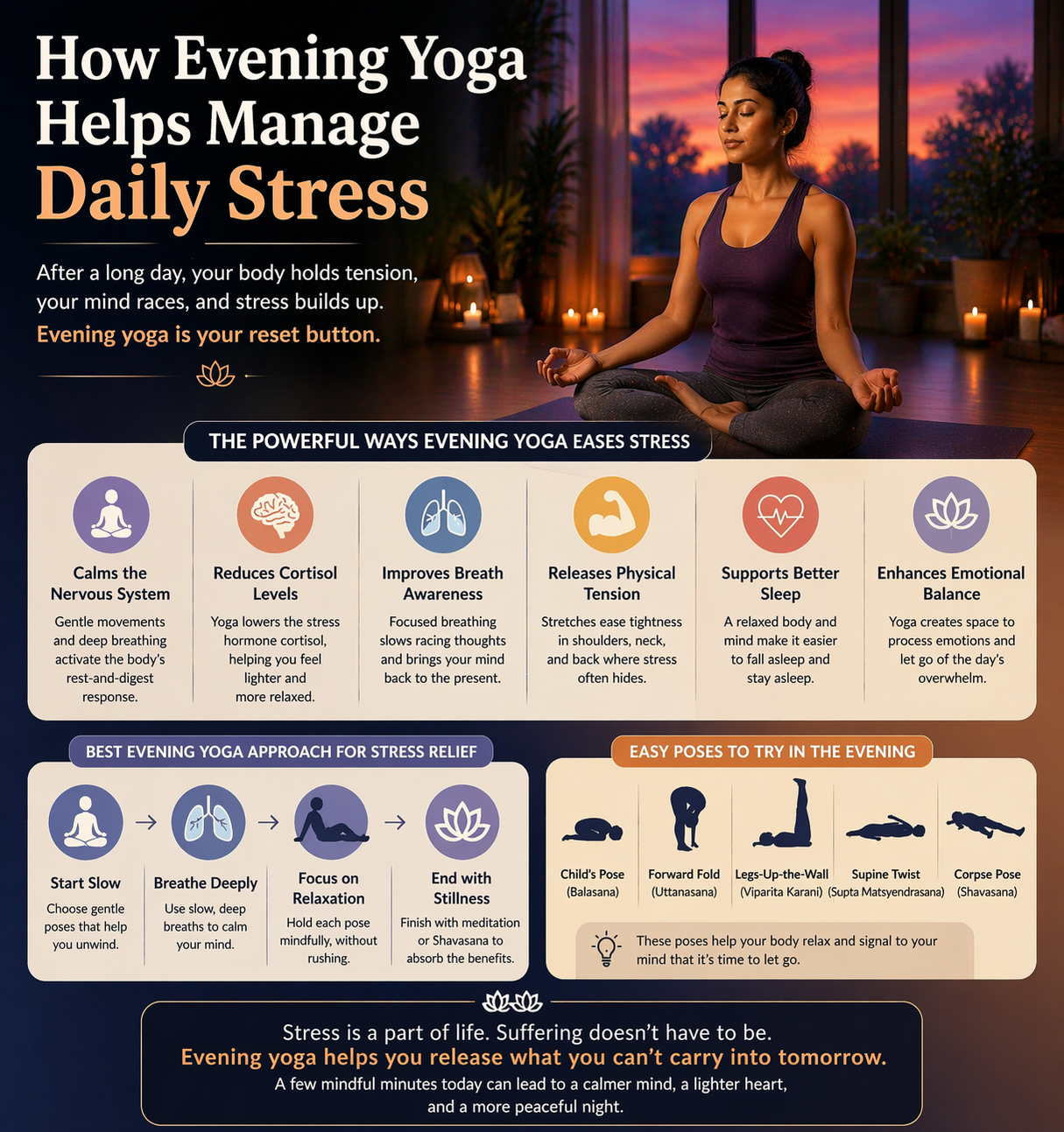
Stress affects both mental and physical health. When stress builds up daily, it can lead to headaches, fatigue, and poor concentration. Evening yoga creates a structured way to release tension before it becomes overwhelming.
Simple breathing patterns calm the nervous system and reduce stress signals. Gentle stretches allow tight muscles to relax, reducing physical discomfort.
For individuals specifically dealing with stress-related tension, combining this routine with methods described in yoga for stress relief techniques can significantly improve outcomes.
Transitioning from Daytime Activity to Night Relaxation
The evening is a natural transition period between activity and rest. Without proper relaxation, the body may carry daytime tension into sleep hours.
Evening yoga acts as a bridge between these two states. It gradually slows breathing, reduces muscle tension, and signals the body to prepare for rest.
This transition is essential for maintaining long-term health and emotional balance. Over time, the body learns to relax faster, making sleep more natural and refreshing.
Step-by-Step Evening Yoga Routine for Deep Relaxation
Once your space is ready and your mind is calm, it is time to begin the actual evening yoga routine. This section focuses on slow, mindful movements designed to release tension stored in muscles throughout the day.
Unlike high-intensity workouts, evening yoga emphasizes comfort and relaxation. Each posture should be performed slowly, allowing the body to adjust naturally. If you are already familiar with foundational movements from daily yoga routines for beginners, this evening sequence will feel smooth and easy to follow.
Step 1: Sukhasana (Easy Pose) – Begin with Mindful Sitting
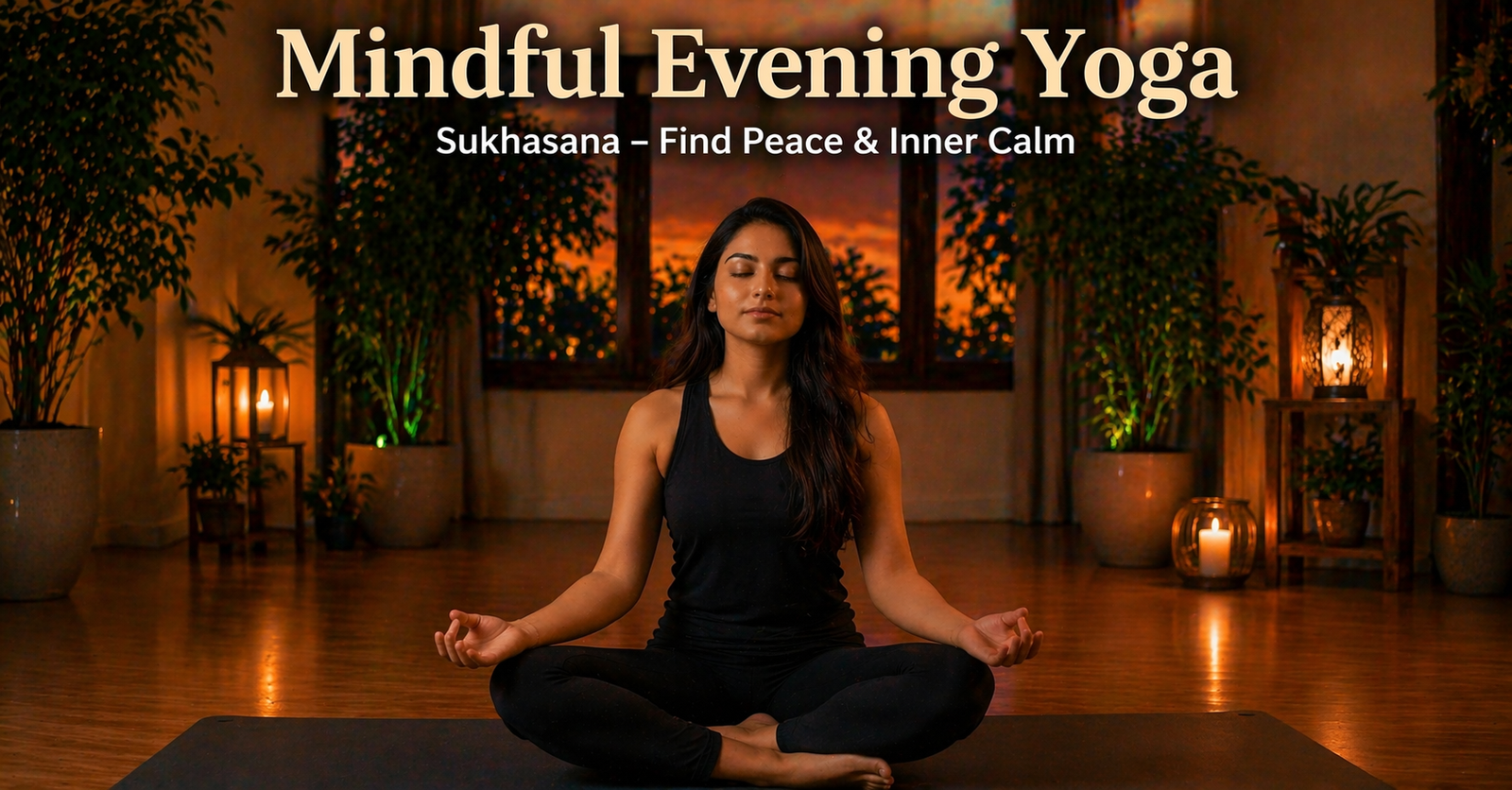
Sukhasana is the starting posture for most relaxing yoga sessions. It allows the body to settle and prepares the mind for focused movement. Sit cross-legged on your yoga mat and keep your spine upright but relaxed.
Rest your hands gently on your knees and close your eyes. Take slow, deep breaths through your nose. Allow your shoulders to relax and release tension from your jaw and neck.
This simple position encourages mindfulness and helps shift attention away from daily stress. Spending two to three minutes in Sukhasana sets a calm foundation for the rest of your practice.
Step 2: Neck Stretch – Release Built-Up Neck Tension
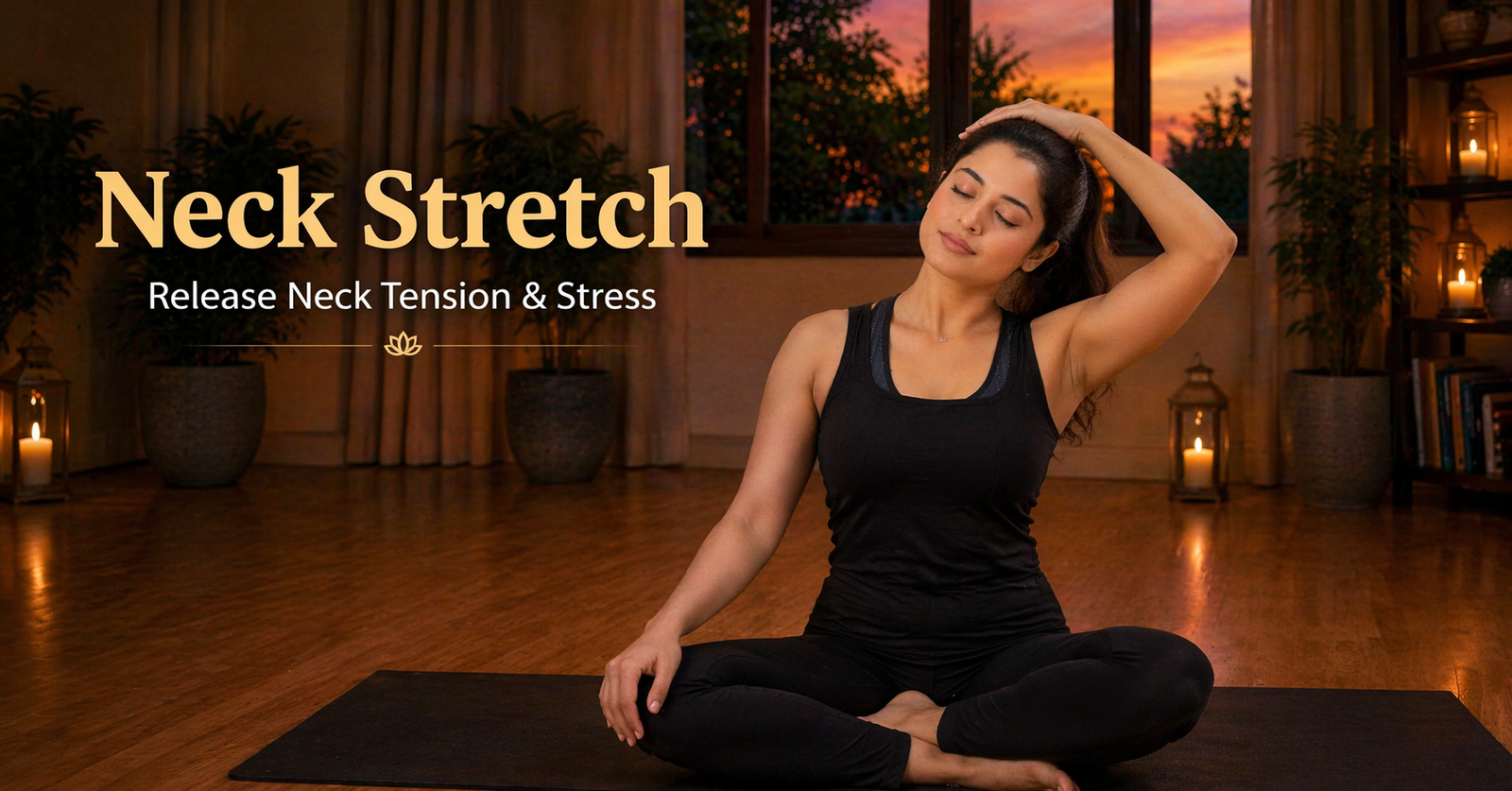
Neck stiffness is one of the most common discomforts caused by long hours of screen usage. Gentle neck stretches help release tight muscles and improve mobility.
Slowly tilt your head toward your right shoulder without forcing the movement. Hold for a few seconds, then return to the center. Repeat the same movement toward the left side.
Next, rotate your head slowly in a circular motion. Keep movements smooth and controlled. Avoid sudden or fast movements, as they may strain the muscles.
These stretches improve blood circulation in the neck region and reduce discomfort caused by poor posture.
Step 3: Shoulder Rolls – Relax Upper Body Muscles
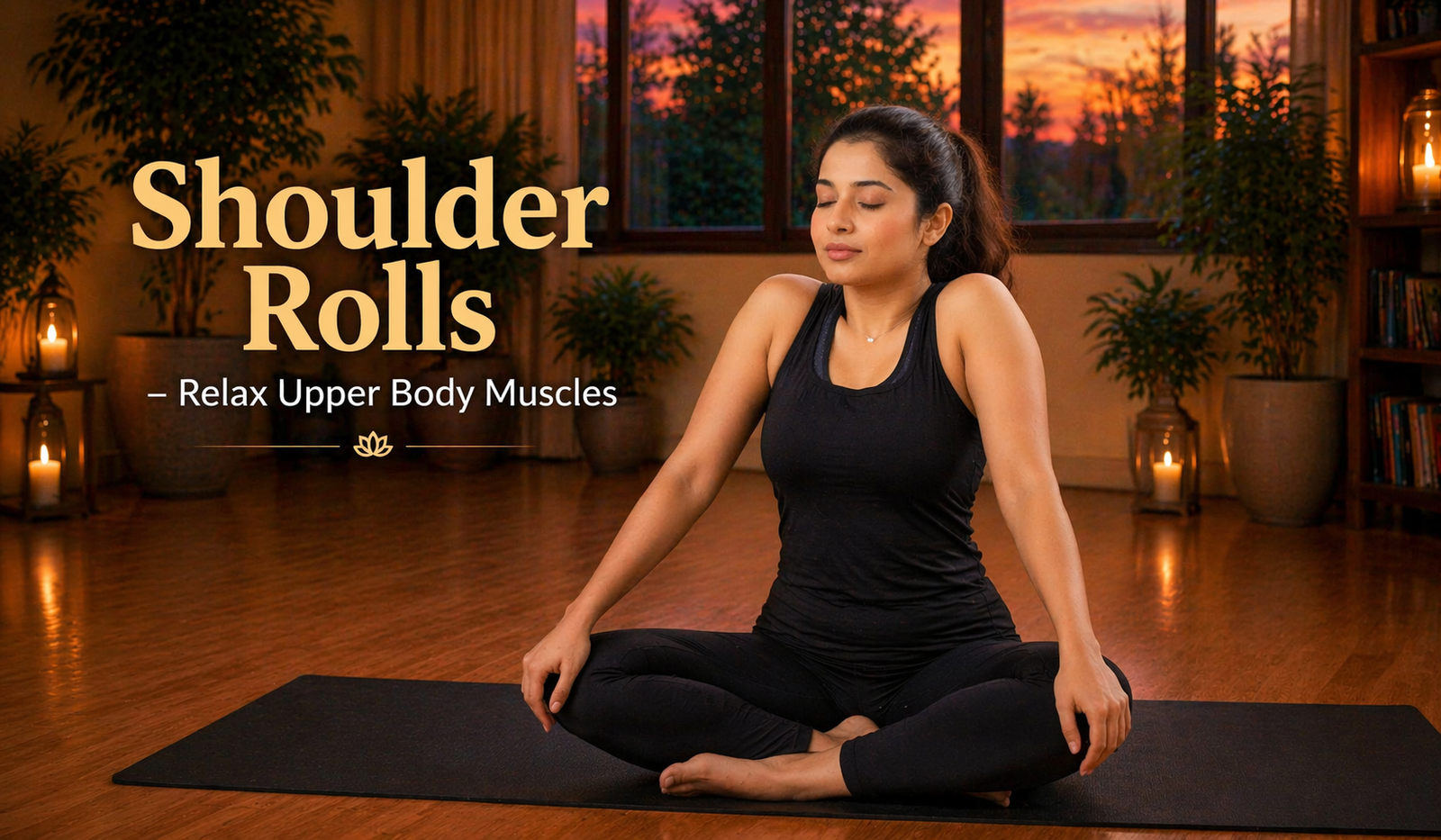
Shoulders often carry stress without us realizing it. Shoulder rolls are a simple yet powerful way to reduce tension and improve upper body comfort.
Lift your shoulders slightly toward your ears, then roll them backward in a circular motion. Repeat this movement slowly for several rounds.
After rolling backward, reverse the direction and roll your shoulders forward. Focus on maintaining smooth breathing during each movement.
This exercise improves posture and reduces stiffness caused by daily activities such as typing, driving, or carrying heavy bags.
Step 4: Cat-Cow Stretch – Improve Spine Flexibility
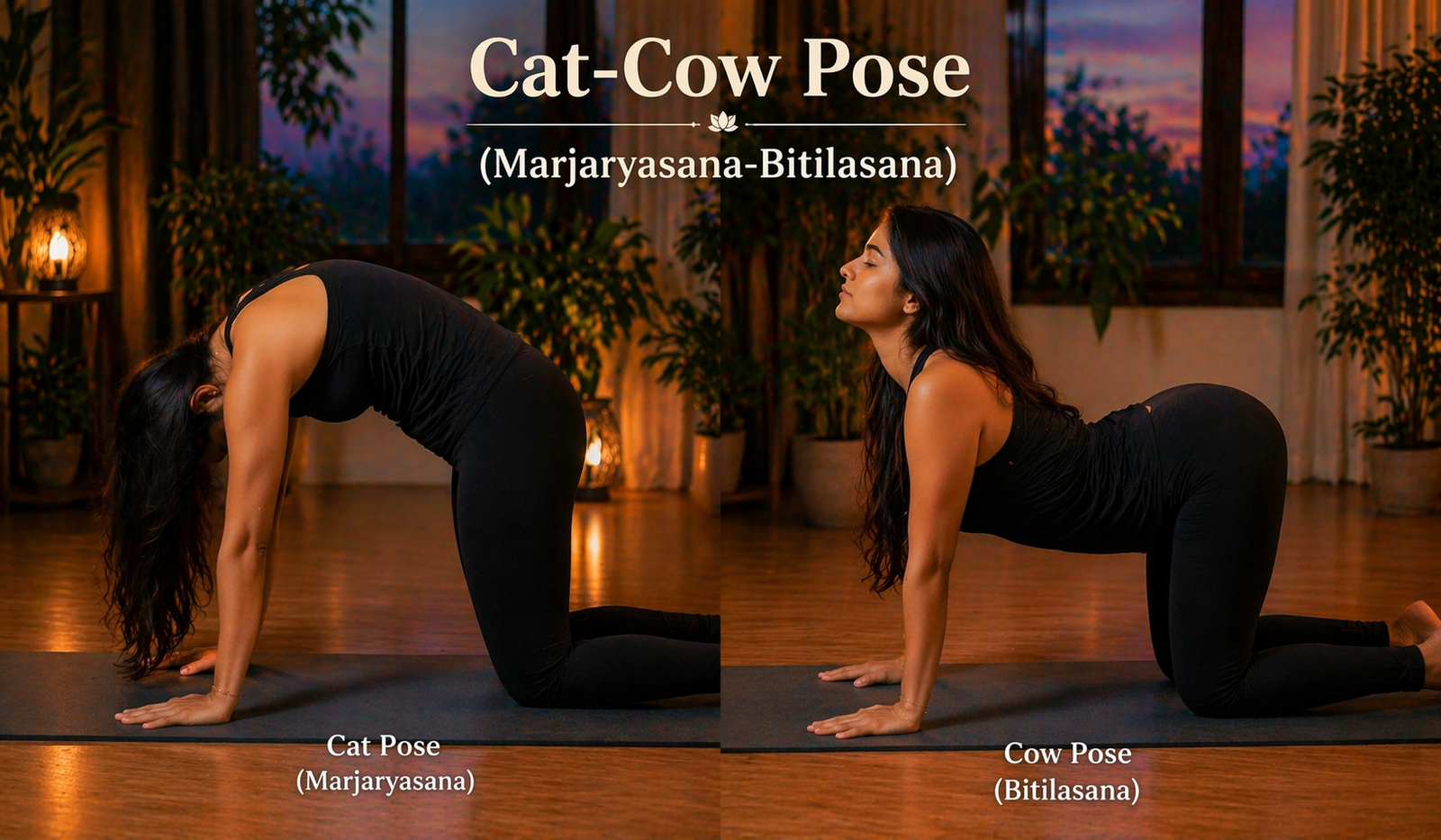
The Cat-Cow stretch is widely known for improving spinal mobility and relieving back tension. Move into a tabletop position with your hands placed under your shoulders and knees under your hips.
As you inhale, gently drop your belly toward the mat and lift your head slightly. This is the Cow position.
As you exhale, round your back upward and tuck your chin toward your chest. This is the Cat position.
Continue alternating between these two positions slowly. Match each movement with your breathing. This rhythm helps the spine move naturally and reduces stiffness accumulated during long sitting hours.
If you experience mild discomfort in the lower back, this movement complements techniques shared in yoga for back pain relief at home.
Step 5: Child’s Pose (Balasana) – Deep Relaxation Posture
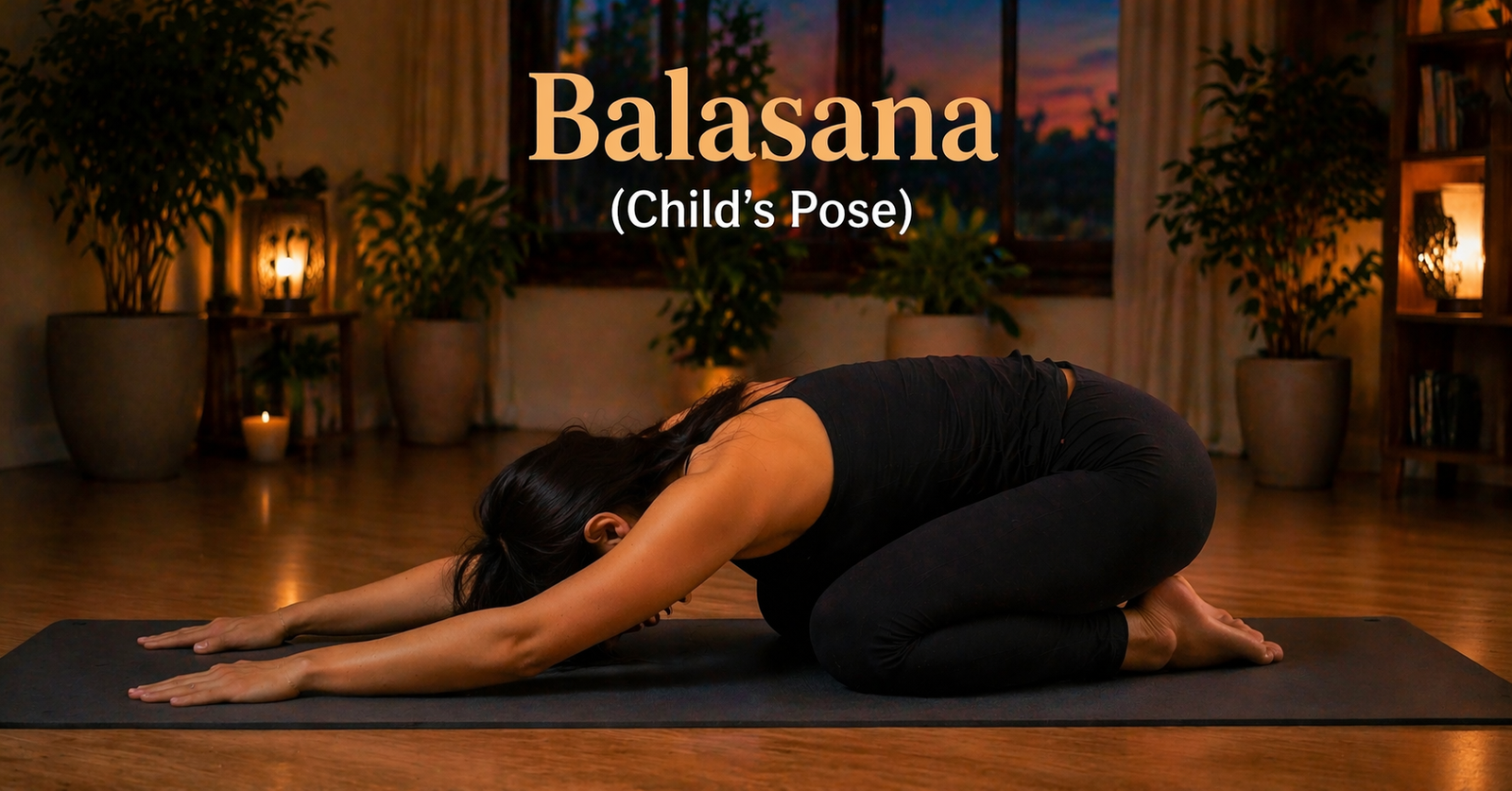
Child’s Pose is one of the most relaxing positions in yoga. It gently stretches the back, hips, and shoulders while encouraging calm breathing.
Lower your hips toward your heels and stretch your arms forward. Rest your forehead on the mat and allow your body to relax completely.
Take slow breaths and feel the gentle stretch along your spine. Stay in this posture for several breaths, allowing tension to melt away.
This pose is especially helpful after long working hours, as it relieves pressure from the lower back and shoulders.
Step 6: Seated Forward Bend – Stretch Lower Body Muscles
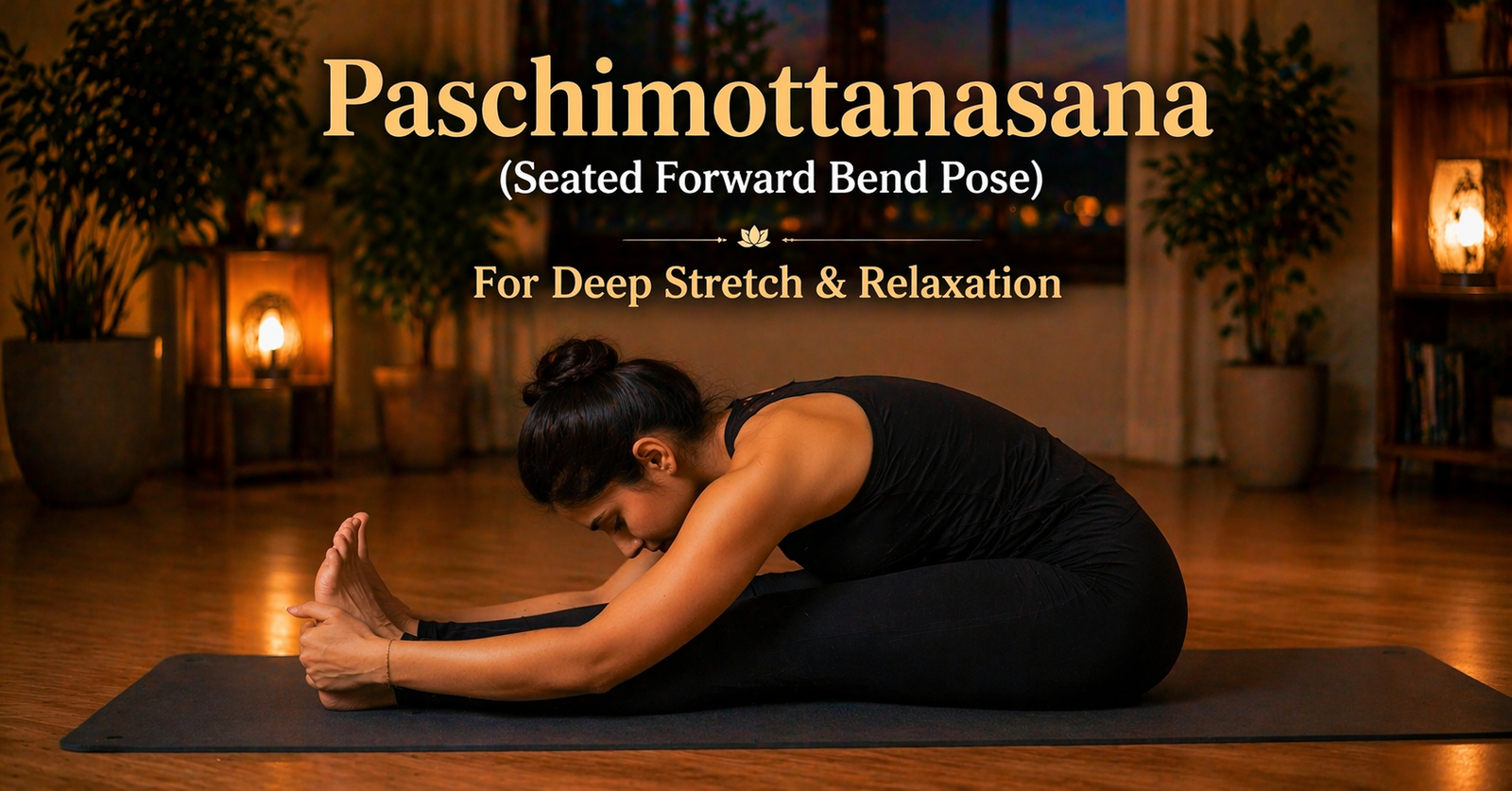
The Seated Forward Bend stretches the hamstrings, calves, and lower back. Sit with your legs extended in front of you and keep your spine straight.
Slowly bend forward from your hips, reaching toward your toes. Do not force your body to touch the feet if flexibility is limited.
Instead, focus on maintaining a comfortable stretch. With regular practice, flexibility naturally improves over time.
This movement reduces stiffness in the lower body and improves posture alignment.
Step 7: Supine Twist – Release Spinal Tension
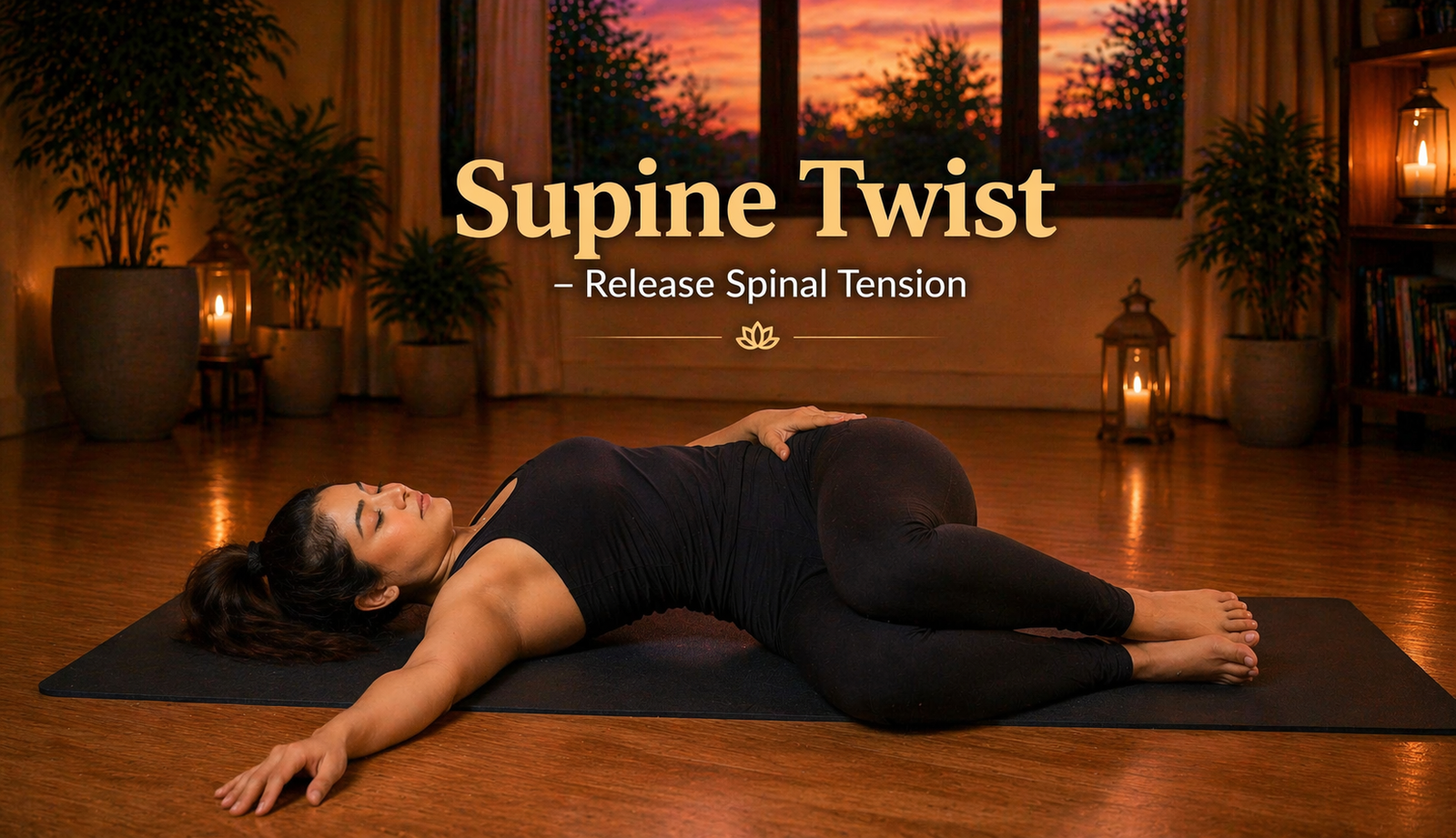
The Supine Twist helps release tension along the spine and improves flexibility. Lie on your back and bend one knee toward your chest.
Slowly guide the bent knee across your body toward the opposite side. Extend your opposite arm outward for balance.
Turn your head gently in the opposite direction and breathe slowly. Repeat on both sides to maintain balance.
This pose supports spinal health and helps relieve tightness caused by prolonged sitting.
Step 8: Legs Up the Wall – Improve Circulation
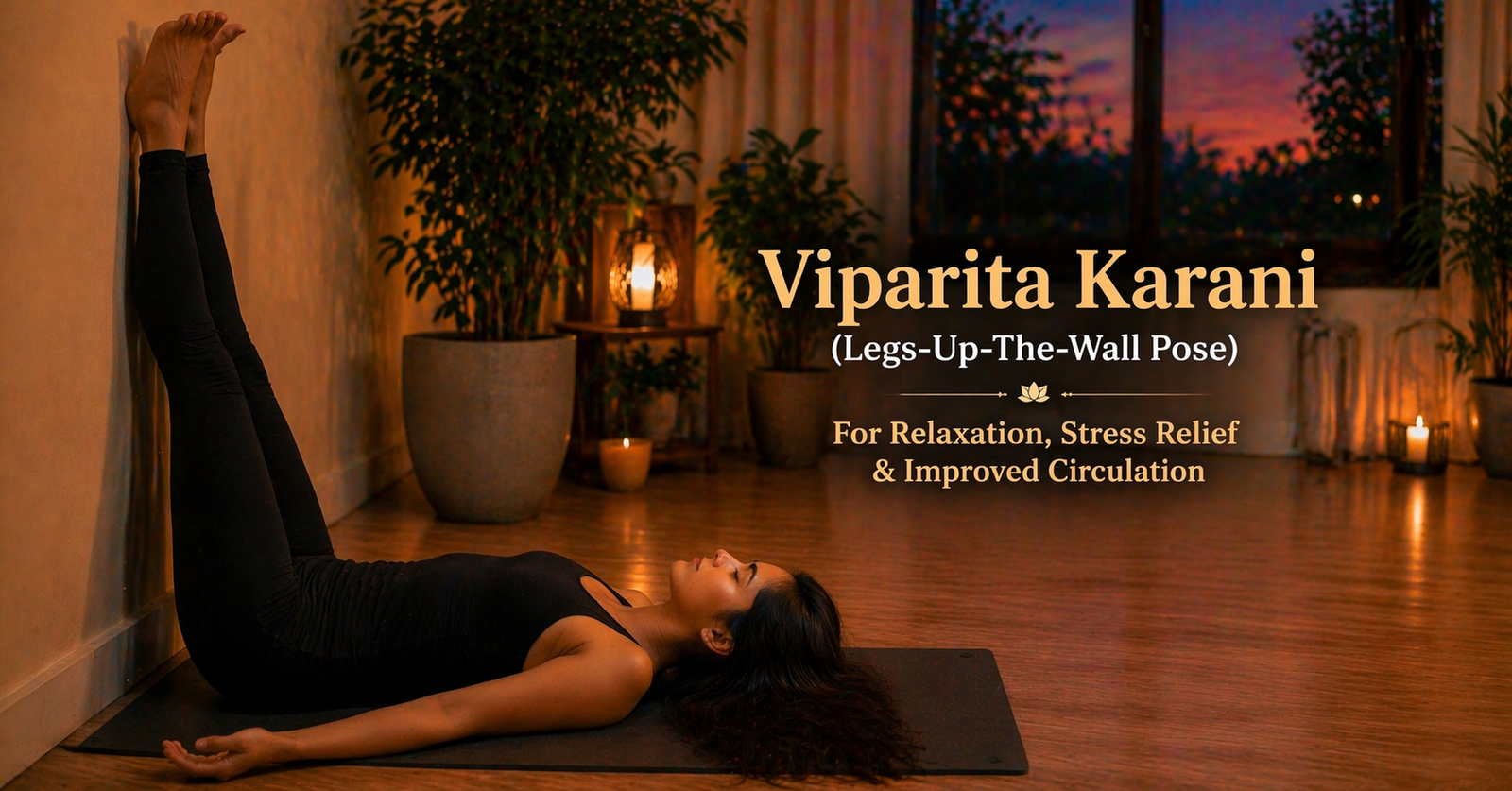
Legs Up the Wall is a deeply relaxing posture that improves circulation and reduces fatigue in the legs. Sit close to a wall and gently raise your legs upward, resting them against the surface.
Keep your arms relaxed at your sides and close your eyes. Focus on slow breathing while allowing gravity to support your legs.
This position helps reduce swelling in the feet and promotes relaxation after standing or walking throughout the day.
Step 9: Gentle Hip Stretch – Improve Flexibility
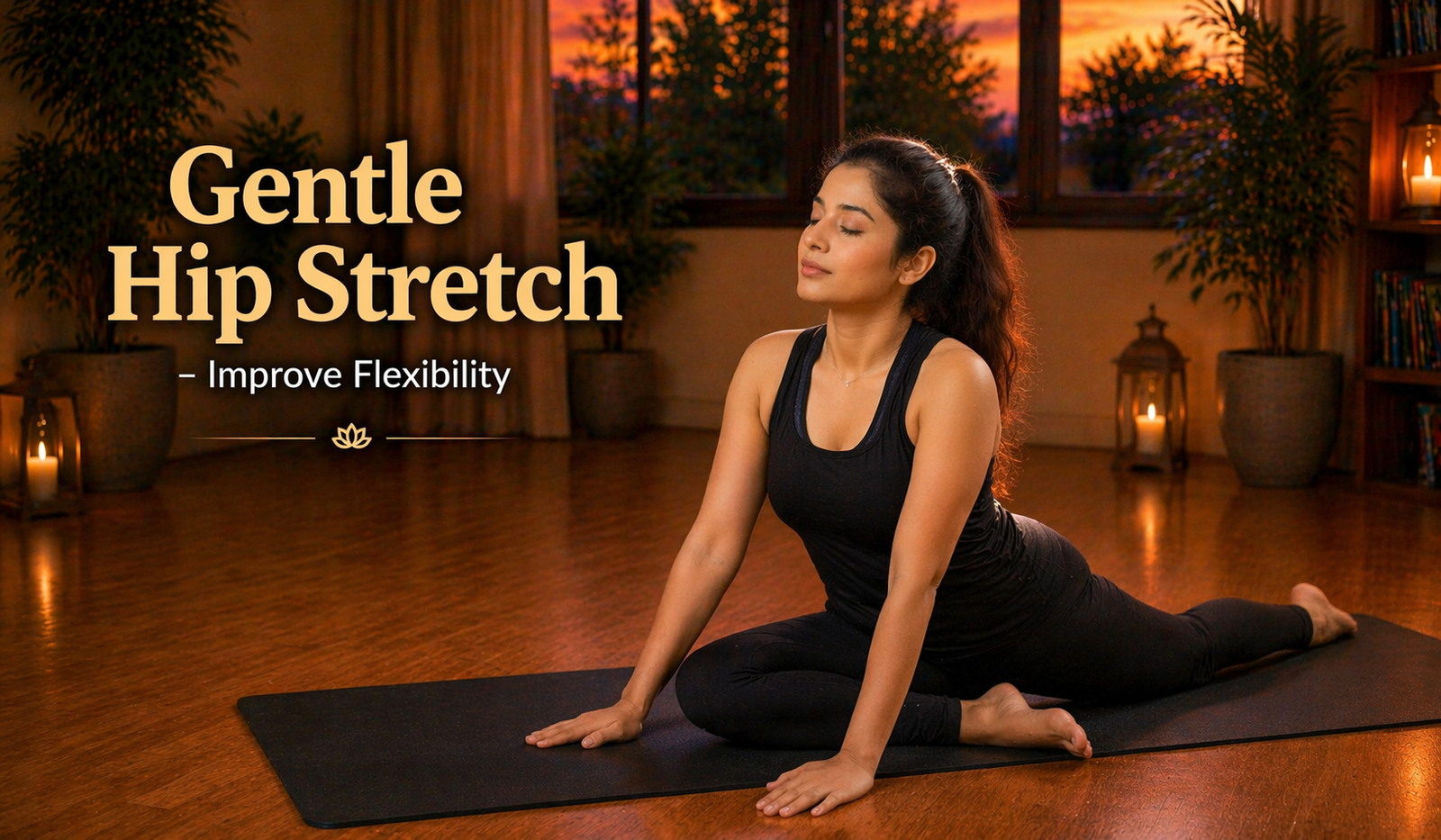
Hip muscles often become tight due to sitting for long periods. Gentle hip stretches improve flexibility and reduce discomfort.
Bring one ankle over the opposite knee and lean slightly forward. Maintain a steady breath while holding the position.
Repeat the stretch on the opposite side to ensure balanced flexibility.
Step 10: Shavasana (Final Relaxation Pose)
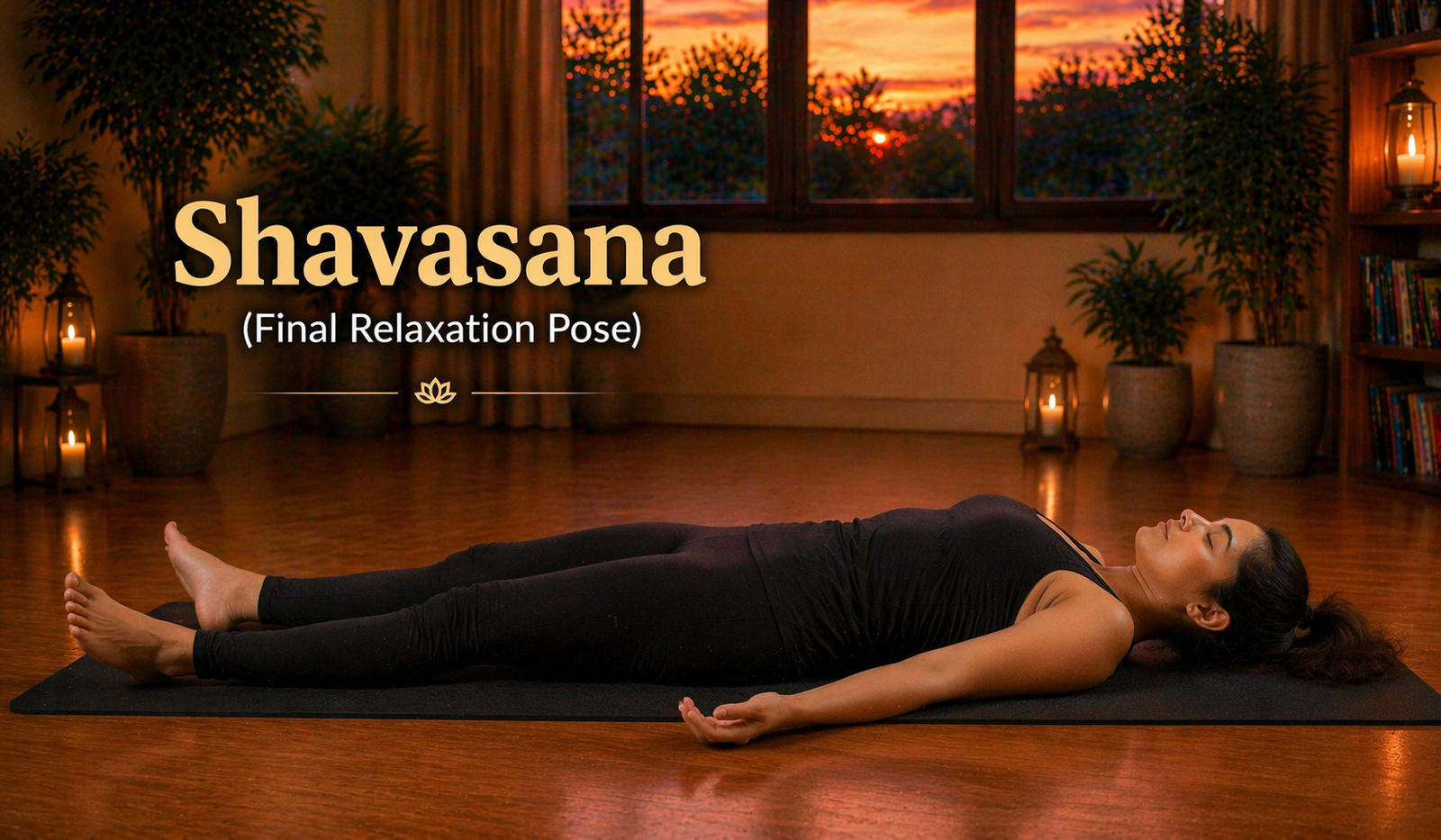
Shavasana is the final and most important relaxation posture. Lie flat on your back with arms resting comfortably by your sides.
Close your eyes and allow your entire body to relax. Let your breathing become natural and effortless.
This posture allows the body to absorb the benefits of all previous movements. Stay in Shavasana for at least five minutes.
Many practitioners underestimate the importance of this step, but skipping relaxation is one of the common mistakes discussed in yoga mistakes beginners should avoid.
Simple Breathing Techniques to Enhance Evening Yoga
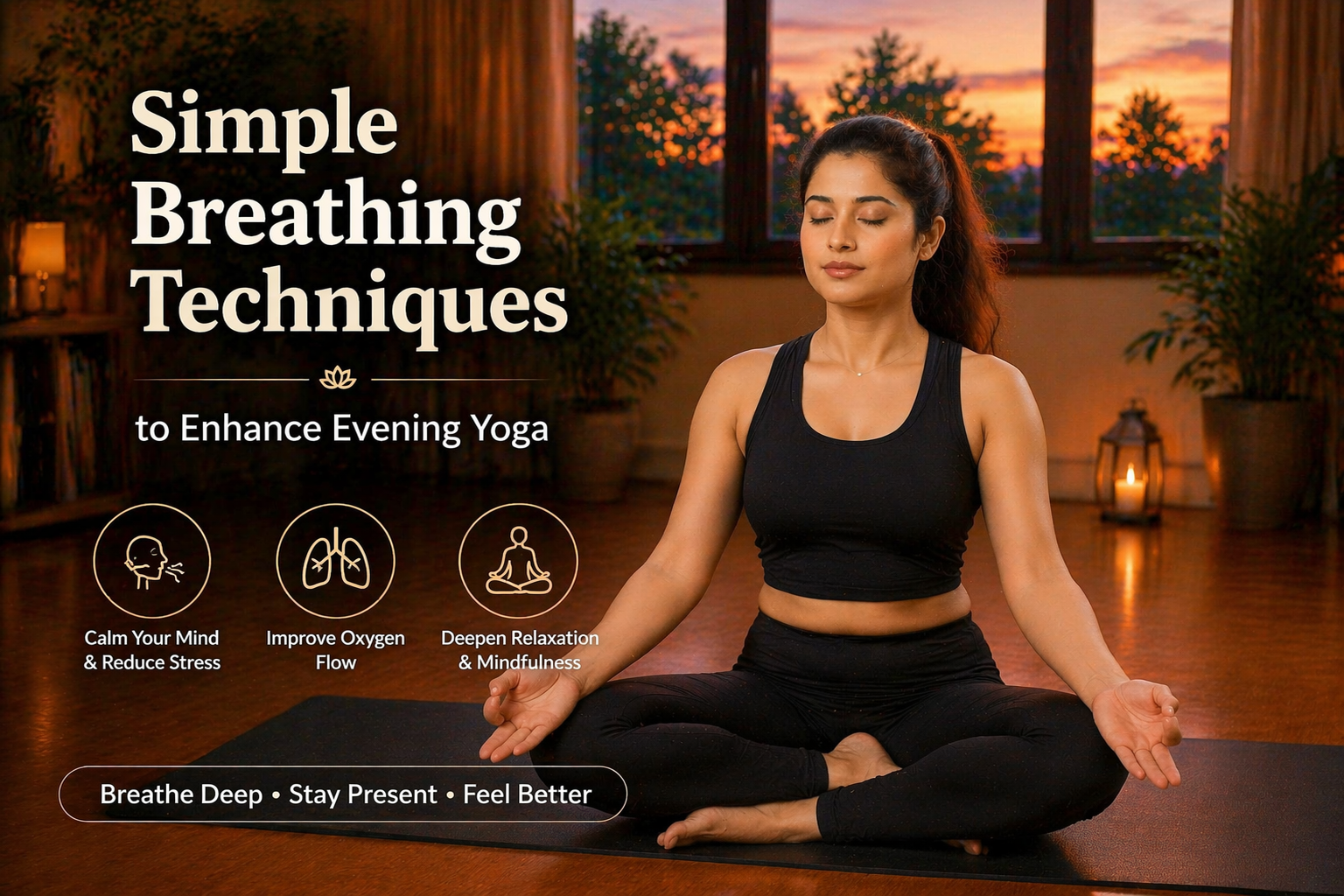
Breathing is one of the most important elements of any yoga routine. While physical postures relax muscles, controlled breathing relaxes the nervous system. When both are combined, the body experiences deeper relaxation and mental clarity.
Evening breathing exercises are especially useful because they help slow down the mind after a busy day. Many people carry mental stress into the night, which can affect sleep quality. Practicing breathing techniques allows the body to release this tension naturally.
If you are exploring different yoga practices, you may also find useful techniques explained in simple yoga techniques for stress relief, which complement evening relaxation routines.
Deep Belly Breathing Technique
Deep belly breathing is one of the easiest methods to calm the body. Sit comfortably in a relaxed posture and place one hand on your abdomen.
Inhale slowly through your nose and allow your belly to expand. Hold the breath gently for a moment, then exhale slowly through your nose. Feel your abdomen move inward as you release the air.
Repeat this process for several minutes. This technique increases oxygen flow and reduces mental tension.
Deep breathing also improves focus and prepares the body for restful sleep. Practicing it daily builds long-term relaxation habits.
Alternate Nostril Breathing (Nadi Shodhana)
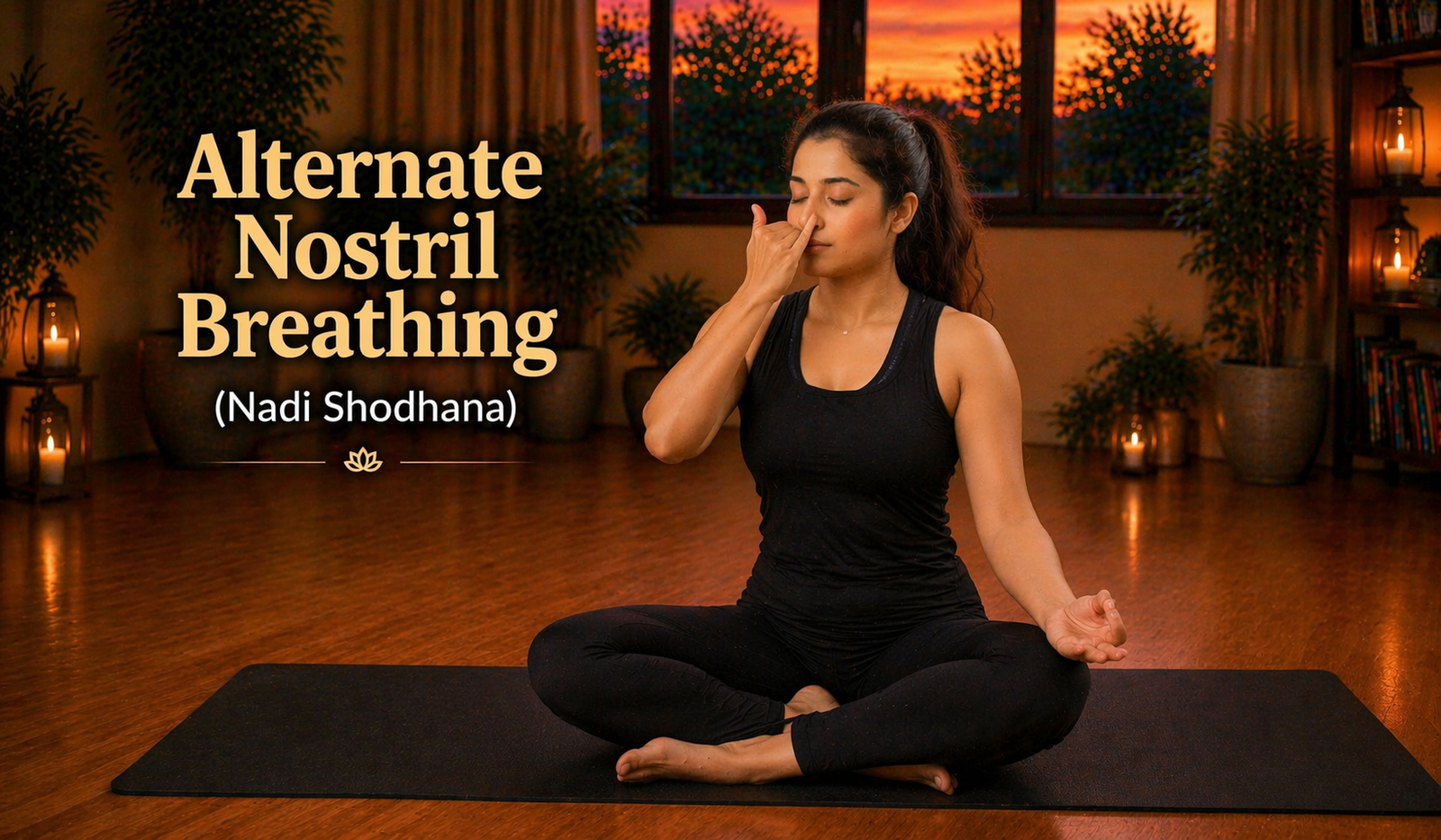
Alternate Nostril Breathing is widely practiced for calming the nervous system. Sit comfortably with your spine straight.
Use your thumb to gently close your right nostril and inhale through the left nostril. Then close the left nostril and exhale through the right. Continue switching sides in a slow rhythm.
This technique balances breathing patterns and promotes mental clarity. It is especially helpful for individuals who feel restless or anxious in the evening.
Evening Meditation for Mental Calmness
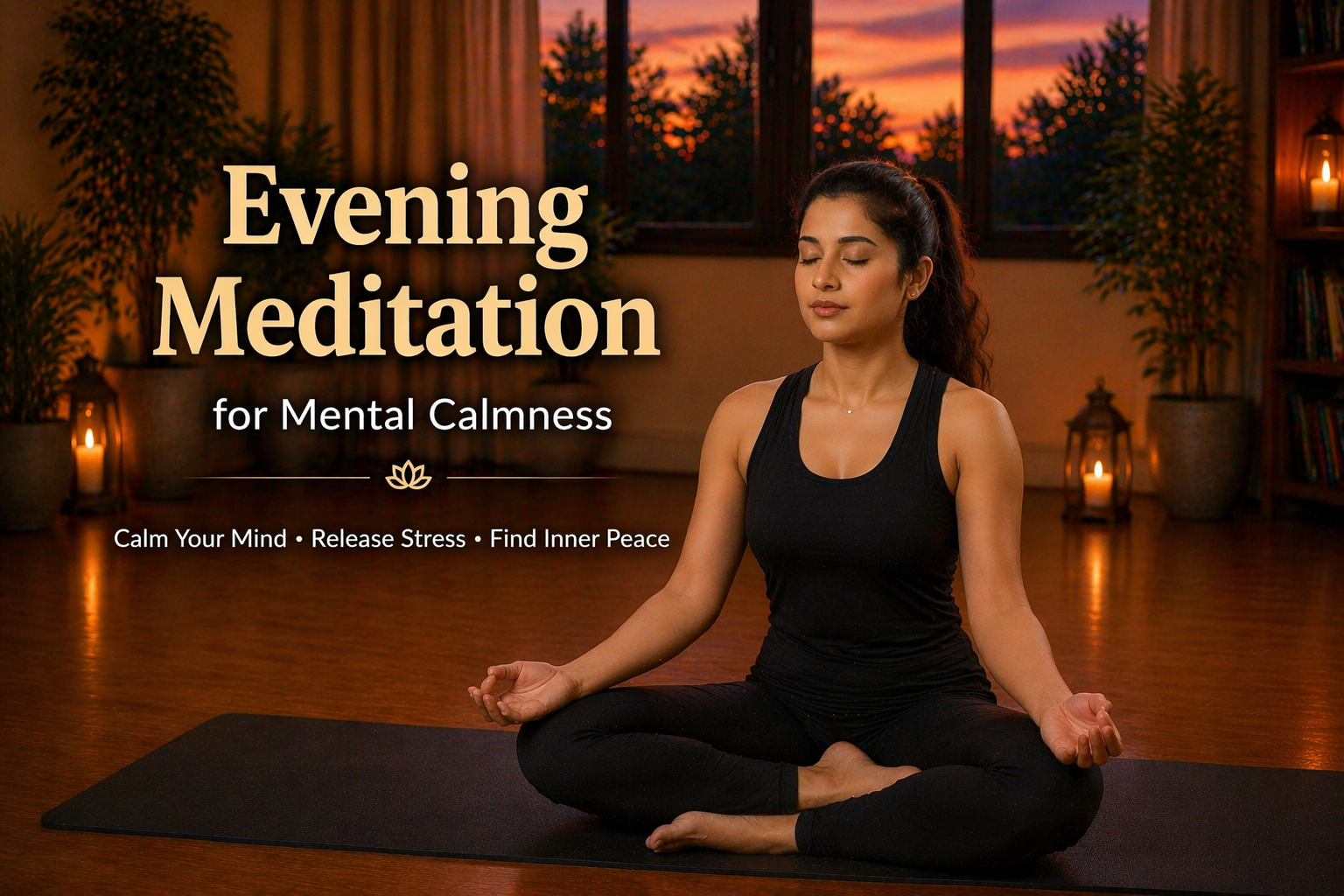
Meditation is a natural extension of evening yoga practice. After completing physical movements and breathing exercises, meditation allows the mind to settle completely.
Even five minutes of meditation can significantly reduce stress levels. Sit quietly and focus on your breath. Allow thoughts to come and go without reacting to them.
Regular meditation builds emotional strength and improves concentration. Many beginners begin meditation after learning the basics from complete beginner yoga guides, which provide a strong foundation for long-term practice.
Common Mistakes to Avoid During Evening Yoga
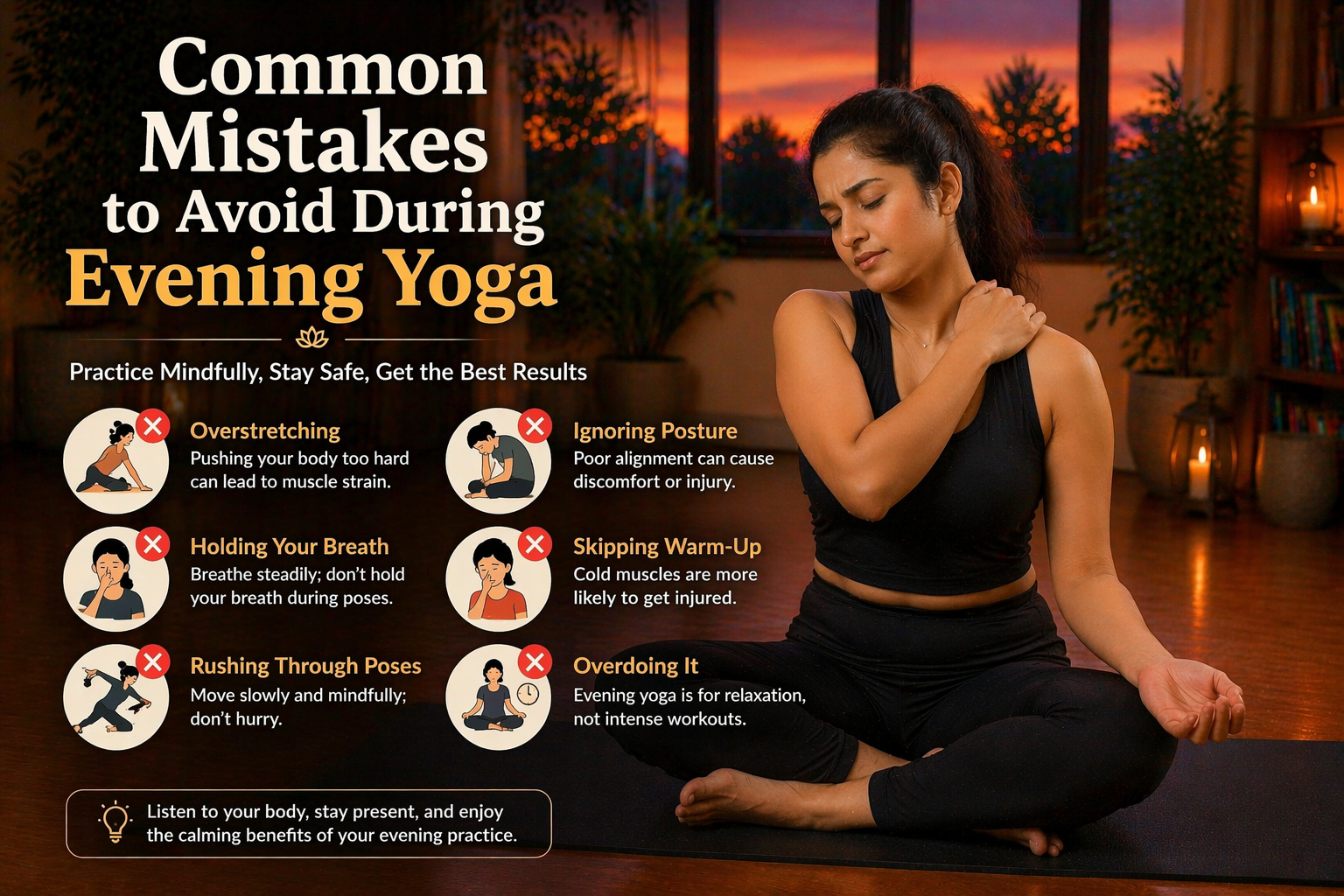
While evening yoga is gentle, mistakes can still reduce its effectiveness. Being aware of common errors helps maintain safety and ensures better results.
- Rushing Through Movements: Yoga should never feel hurried. Slow movements create better muscle relaxation.
- Holding Breath Unnecessarily: Continuous breathing is essential during every posture.
- Ignoring Pain Signals: Discomfort is a sign that the body needs rest or adjustment.
- Skipping Warm-Up or Relaxation: Both preparation and recovery are equally important.
- Practicing on Hard Surfaces: Always use a comfortable yoga mat.
If you want a deeper understanding of posture safety, reviewing guidance shared in beginner yoga mistake prevention tips can be very helpful.
Safety Tips for Practicing Evening Yoga at Home
Safety should always be a priority during yoga practice. While most evening routines are gentle, following basic precautions helps prevent injury and discomfort.
- Wear comfortable clothing that allows easy movement
- Practice in a quiet and well-ventilated space
- Maintain proper posture alignment
- Drink water before and after practice
- Stop immediately if sharp pain occurs
These simple steps ensure that your yoga session remains comfortable and beneficial.
How to Build a Consistent Evening Yoga Habit
Consistency is the key to experiencing long-term benefits of evening yoga. Many people start with enthusiasm but struggle to maintain regular practice.
Building a routine requires discipline and realistic goals. Instead of long sessions, begin with short and manageable durations.
Setting reminders or practicing at the same time each day creates a predictable schedule. Over time, yoga becomes a natural part of daily life.
Combining this routine with guidance from morning yoga routines creates a balanced lifestyle that supports both energy and relaxation.
Lifestyle Habits That Enhance Evening Yoga Results
Yoga works best when supported by healthy daily habits. Small lifestyle adjustments improve the effectiveness of evening routines.
- Avoid heavy meals before practice
- Reduce screen exposure before bedtime
- Maintain regular sleeping hours
- Stay physically active during the day
- Drink enough water throughout the day
These habits create a supportive environment for better physical and mental wellness.
Long-Term Benefits of Practicing Evening Yoga Regularly
With consistent practice, evening yoga produces noticeable long-term improvements. These benefits extend beyond physical flexibility and include mental stability and emotional balance.
People who maintain regular evening yoga routines often report reduced stress levels, improved sleep patterns, and better overall comfort.
Regular stretching also supports muscle recovery and prevents stiffness caused by daily activity.
In addition to flexibility, yoga improves awareness of body movements. This awareness reduces the risk of posture-related discomfort.
Conclusion: Create a Peaceful Ending to Your Day with Evening Yoga
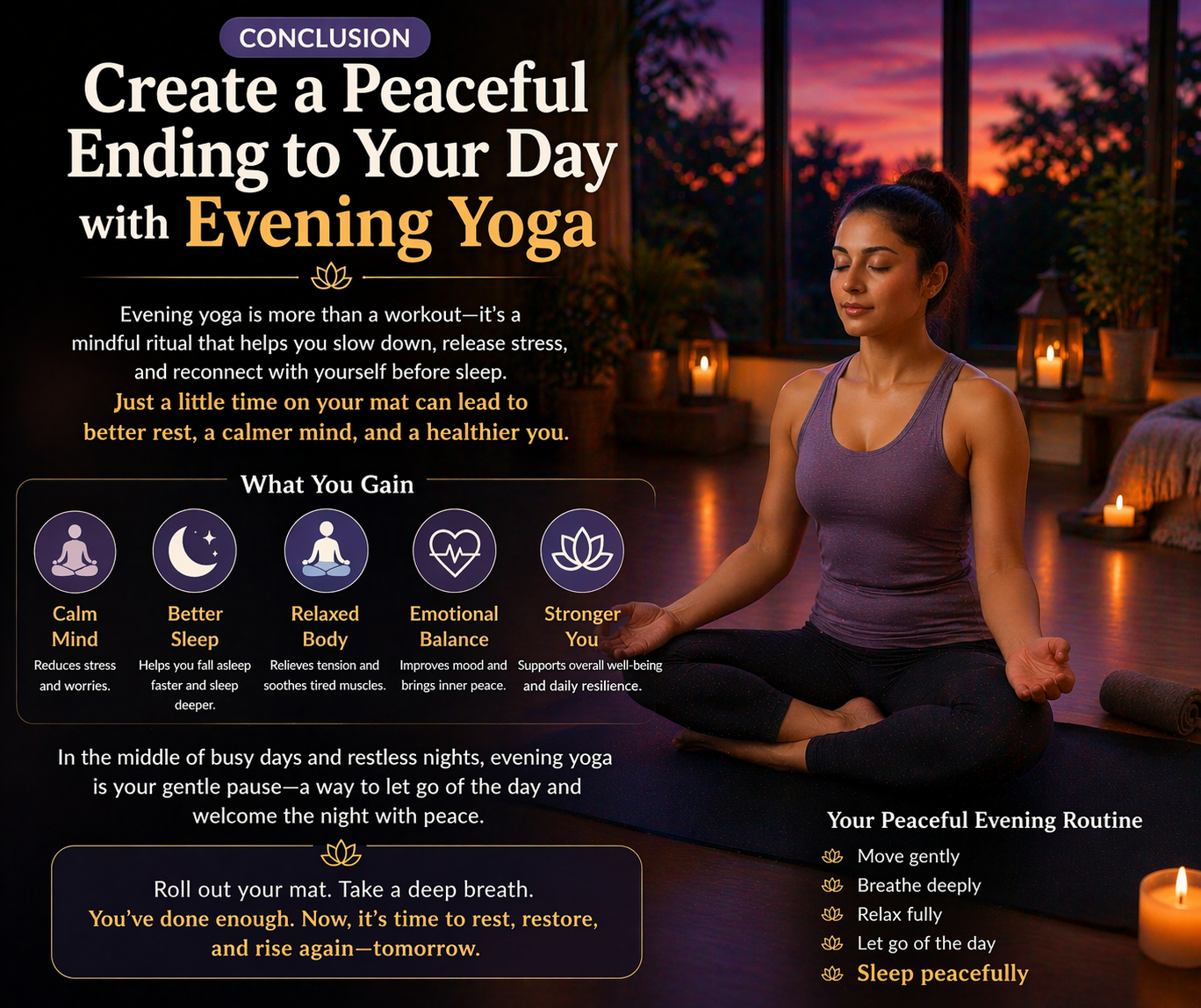
An evening yoga routine is one of the simplest ways to release daily tension and prepare your body for rest. Unlike demanding workouts, it focuses on gentle movement, controlled breathing, and mental relaxation.
By dedicating just a few minutes each evening, you create a powerful habit that improves both physical comfort and emotional balance. Over time, this small routine becomes an essential part of a healthy lifestyle.
Whether you are new to yoga or continuing an existing practice, evening yoga provides a reliable method to reduce stress and support restful sleep. With patience and consistency, the benefits become more noticeable each day.
Start slowly, listen to your body, and enjoy the calm that comes from mindful movement. A peaceful evening routine not only improves sleep but also prepares you for a fresh and energized tomorrow.