
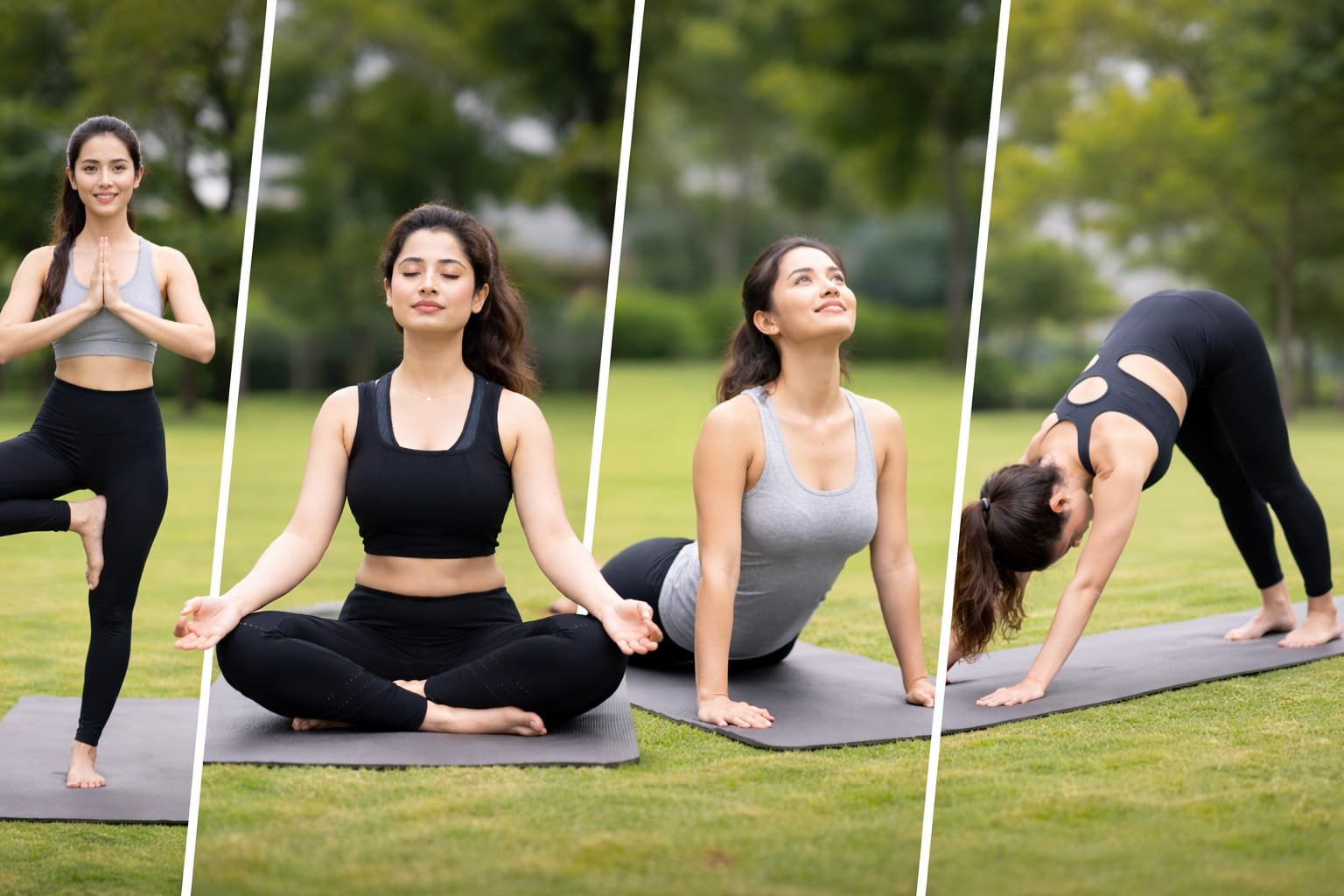
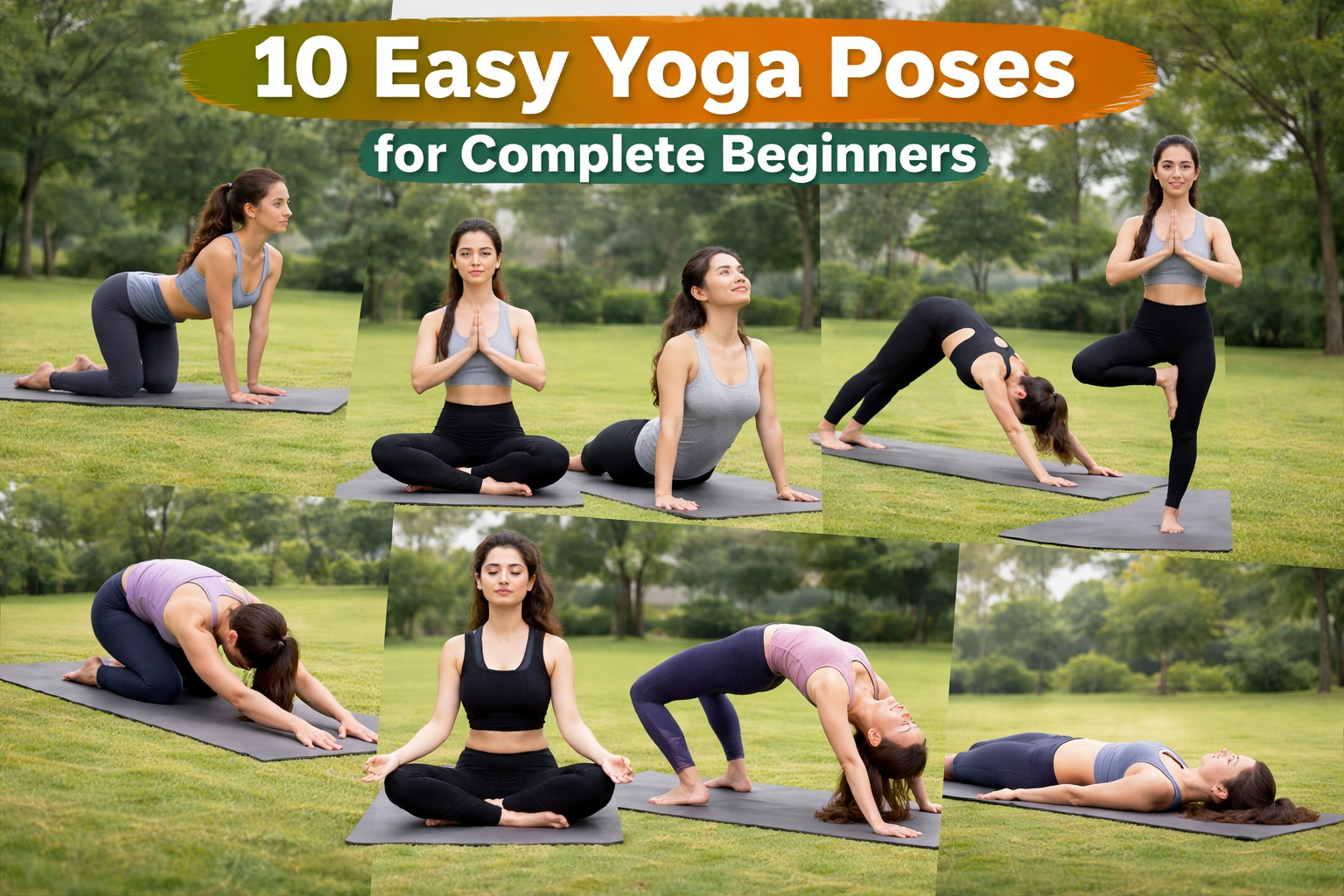
If you have ever experienced a migraine, you already know how intense and overwhelming it can feel. It is not just a simple headache. It often comes with deep, throbbing pain that makes you want to rest in a quiet, dark place. For many people, migraines also bring nausea, sensitivity to light and sound, and even visual disturbances such as flashing lights or blurred vision. These symptoms can easily disrupt your entire day and affect your focus, mood, and energy.
Over the years, doctors and researchers have worked to better understand migraines and how they affect the brain and nervous system. While medical treatments are available and effective, many people also look for natural ways to support their recovery. This is where yoga for migraine relief becomes a gentle and supportive option.
Yoga is more than just physical stretching. It combines mindful movement, controlled breathing, and deep relaxation. Together, these elements may help calm the nervous system, reduce stress, and support overall body balance. If stress is one of your common triggers, practicing yoga for stress relief can help you understand how relaxation-based movement supports both the mind and body.
Migraine is a complex neurological condition, and its symptoms can vary from person to person. According to trusted medical sources such as the NHS migraine guide, migraine may include headache, nausea, and sensitivity to light or sound. Yoga should not replace medical care, but it can be used as a calming lifestyle practice alongside proper guidance.
The best part is that you do not need to be flexible or experienced to begin. This guide is designed for beginners and anyone looking for a simple, safe, and practical approach. In this article, you will learn why migraines happen, how yoga supports the brain and body, which gentle practices may help, and how to build a calm daily routine for long-term comfort.
What Happens During a Migraine Attack?
Before exploring how yoga can help, it is important to understand what actually happens in the body during a migraine. Migraine is not just a regular headache—it is a complex neurological condition that involves changes in the brain, nerves, and blood flow, leading to intense discomfort and heightened sensitivity.
During a migraine attack, the brain becomes more sensitive than usual. Certain nerve pathways become overactive, affecting how pain signals are processed. At the same time, blood vessels in the head may expand and contribute to inflammation, while nearby nerves release chemicals that increase pain and irritation. These changes can last for several hours or even a couple of days.
Many people also notice that migraines are triggered by specific factors. These are known as triggers, and they vary from person to person. Common triggers include stress, lack of sleep, bright lights, loud sounds, strong smells, and certain foods. If you often feel tension building up before a headache, practicing yoga for anxiety and depression can help you understand how relaxation supports emotional balance and mental calmness.
According to trusted medical sources such as the Healthline migraine guide, common migraine symptoms include throbbing head pain, nausea, and sensitivity to light and sound. In some cases, people may also experience an “aura,” which can involve visual disturbances such as flashing lights, zigzag patterns, or temporary blind spots before the headache begins.
Migraine pain is often felt on one side of the head and may feel pulsing or intense. Along with the pain, it is common to experience fatigue, mental exhaustion, and emotional sensitivity. These symptoms highlight how closely migraine is connected to the nervous system and overall stress levels.
Because of this strong connection, calming the body and mind becomes an essential part of managing discomfort. Gentle practices that focus on relaxation and controlled breathing can support the nervous system and help reduce overall tension. This is one of the key reasons why yoga is often considered a valuable addition to a balanced lifestyle.
Why Yoga Works for Migraine
Yoga is more than just physical stretching—it is a mind-body practice that combines gentle movement, controlled breathing, and deep relaxation. These elements work together to regulate the nervous system, which plays a central role in how migraines develop and are triggered.
When the body is under stress, it often enters a “fight-or-flight” state. In this condition, the heart rate increases, muscles remain tense, and the mind stays constantly alert. Over time, this ongoing stress response can become a major trigger for frequent migraine attacks. If stress is one of your common triggers, practicing pranayama breathing techniques can help you understand how breath control supports relaxation and emotional balance.
Yoga naturally activates the opposite response, known as the “rest-and-digest” system. This state allows the body to slow down and recover. The heart rate becomes steady, muscles relax, and the mind begins to feel calm. With regular practice, the body becomes more efficient at returning to this relaxed state, which may help reduce the intensity and frequency of migraine triggers.
Scientific research supports this connection. According to trusted medical information from the Mayo Clinic, migraine is closely linked to changes in brain activity and increased sensitivity within the nervous system. Lifestyle practices that focus on stress reduction and relaxation may support overall migraine management when used alongside proper medical care.
In addition, yoga helps reduce overall muscle tension and supports a balanced inflammatory response in the body. Since migraine is often associated with both physical stress and nervous system sensitivity, these calming effects can play an important role in long-term relief.
In simple terms, yoga for migraine relief is not just a traditional practice—it is a gentle, science-backed approach that helps the body relax, restore balance, and manage stress more effectively over time.
Before You Start – Important Safety Tips
Yoga is generally safe for most people. However, when dealing with migraine, it is important to practice with extra awareness. Following a few simple precautions can help you avoid discomfort and get the best results from your practice.
- Do not push through pain: If any movement or posture increases discomfort in your head, stop immediately. Come out of the pose slowly and allow your body to rest. Yoga should support relaxation, not create additional strain.
- Avoid pressure on the head and neck: Stay away from poses that place excessive pressure on the head or neck, such as headstands, shoulder stands, and other inverted positions. These movements may increase pressure in the head and trigger symptoms. If you are unsure which movements to avoid, you can learn safer approaches from common yoga mistakes beginners should avoid.
- Stay hydrated and avoid high heat: Practicing yoga in very hot environments can lead to dehydration, which may worsen migraine symptoms. Choose a calm, comfortable space and keep your body well hydrated.
- Move slowly and mindfully: Fast-paced styles can overstimulate the body and increase tension. Gentle, controlled movements are more effective for relaxation and balance.
- Listen to your body during an attack: If you are already experiencing a strong migraine episode, focus only on gentle breathing or complete rest. Lying down in a quiet, dim environment is often more beneficial than forcing physical activity.
By following these simple safety guidelines, you can create a more comfortable and effective yoga experience. Now, let us move forward and explore the most helpful yoga practices for migraine relief.
Yoga Pose 1 – Balasana (Child’s Pose)
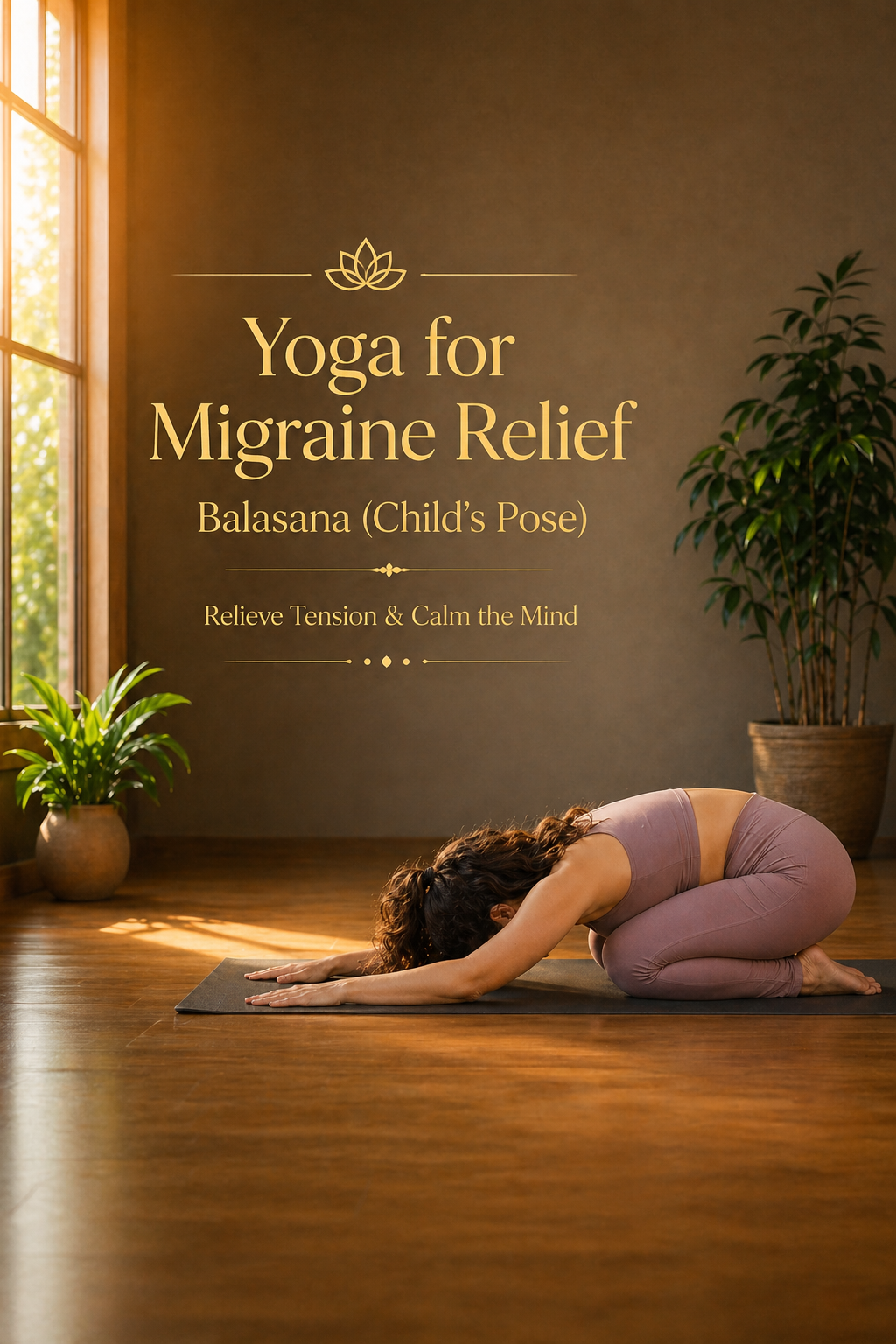
Balasana, also known as Child’s Pose, is a gentle resting posture that allows both the body and mind to relax deeply. Although it looks simple, it can be very effective in releasing tension from the lower back, shoulders, and neck. It also helps reduce external stimulation, which can be especially helpful when the body feels sensitive to light or noise during migraine.
How to Practice
- Kneel down on a mat or a soft surface.
- Bring your big toes together and keep your knees slightly apart.
- Slowly sit back onto your heels.
- Gently fold your upper body forward.
- Allow your forehead to rest on the floor.
- Keep your arms relaxed alongside your body with palms facing upward, or extend them forward for a deeper stretch.
Duration
Stay in this position for 1 to 3 minutes. Breathe slowly and naturally, and with each exhale, allow your body to relax deeper into the ground.
Modification (If Needed)
If your forehead does not comfortably reach the floor, you can place a folded blanket or a yoga block underneath for support. This helps maintain comfort and proper alignment.
Tips for Better Practice
- Do not force your body—stay within a comfortable range.
- Keep your breathing slow and natural throughout the pose.
- Relax your shoulders and avoid holding unnecessary tension.
This posture is widely known for its calming effect, as the gentle contact of the forehead with the surface may promote relaxation and reduce mental tension.
If you are building a regular yoga routine, you may also explore what is yoga – a complete beginner’s guide, which explains the fundamentals of safe and consistent practice.
Yoga Pose 2 – Marjaryasana and Bitilasana (Cat–Cow Stretch)
Marjaryasana (Cat Pose) and Bitilasana (Cow Pose) are gentle spinal movements practiced together in a slow, flowing sequence. This combination helps warm up the spine, release stiffness in the neck and upper back, and improve overall flexibility. Since tension in these areas can contribute to discomfort, this gentle movement may help the body feel more relaxed and balanced.
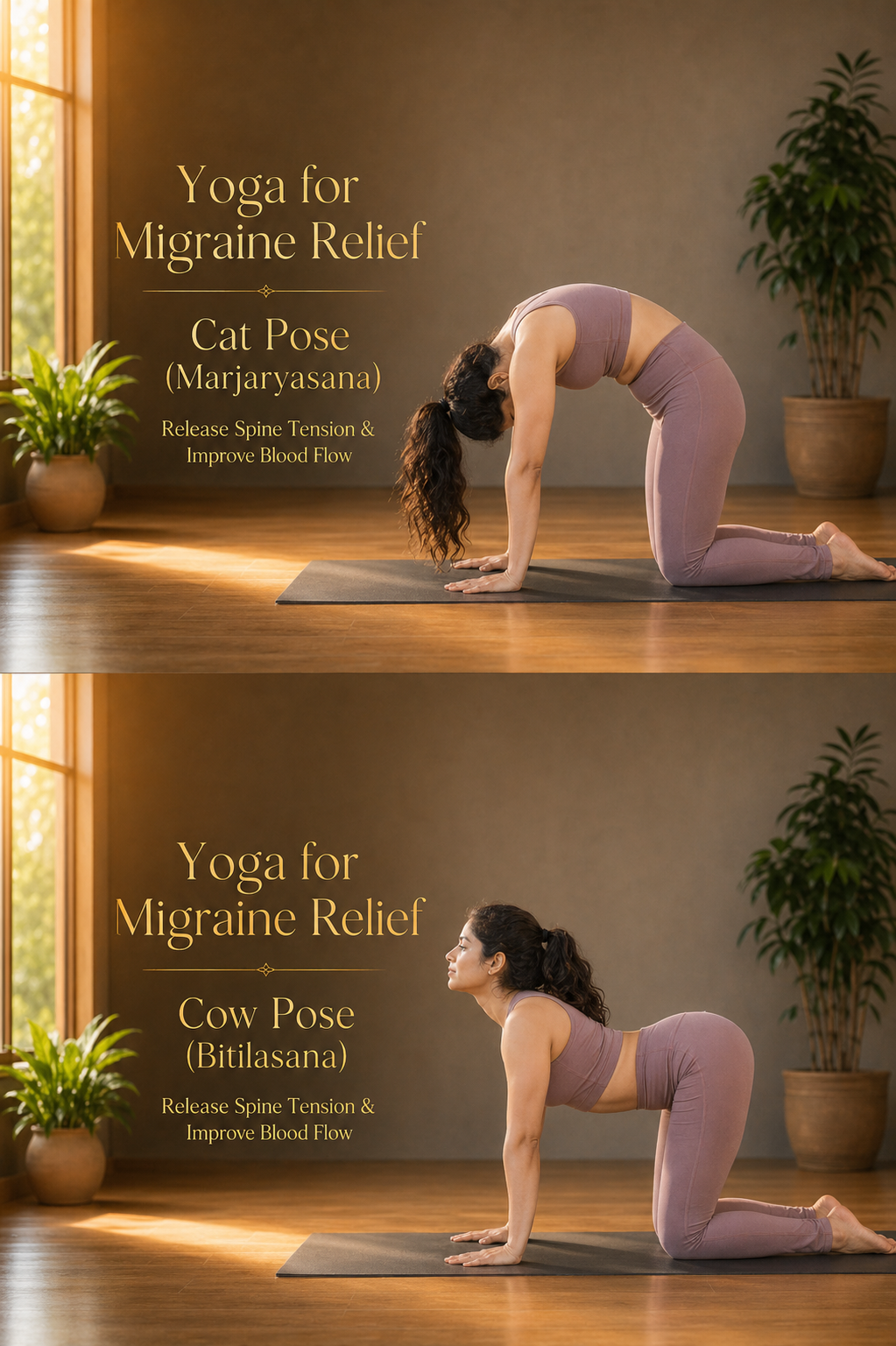
How to Practice
- Start on your hands and knees in a tabletop position.
- Keep your wrists aligned under your shoulders and knees under your hips.
- Begin with a neutral spine, keeping your back flat.
- Inhale (Cow Pose): Drop your belly toward the floor, lift your chest, and gently raise your tailbone. Keep your gaze soft and slightly forward.
- Exhale (Cat Pose): Round your spine upward toward the ceiling, draw your chin toward your chest, and gently engage your core.
Duration
Move slowly between Cat and Cow for 5 to 10 breaths. Match each movement with your breathing—inhale into Cow and exhale into Cat.
Modification (If Needed)
If you feel discomfort in your wrists, place a folded towel under your palms or make gentle fists instead of keeping palms flat. Keep the movement small and comfortable without forcing deep stretches.
Tips for Better Practice
- Keep your movements slow and controlled—avoid rushing.
- Focus on smooth motion through the spine rather than depth.
- Maintain steady breathing throughout the practice.
This simple sequence is widely used to reduce physical tension and support relaxation. Practicing it regularly can help release built-up stiffness and improve overall comfort in the body.
Yoga Pose 3 – Shishuasana (Extended Child’s Pose)
Shishuasana is a gentle variation of Child’s Pose that provides a deeper stretch through the shoulders, upper back, and sides of the body. It is especially helpful for releasing tension that can build up from long hours of sitting, computer work, or driving.
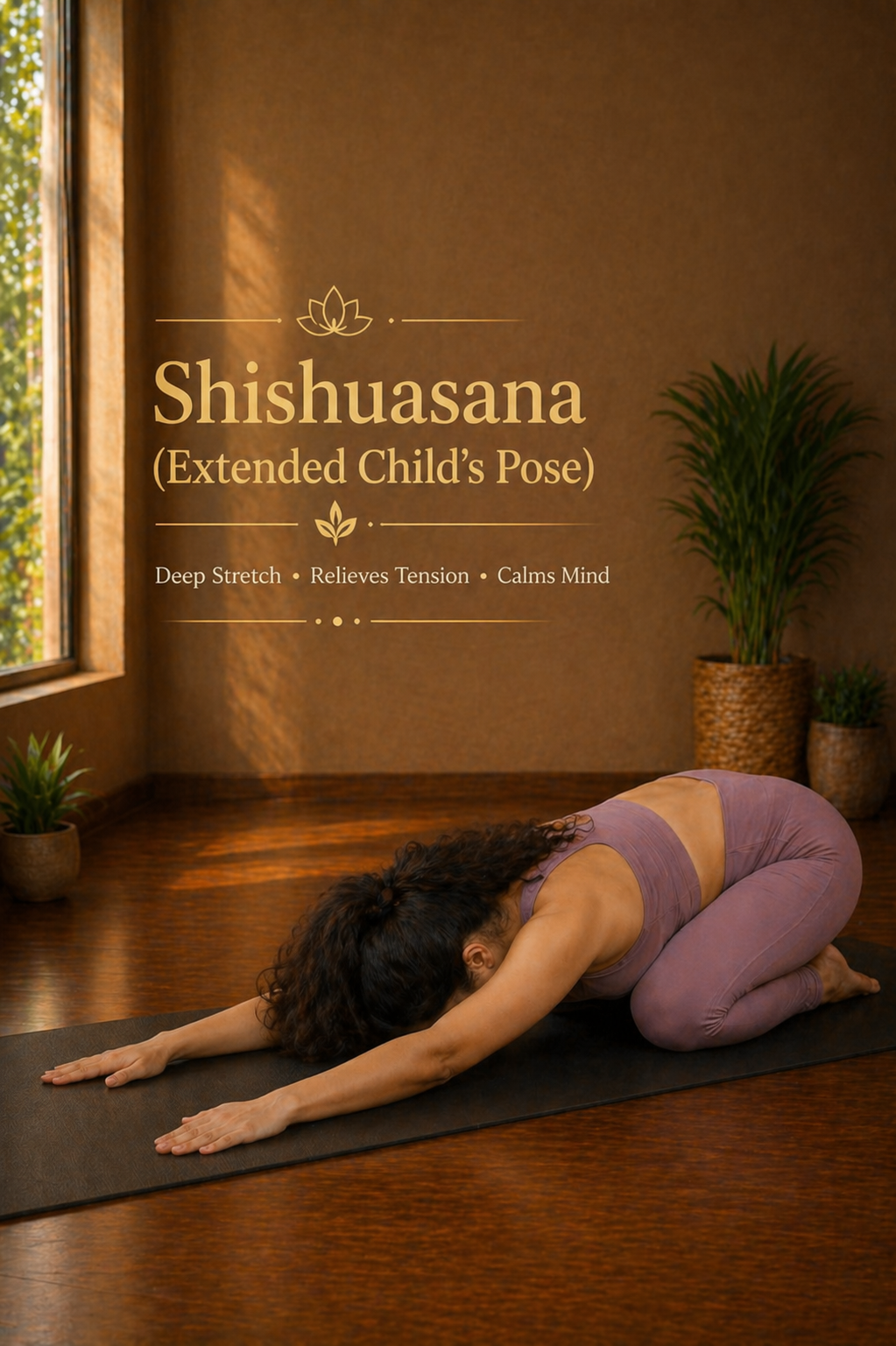
How to Practice
- Begin in Child’s Pose (Balasana).
- Slowly walk your hands forward on the floor until your arms are fully extended.
- Keep your forehead resting comfortably on the ground.
- Allow your hips to stay back toward your heels.
- Feel a gentle stretch along the sides of your torso and under your arms.
Duration
Stay in this position for 1 to 2 minutes. Breathe slowly, and with each exhale, allow your body to relax deeper into the stretch.
Modification (If Needed)
If the stretch feels too intense, bring your hands slightly closer to your body. You can also keep your knees closer together instead of wide apart to reduce the intensity.
Tips for Better Practice
- Keep the movement gentle—avoid forcing a deep stretch.
- Relax your shoulders and neck completely.
- Focus on slow, steady breathing to enhance relaxation.
The goal of this pose is to feel a comfortable stretch, not sharp or uncomfortable pain. Practicing mindfully can help release tension and promote a calm, relaxed state in the body.
Yoga Pose 4 – Setu Bandhasana (Bridge Pose)
Setu Bandhasana is a gentle backbend that helps open the chest, support the spine, and encourage smooth blood circulation. When practiced with control, it can help the body feel more relaxed and balanced.
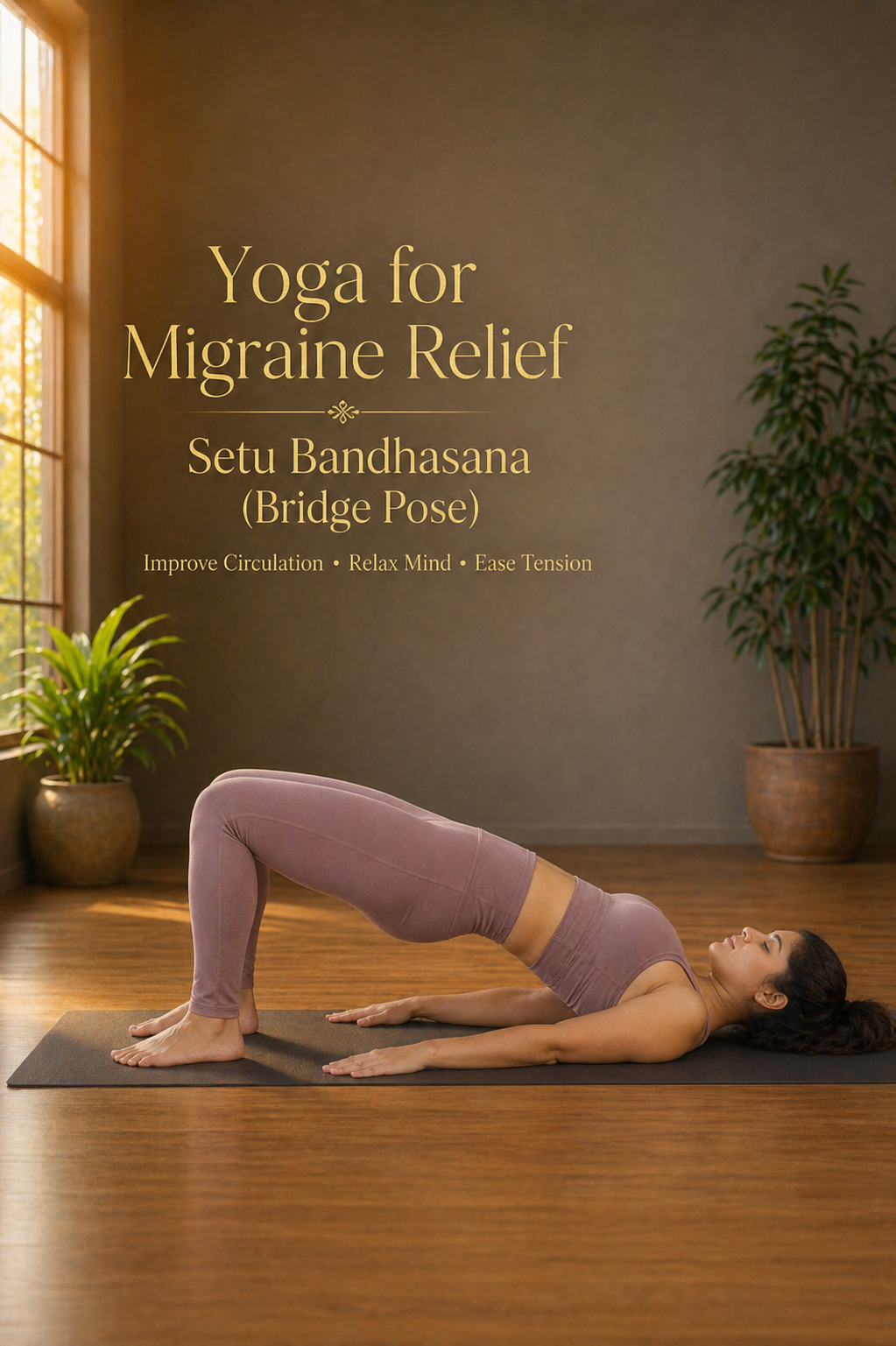
How to Practice
- Lie on your back on a comfortable surface.
- Bend your knees and place your feet flat on the floor, hip-width apart.
- Rest your arms alongside your body with palms facing down.
- Press your feet into the floor and slowly lift your hips upward.
- Keep your thighs parallel and avoid letting the knees move outward.
- You may interlace your fingers under your back or keep your arms relaxed on the mat.
Duration
Hold the position for 30 seconds to 1 minute while breathing normally. Slowly lower your spine down one part at a time and rest before repeating.
Modification (If Needed)
If you feel discomfort in your lower back or neck, do not lift too high. You can also place a yoga block or cushion under your lower back for gentle support.
Tips for Better Practice
- Keep your neck neutral—avoid turning your head during the pose.
- Lift your hips slowly and with control—avoid sudden movement.
- Focus on steady breathing and relaxed shoulders.
If you have any neck sensitivity, always keep your head in a neutral position. For those focusing on gradual flexibility and controlled movement, you may also explore easy yoga poses for beginners, which explains safe and beginner-friendly approaches.
Yoga Pose 5 – Pada Sanchalanasana (Cycling Pose)
Pada Sanchalanasana is a simple and gentle movement that allows the body to stay relaxed while keeping the legs active. Since the upper body remains supported on the floor, it helps maintain comfort while encouraging smooth circulation.
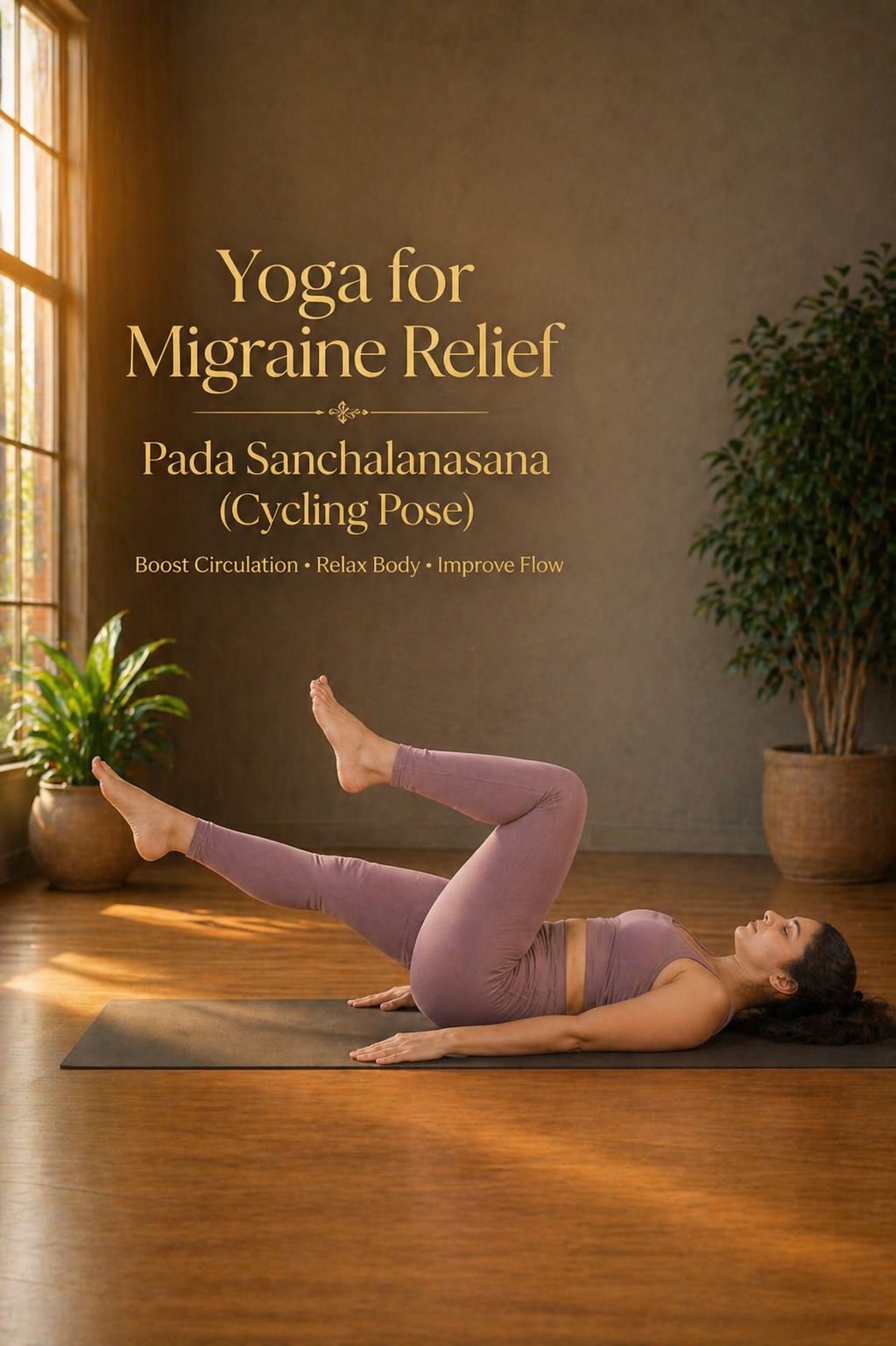
How to Practice
- Lie flat on your back with your arms resting comfortably by your sides.
- Lift both legs slightly off the floor.
- Start moving your legs in a slow cycling motion, as if you are pedaling a bicycle.
- Keep the movement controlled and steady.
- After completing one direction, pause and then repeat in the opposite direction.
Duration
Continue the cycling motion for 30 seconds to 1 minute. Rest for a few breaths, then repeat in the opposite direction for another 30 seconds.
Modification (If Needed)
If lifting both legs feels difficult, you can move one leg at a time. You may also keep your legs slightly lower or bend your knees more to reduce strain.
Tips for Better Practice
- Keep your movements slow and controlled—avoid fast pedaling.
- Do not strain your lower back—keep it relaxed against the floor.
- Breathe naturally and avoid holding your breath.
This gentle activity supports natural body movement and coordination. If you are exploring routines that include light movement, you may also find it helpful to read 7 day yoga plan for beginners, which explains how to build consistency with simple practices.
Yoga Pose 6 – Viparita Karani (Legs Up the Wall)
Viparita Karani is one of the most relaxing yoga poses you can practice. It is gentle, requires no strength or flexibility, and helps calm the nervous system. This pose can reduce tension and provide deep rest, making it especially helpful when you feel tired, overwhelmed, or mentally exhausted.
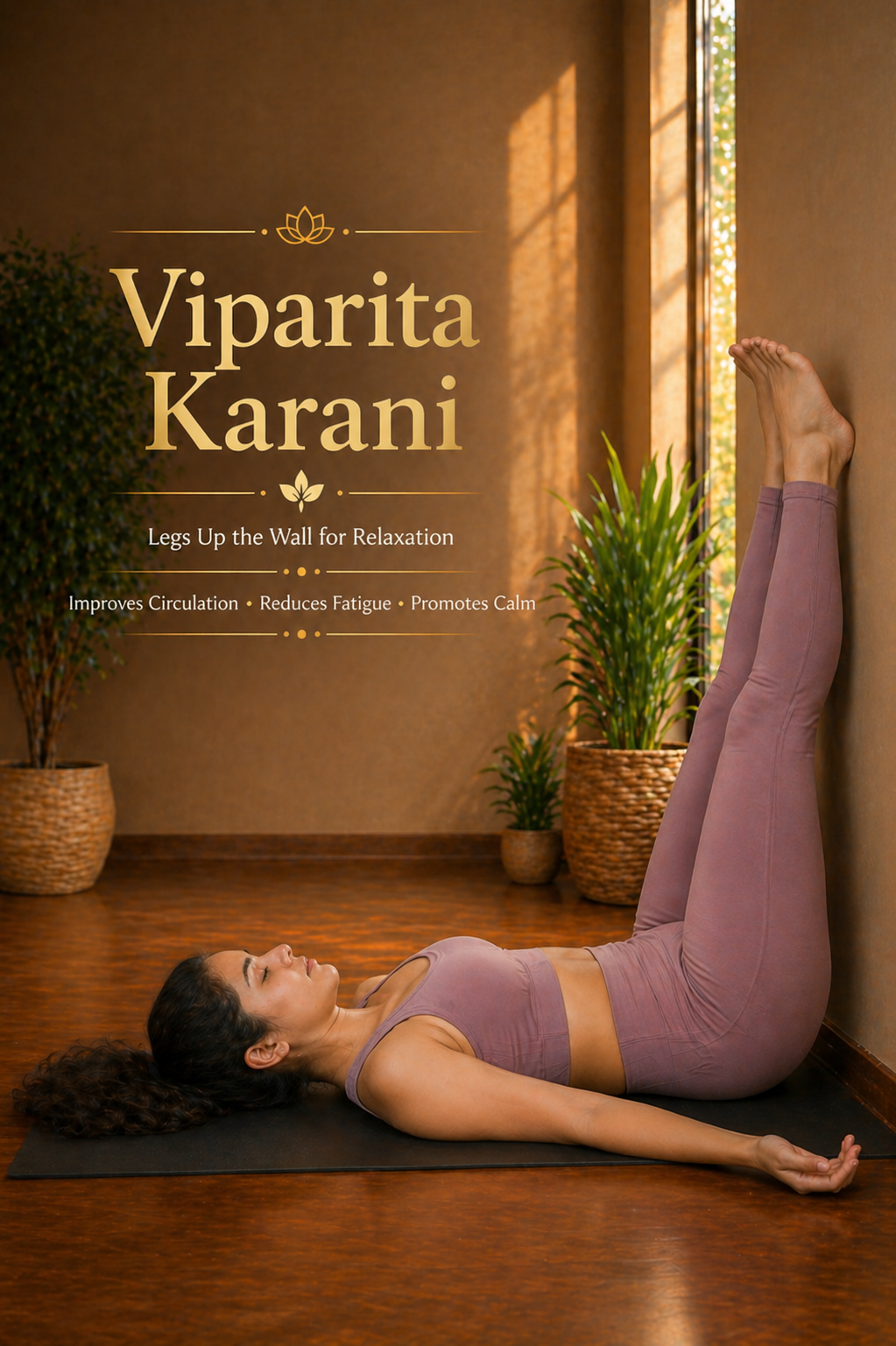
How to Practice
- Sit close to a wall with one side of your body touching it.
- Slowly lie down on your back and swing your legs up onto the wall.
- Adjust your hips so they are a few inches away from the wall or slightly touching it.
- Let your arms rest comfortably by your sides with palms facing upward.
- Close your eyes and allow your whole body to relax.
Duration
Stay in this position for 5 to 10 minutes. Breathe slowly and naturally, allowing your body to relax deeply.
Modification (If Needed)
If your legs feel uncomfortable, place a pillow or folded blanket under your hips for support. You can also slightly bend your knees if needed.
Tips for Better Practice
- Do not force your body—let gravity do the work.
- Keep your breathing slow and relaxed.
- Come out of the pose slowly to avoid dizziness.
This pose is especially helpful when you feel pressure building in your head or when your body feels heavy after a long day. It allows your body to rest without putting strain on your neck or back. If you feel any discomfort, slowly come out of the pose and rest flat on the floor.
Yoga Pose 7 – Supta Baddha Konasana (Reclined Butterfly)
Supta Baddha Konasana is a deeply relaxing pose that gently opens the hips and allows the entire body to rest. During migraine, the body often feels tight and fatigued. This restorative posture helps release tension and promotes calmness without requiring any physical effort.
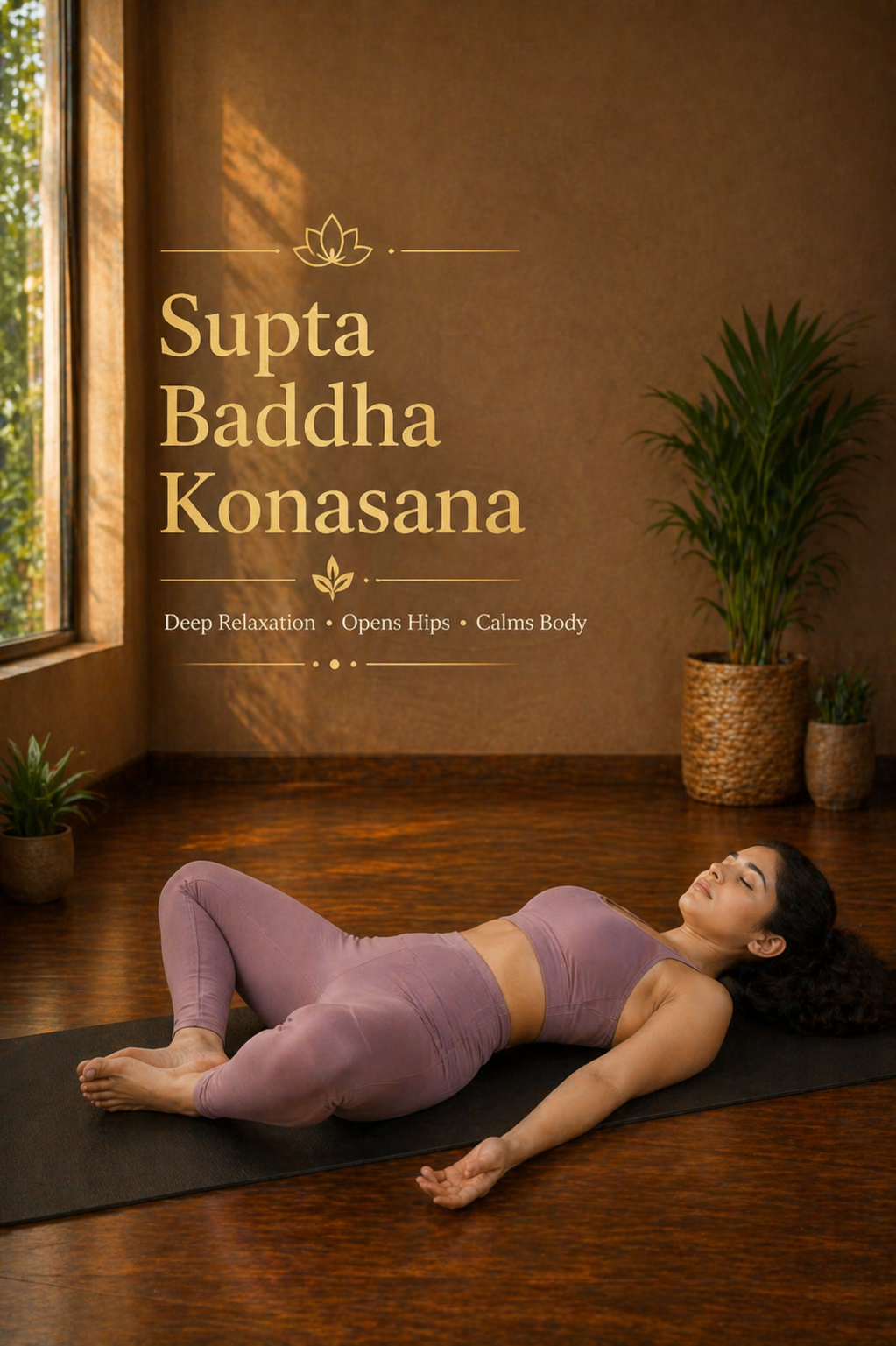
How to Practice
- Lie down on your back on a comfortable surface.
- Bend your knees and bring the soles of your feet together.
- Allow your knees to fall outward naturally, like a butterfly shape.
- Place your hands on your belly or by your sides with palms facing upward.
- Close your eyes and relax your face, jaw, and shoulders.
Duration
Stay in this position for 3 to 5 minutes. Breathe slowly and gently, allowing your body to relax fully.
Modification (If Needed)
If your knees feel uncomfortable, place pillows or folded blankets under them for support. The goal is to feel supported, not stretched.
Tips for Better Practice
- Do not force your legs downward—allow them to relax naturally.
- Keep your breathing slow and calm.
- Focus on releasing tension from your hips and lower body.
This pose is especially helpful when you feel stressed, restless, or low on energy. It allows your body to reset and your mind to calm down. If needed, come out of the pose slowly and rest flat on your back.
Yoga Pose 8 – Uttanasana (Standing Forward Bend) – Optional
Uttanasana is a gentle standing forward bend that stretches the hamstrings, relaxes the neck, and helps release tension from the upper body. Some people find this pose calming, but it may not feel comfortable for everyone during migraine. That is why it is optional and should be practiced only if it feels safe for your body.
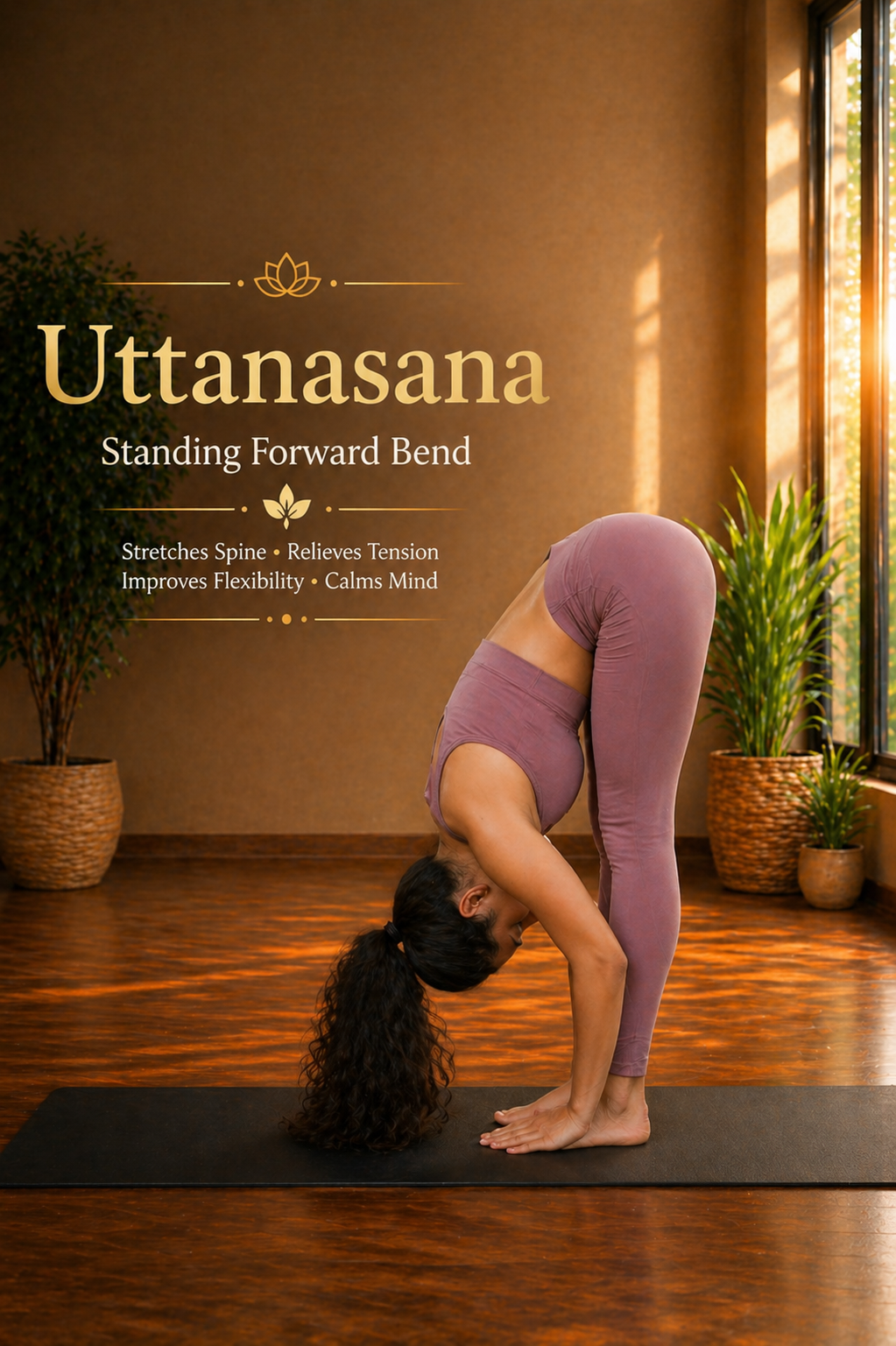
How to Practice
- Stand with your feet hip-width apart.
- Keep your knees slightly bent.
- Slowly bend forward from your hips, not your waist.
- Let your head hang down naturally without forcing.
- Place your hands on your legs, ankles, or the floor—wherever comfortable.
Duration
Stay in the pose for 20 to 30 seconds while breathing slowly and gently.
Modification (If Needed)
If you feel discomfort, keep your knees more bent or rest your hands on your thighs instead of reaching the floor. You can also come out of the pose at any time.
Tips for Better Practice
- Do not force your body into a deep bend—stay comfortable.
- Keep your neck relaxed and shoulders soft.
- Come out of the pose slowly to avoid dizziness.
If you feel pressure in your head, dizziness, or discomfort, skip this pose and choose a lying-down posture instead. Always listen to your body and practice only what feels safe and comfortable.
Yoga Pose 9 – Savasana (Corpse Pose)
Savasana may appear simple, but it is one of the most important parts of any yoga practice. It allows the body to rest deeply and gives the mind a chance to slow down. When the body is fully supported and still, it becomes easier to release built-up tension.
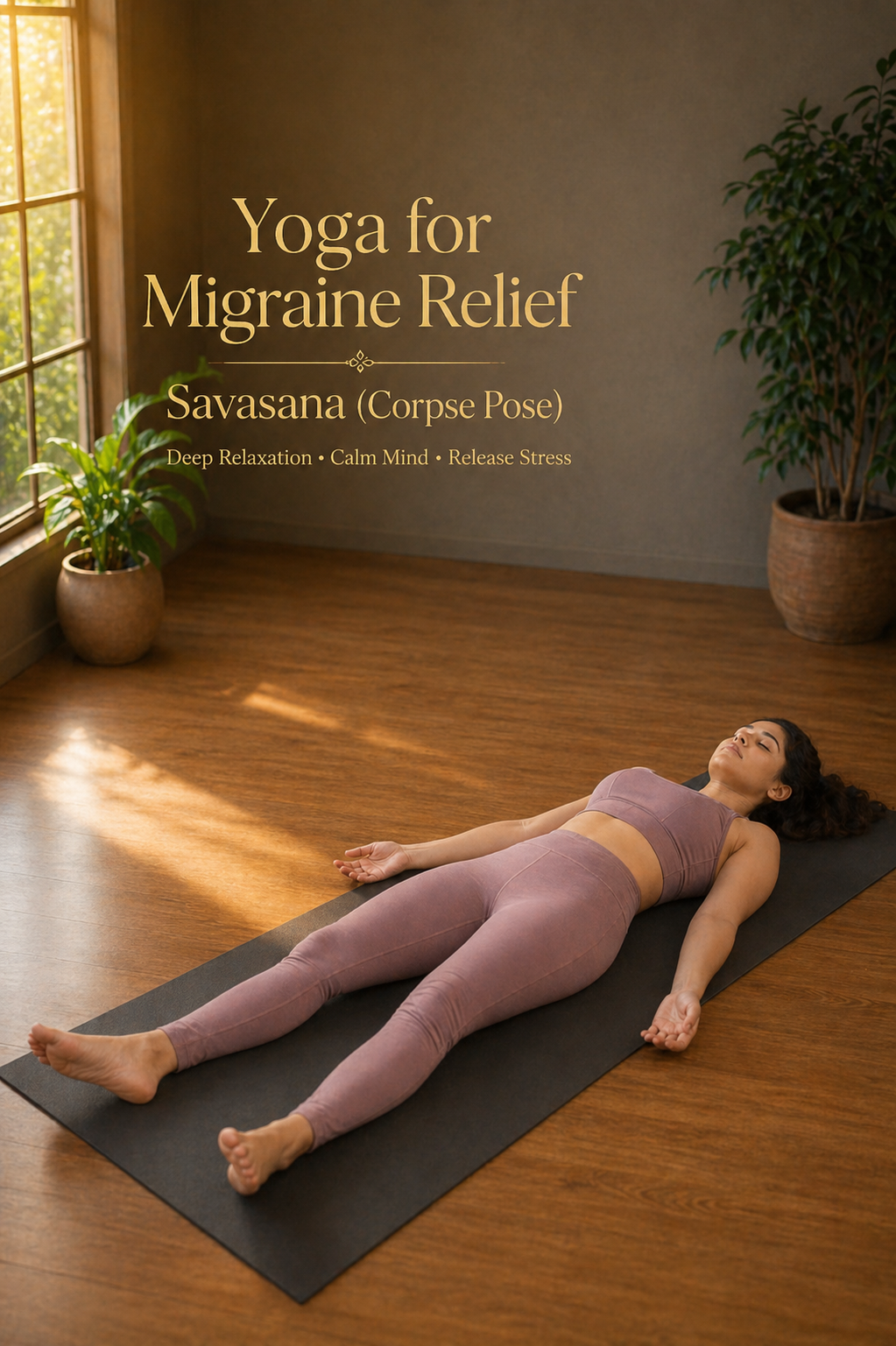
How to Practice
- Lie flat on your back on a comfortable surface.
- Let your legs relax naturally, allowing the feet to fall outward.
- Rest your arms alongside your body with palms facing upward.
- Gently close your eyes and bring your attention to your breath.
- Relax your body step by step—from toes to head.
- Release tension from your legs, stomach, shoulders, face, and jaw.
Duration
Stay in this position for 5 to 10 minutes. If needed, you can remain longer for deeper relaxation.
Modification (If Needed)
You may place a small rolled towel under your neck or a cushion under your knees for support. Covering your eyes with a soft cloth can also help reduce light and enhance relaxation.
Tips for Better Practice
- Keep your body completely still and relaxed.
- Avoid controlling your breath—let it flow naturally.
- Release any remaining tension from your face and shoulders.
This posture is often included at the end of a routine because it allows the body to settle and absorb the effects of the practice. Staying relaxed in Savasana can help you feel more balanced, calm, and refreshed.
Pranayama – Breathing Techniques for Migraine Relief
While yoga poses are helpful, breathing techniques—known as pranayama—can have an even deeper impact on how the body responds to stress and discomfort. The breath is directly connected to the nervous system, and gentle, controlled breathing can help shift the body from a state of tension to a state of calm.
One of the biggest advantages of pranayama is its simplicity. It does not require flexibility or physical effort. You can practice it while sitting comfortably or even lying down, making it ideal during low-energy days or early migraine symptoms.
Bhramari Pranayama (Humming Bee Breath)
Bhramari is a deeply calming breathing technique that uses a soft humming sound during exhalation. The gentle vibration created by this sound may help relax the mind, reduce mental tension, and create a soothing effect around the head and nervous system.
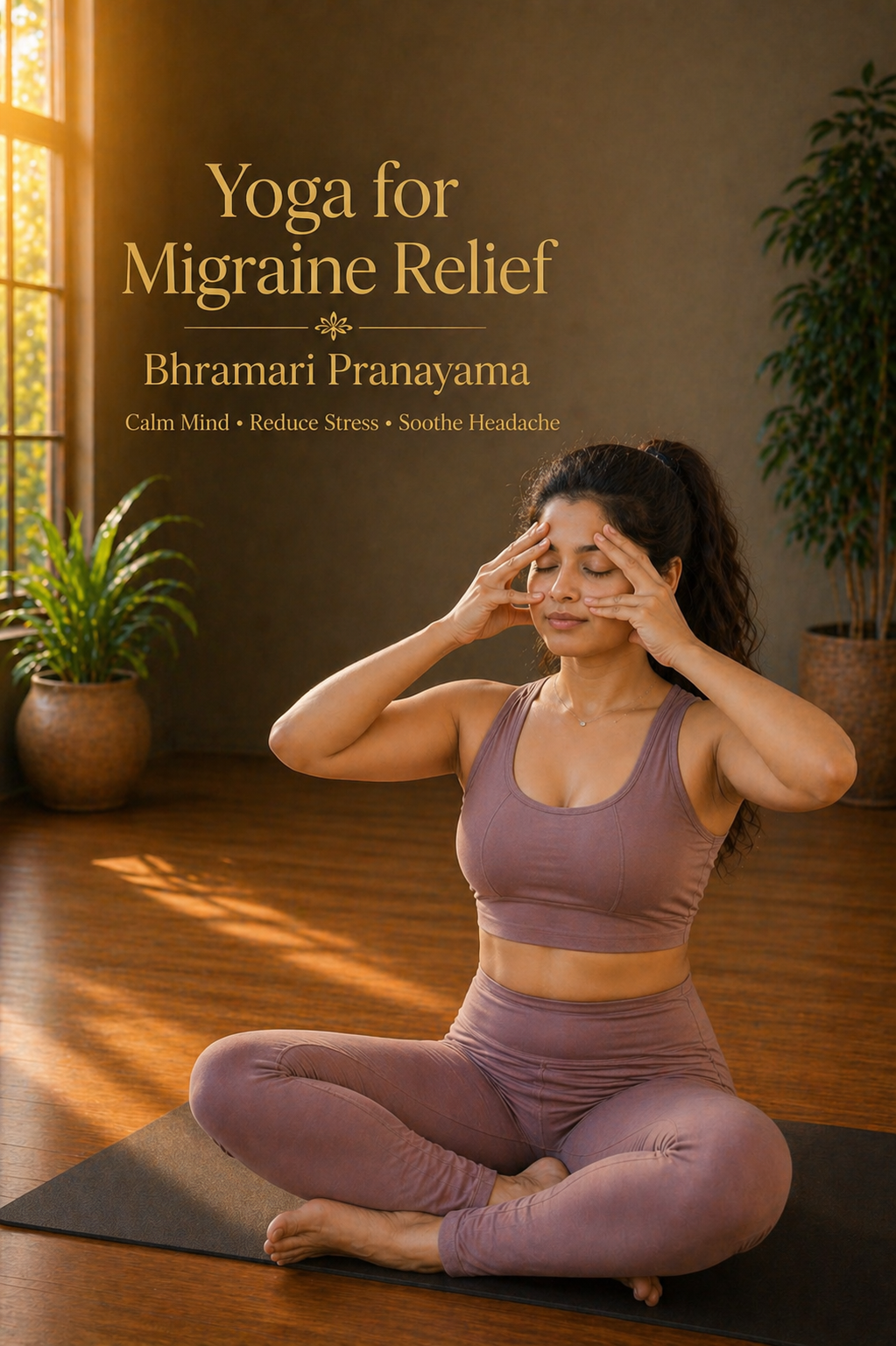
How to Practice
- Sit comfortably in a quiet place or lie down in a relaxed position.
- Close your eyes and allow your body to settle.
- Gently place your thumbs over your ears (lightly closing them).
- Rest your other fingers softly on your forehead and around the eyes without pressure.
- Take a slow, deep breath in through your nose.
- As you exhale, produce a soft humming sound like a bee.
- Keep the sound steady, smooth, and comfortable.
Duration
Repeat this process for 5 to 10 rounds. After completing the practice, remain still for a few moments and observe the calming sensation in your body.
If you are exploring breathing practices in more detail, you may also find it helpful to read 7 chakras and energy balance, which explains how breath awareness supports internal balance.
Scientific research also supports the benefits of slow breathing. According to studies available on NCBI, controlled breathing techniques may help regulate the body’s stress response and promote relaxation when practiced regularly in a calm environment.
With regular practice, Bhramari pranayama can become a simple yet powerful tool to calm the mind, reduce tension, and support overall migraine management naturally.
Anulom Vilom (Alternate Nostril Breathing)
Anulom Vilom is a simple yet effective breathing technique that helps balance the airflow through both nostrils. It is commonly used to support mental clarity, calm the nervous system, and reduce overall tension in the body.
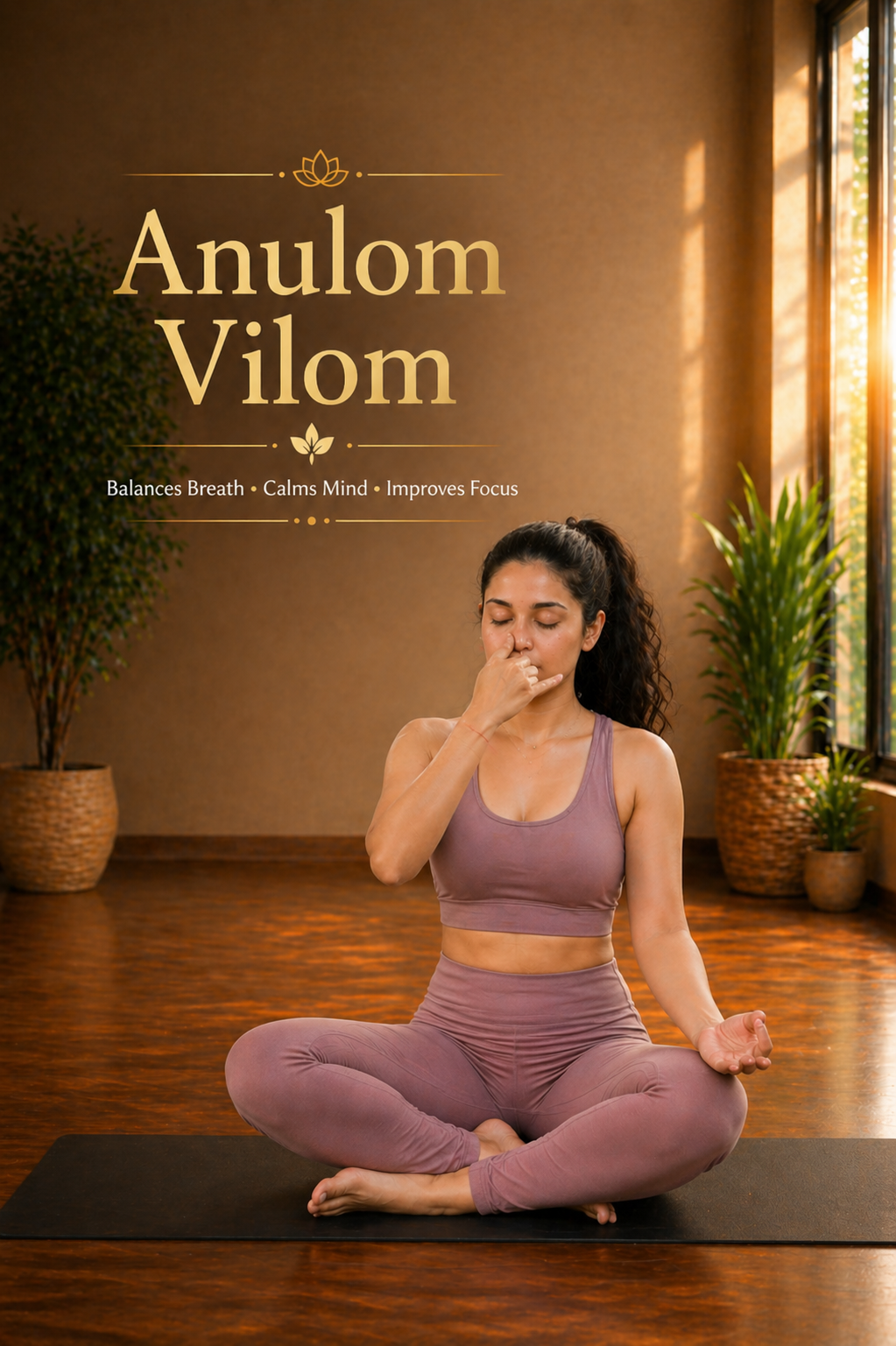
How to Practice
- Sit comfortably with your spine straight and shoulders relaxed.
- Use your right hand to control the breath (Vishnu Mudra).
- Gently close your right nostril with your thumb and inhale slowly through your left nostril.
- Close your left nostril using your ring finger, release your thumb, and exhale through your right nostril.
- Inhale through the right nostril, then close it.
- Release the left nostril and exhale through the left side.
Duration
Continue this slow and steady breathing pattern for 5 to 10 minutes. Keep your breath smooth and natural without forcing it.
Modification (If Needed)
If you feel uncomfortable or lightheaded, pause the practice and return to normal breathing. Beginners can start with shorter durations and gradually increase the time.
Tips for Better Practice
- Keep your breathing slow, gentle, and controlled.
- Do not force the breath—stay relaxed throughout the practice.
- Maintain a comfortable posture to avoid strain in the neck or shoulders.
Regular practice of Anulom Vilom can become a valuable part of a daily routine. With consistency, it may help promote calmness, mental clarity, and overall balance.
Deep Belly Breathing (Diaphragmatic Breathing)
Deep belly breathing is one of the simplest and most effective ways to relax the body. During stress or discomfort, breathing often becomes shallow and fast. This technique encourages slower, deeper breaths that support a calm and steady state.
To begin, lie comfortably on your back. Place one hand on your belly and the other on your chest. As you breathe in slowly through your nose, allow your belly to rise gently while keeping your chest relatively still.
As you breathe out, let your belly fall naturally. Try to make your exhale slightly longer than your inhale. For example, you can inhale for four counts and exhale for six counts. Keep the breathing smooth and controlled without forcing it.
Continue this practice for about five minutes. Over time, you may notice your breathing becoming slower and more steady.
According to information from trusted health sources such as Harvard Health Publishing, controlled breathing techniques may help reduce stress, support relaxation, and improve overall mental well-being when practiced regularly.
A Simple Morning Breathing Routine
Starting the day with a calm and steady mind can make a noticeable difference in how the body responds to stress. A short breathing routine in the morning may help create that sense of balance without taking much time.
You can try this simple three-minute practice. Sit comfortably in bed or on a chair and gently close your eyes. Begin with five slow, deep belly breaths, allowing your body to relax with each exhale.
Next, practice five rounds of Bhramari breathing with a soft humming sound. After completing the rounds, return to five more deep belly breaths. Finally, open your eyes slowly and take a moment before starting your day.
This small routine can help support a calm and steady state throughout the day. If you are building a complete daily habit, you may also explore morning yoga routine, which includes gentle movements and breathing practices.
Yoga Poses to Avoid Completely
While many yoga practices are gentle and supportive, some poses may not be suitable when dealing with migraine. Being aware of what to avoid can help you practice more safely and comfortably.
Inverted poses such as headstands and handstands are generally best avoided. These positions place the head below the heart, which may increase pressure in the head for some individuals.
Shoulder Stand and Plow Pose can also place strain on the neck and upper body. Since comfort and stability are important, it is better to choose poses that keep the neck relaxed and supported.
Deep backbends, such as Wheel Pose or Full Camel Pose, may feel intense and can increase tension if performed without proper preparation. Gentle variations, like supported backbends, are usually more suitable.
Hot yoga environments may not be ideal, as excessive heat can lead to dehydration. Staying well-hydrated and practicing in a comfortable environment can help maintain balance in the body. If you are unsure about safe practice, you may also find it helpful to read safe yoga practices and precautions, which explains how to adapt yoga based on body conditions.
Fast-paced styles such as vigorous vinyasa or power yoga may feel overstimulating. Choosing slower, more controlled movements allows the body to stay relaxed and reduces unnecessary strain.
How to Build a Home Practice for Migraine Prevention
You do not need a yoga studio or special equipment to begin a simple practice at home. A quiet space and a comfortable surface are enough. With a short and consistent routine, it becomes easier to support relaxation and maintain balance in the body.
Here is a simple routine that takes about twenty minutes and can be adjusted based on your comfort level:
- Deep Belly Breathing (2 minutes): Sit or lie down and focus on slow, steady breathing.
- Cat–Cow Stretch (2 minutes): Move gently with your breath, keeping the motion slow and controlled.
- Child’s Pose (2 minutes): Rest your forehead on the floor or a soft support and allow the body to relax.
- Bridge Pose (1–2 minutes): Lift and lower the hips slowly, keeping the movement smooth.
- Cycling Pose (1 minute): Lie on your back and move your legs gently in a slow cycling motion.
- Bhramari Breathing (3 minutes): Practice soft humming breaths to encourage calmness.
- Savasana (5 minutes): Lie still and allow your body to rest completely.
You can practice this routine four to five times per week. On days when your energy feels low, focusing only on gentle breathing for a few minutes is also beneficial. Consistency matters more than intensity.
If you prefer a structured plan, you may also explore daily yoga routine for beginners, which explains how to build a balanced and simple schedule.
When to Practice Yoga for Migraine
Many people wonder whether yoga should be practiced during a migraine episode or only between episodes. The right approach often depends on how the body feels at that moment.
Between episodes, regular practice can help build consistency and support overall balance in the body. Gentle routines performed a few times each week may help improve relaxation and reduce daily stress levels over time.
During early warning signs, such as neck stiffness, fatigue, or changes in mood, light practices can be helpful. Slow breathing and simple postures like Child’s Pose can encourage the body to relax before discomfort increases.
During a strong migraine episode, it is important to listen to your body. Some people may feel comfortable practicing gentle breathing or resting in Savasana, while others may prefer complete stillness in a quiet, low-light environment. Both approaches are valid, depending on individual comfort.
There is no need to force movement or follow a strict routine during discomfort. Choosing rest when needed is also part of a balanced practice. Paying attention to how the body responds can help you decide what feels most supportive at any given time.
Being aware of triggers and early warning signs can help you respond more effectively. Adjusting your activity level based on how you feel is an important part of maintaining balance.
Other Lifestyle Habits That Work with Yoga
Yoga can be a helpful part of a balanced routine, but it works best when combined with simple daily habits. Supporting your body through sleep, hydration, and mindful routines can make a noticeable difference over time.
Maintain a regular sleep schedule. Going to bed and waking up at the same time each day helps the body stay balanced. Irregular sleep patterns can sometimes act as triggers. Building simple and consistent rest habits can help the body feel more stable over time.
Stay well hydrated. Drinking water throughout the day helps maintain balance in the body. It is better to drink regularly rather than waiting until you feel thirsty. Reducing excess caffeine and alcohol may also help support hydration.
Eat at regular intervals. Skipping meals can affect energy levels. Having balanced meals at consistent times supports steady energy throughout the day. If you are building mindful eating habits, you may find it useful to read yoga diet plan for beginners, which explains simple and practical food habits.
Limit continuous screen time. Spending long hours on screens can create strain in the eyes and neck. Taking short breaks, looking away from the screen, and allowing your eyes to rest can help reduce overall tension.
Practice daily stress management. Even a few minutes of breathing or quiet sitting can help the body feel more relaxed. Simple breathing awareness and quiet time can support a calm and steady state.
According to information from trusted health sources such as World Health Organization (WHO), lifestyle factors like sleep, hydration, stress, and daily habits can influence how the body responds to headache conditions. Maintaining a balanced routine may support overall well-being.
What to Do When a Migraine Starts
Even with a consistent routine, migraine episodes can still occur. In such moments, having a simple and calm approach can help you respond in a more balanced way.
1. Pause and find a quiet space. Stop what you are doing and move to a calm, low-light environment. If possible, lie down and allow your body to rest without distraction.
2. Begin with slow breathing. Practice deep belly breathing by inhaling for four counts and exhaling for six counts. Continue for a few minutes, keeping the breath smooth and steady.
3. Use gentle humming if comfortable. If the body feels okay with it, try a few rounds of Bhramari breathing. The soft humming sound may help create a sense of calm.
4. Apply a cool or warm compress. Placing a cloth on the forehead or the back of the neck may help improve comfort. Some people prefer cool sensations, while others find warmth more soothing. You can try both and choose what feels better for you.
5. Rest in stillness. Spend a few minutes in a relaxed position such as Savasana. Covering your eyes and keeping the environment quiet may help reduce external stimulation.
If the discomfort continues or becomes intense, it is important to follow the advice of a healthcare professional and use prescribed treatment when needed. Yoga can be used as a supportive practice, but it does not replace medical care. According to guidance from trusted health sources such as National Institute of Neurological Disorders and Stroke (NINDS), proper medical support plays an important role in managing migraine effectively.
How Yoga Helps Different Types of Migraine
Migraine can feel different for each person. Some experience visual changes before the headache, while others may feel dizziness or notice patterns linked with hormonal cycles. Because of this variation, it is helpful to adjust yoga practice based on how the body feels.
Migraine with aura: If you notice visual changes such as flashing lights or patterns, it is best to focus on gentle breathing first. Avoid moving into physical postures until the sensation passes, as balance may feel affected during this time.
Vestibular migraine (dizziness-related): When dizziness is present, choose stable positions such as lying down or sitting comfortably. Avoid sudden head movements, looking upward, or closing your eyes while standing. Gentle breathing and supported postures may feel more comfortable.
Menstrual migraine: During this phase, the body may benefit from softer, restorative movements. Poses that encourage relaxation without strain can support comfort. For more guidance, you may also explore yoga during periods, which explains how to adapt practice based on physical changes.
Since migraine patterns vary, listening to your body is important. Adjusting intensity, choosing supportive postures, and focusing on breathing can help create a more balanced approach over time.
According to information from trusted health sources such as The Migraine Trust, different types of migraine may require different management approaches, including lifestyle adjustments and awareness of triggers. Gentle and flexible routines can support overall well-being.
Common Mistakes Beginners Make
When starting yoga for migraine support, it is common to make a few simple mistakes. Being aware of these can help you build a more comfortable and consistent practice over time.
Practicing too intensely: Yoga does not need to be fast or physically demanding to be effective. Gentle, slow movements are often more suitable when the goal is relaxation and balance.
Holding the breath: It is easy to forget about breathing while focusing on a pose. Try to keep your breath smooth and steady, as controlled breathing supports relaxation.
Comparing with others: Every body is different. Avoid comparing your progress with others. Even a short session of breathing or gentle movement can be meaningful when practiced regularly.
Not using support: Props such as pillows, blankets, or folded towels can make poses more comfortable. Using support helps reduce strain and allows the body to relax fully.
Expecting quick results: Yoga is a gradual process. It may take time to notice changes, so consistency is more important than intensity.
Starting slowly and practicing with awareness can help you build a safe and steady routine over time.
Creating a Migraine-Friendly Yoga Space
The environment in which you practice can influence how comfortable and relaxed you feel. Creating a calm and supportive space may help you stay consistent with your yoga routine.
Keep the lighting soft. A dim or gently lit room is often more comfortable. You can close curtains or choose a space that does not receive harsh direct sunlight. A softer visual environment may help reduce strain on the eyes.
Reduce noise. A quiet setting allows the mind to settle more easily. If you prefer background sound, choose gentle options such as soft instrumental music or natural sounds without sudden changes.
Maintain a comfortable temperature. The room should feel balanced—not too hot and not too cold. Wearing light layers or socks can help you stay comfortable throughout the practice.
Be mindful of scents. Strong smells can feel overwhelming for some individuals. It is usually better to keep the space neutral and avoid intense fragrances unless you are certain they feel comfortable.
Use supportive props. Items such as blankets, pillows, or a yoga block can make postures easier to hold and more relaxing. If you are setting up a home practice area, you may also explore morning yoga routine, which explains how to create a simple and consistent practice setup.
According to guidance from trusted health sources such as Sleep Foundation, a calm environment with controlled light, sound, and temperature can support relaxation and improve overall comfort, which may help the body unwind more effectively.
Combining Yoga with Other Natural Approaches
Yoga can be a helpful part of a balanced routine, and it may feel even more supportive when combined with other gentle lifestyle practices. Using a holistic approach allows the body and mind to stay more relaxed and balanced over time.
Ayurvedic lifestyle awareness: Ayurveda focuses on daily habits, food choices, and overall balance in the body. Paying attention to what you eat and how your body responds can help you make better lifestyle decisions. If you are exploring related concepts, you may also find it helpful to read natural hormone balance through yoga, which shares simple lifestyle ideas that can be adapted for overall well-being.
Meditation practice: Spending a few minutes each day in quiet awareness can support mental calmness. You do not need long sessions—sitting comfortably and observing your breath for ten minutes can help the mind feel more settled.
Acupressure support: Gentle pressure on specific points of the body is often used to promote relaxation. When combined with slow breathing, it may help create a sense of comfort during stressful moments.
Light physical activity: On days when you feel comfortable, gentle movement such as walking or slow cycling can support circulation and overall balance. It is best to keep the activity moderate and avoid overexertion.
According to information from trusted health sources such as National Center for Complementary and Integrative Health (NCCIH), approaches like relaxation techniques, meditation, and gentle physical activity may support overall well-being when used alongside proper care.
How to Track Your Progress
Tracking your daily experience can help you understand what works best for your body. A simple journal is enough—you can use a notebook or even a notes app on your phone.
Each day, write down a few key details. Note whether you experienced any discomfort, how intense it felt on a scale of one to ten, and how long it lasted. You can also record your meals, water intake, sleep duration, and any yoga or breathing practices you followed.
After a few weeks, review your notes. You may begin to notice patterns, such as changes in frequency, intensity, or specific triggers. This awareness can help you adjust your routine in a more informed way.
If you are building consistency, you may also find it helpful to explore structured yoga plans, which show how regular practice can be organized over time.
If you do not notice improvement after consistent practice for a few months, it is important to consult a qualified healthcare professional. Yoga can be used as a supportive approach, but it is not a replacement for medical care. Keeping a simple record of your daily habits and symptoms can support better understanding over time.
Sample Weekly Yoga Schedule
Having a simple weekly plan can make it easier to stay consistent with your practice. You can adjust the duration and intensity based on how your body feels each day.
- Monday (20 minutes): Deep breathing (3 min), Cat–Cow (3 min), Child’s Pose (3 min), Bridge Pose (2 min), Cycling Pose (2 min), Bhramari (3 min), Savasana (4 min).
- Tuesday (10 minutes or rest): Gentle breathing practice with deep belly breathing and Bhramari.
- Wednesday (15 minutes): Breathing-focused session: deep belly breathing (5 min), Anulom Vilom (5 min), Bhramari (5 min).
- Thursday (20 minutes): Repeat Monday routine and include Extended Child’s Pose for 2 minutes.
- Friday: Rest day.
- Saturday (25 minutes): Similar to Thursday, but extend Savasana to around 8 minutes for deeper relaxation.
- Sunday (10 minutes): Light breathing practice only.
This type of schedule allows you to balance movement, breathing, and rest throughout the week. If you would like to explore more beginner-friendly variations, you may also find it helpful to read easy yoga poses for beginners, which offers additional options for simple practice.
According to information from trusted health sources such as World Health Organization (WHO), regular moderate activity combined with rest days can support overall physical and mental well-being when practiced consistently.
Final Words of Encouragement
Living with migraine can feel challenging. It can affect your daily routine, energy levels, and overall comfort. If you are going through this, remember that you are not alone. Many people face similar experiences and continue to find supportive ways to manage them.
Yoga is not a quick fix, but it offers simple and practical tools over time. Gentle movement, mindful breathing, and deep relaxation may help the body feel more balanced and calm. When practiced consistently, even small steps can become a powerful part of your daily routine.
Start small and move at your own pace. Some days you may feel motivated to practice, while on others, rest may feel more appropriate—and that is completely okay. Returning to your breath, even for a few minutes, is always a meaningful step toward balance.
If you are also experiencing physical discomfort, gentle practices that support back care can be helpful. You may explore yoga for back pain relief, which focuses on simple and supportive movements for daily comfort.
Choosing to care for your body and mind is a positive and empowering step. Each time you practice or take a moment to breathe, you are building awareness and supporting your well-being in a natural way.
Migraine is a complex condition, and a balanced approach that includes lifestyle awareness, consistency, and proper care may support long-term management.
This content is for informational purposes only and does not replace professional medical advice. Always consult a qualified healthcare provider before starting any new exercise or wellness routine.
Frequently Asked Questions (FAQs)
Can yoga cure migraine permanently?
Yoga is not a cure for migraine, but it may help support relaxation, reduce stress, and improve overall well-being. When practiced regularly, it can be a helpful part of a balanced lifestyle.
Which yoga is best for migraine relief?
Gentle and restorative practices are usually best. Poses like Balasana (Child’s Pose), Setu Bandhasana (Bridge Pose), and Savasana, along with breathing techniques such as Bhramari and Anulom Vilom, are commonly recommended.
Can I do yoga during a migraine attack?
It depends on how your body feels. Some people benefit from gentle breathing or resting positions, while others may prefer complete rest in a quiet, dark space. Always listen to your body.
How often should I practice yoga for migraine?
A simple routine practiced 3 to 5 times per week can help build consistency. Even short sessions of breathing or relaxation can be beneficial when done regularly.
Which breathing technique is best for migraine?
Calming techniques such as deep belly breathing, Bhramari (humming breath), and Anulom Vilom are commonly used to support relaxation and steady breathing patterns.
Can yoga help reduce migraine triggers?
Yoga may help support stress management and relaxation, which are often linked to common migraine triggers. It works best when combined with healthy sleep, hydration, and balanced daily habits.
Is yoga safe for beginners with migraine?
Yes, gentle yoga is generally safe for beginners. It is important to start slowly, avoid intense poses, and choose comfortable movements that do not create strain.