
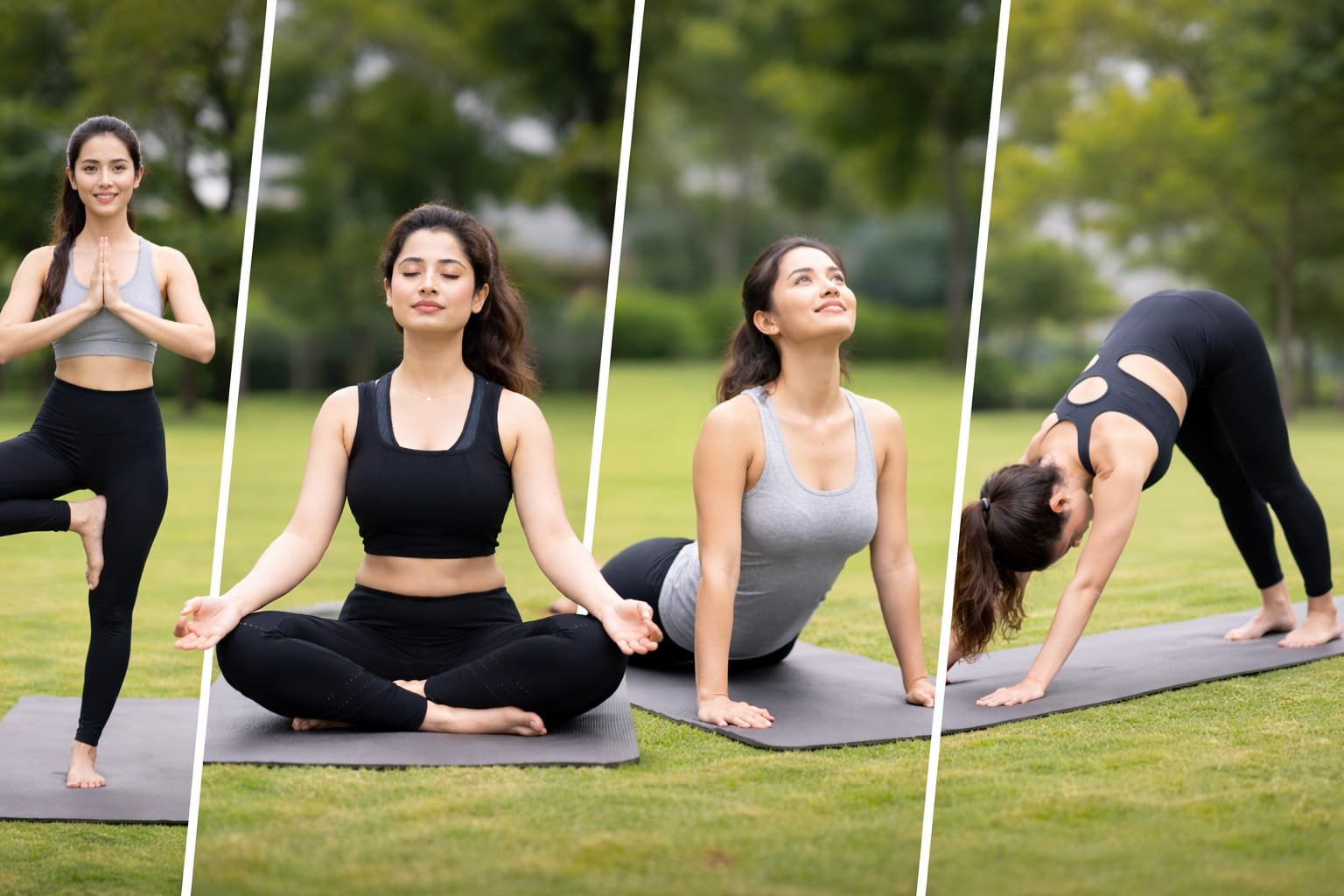
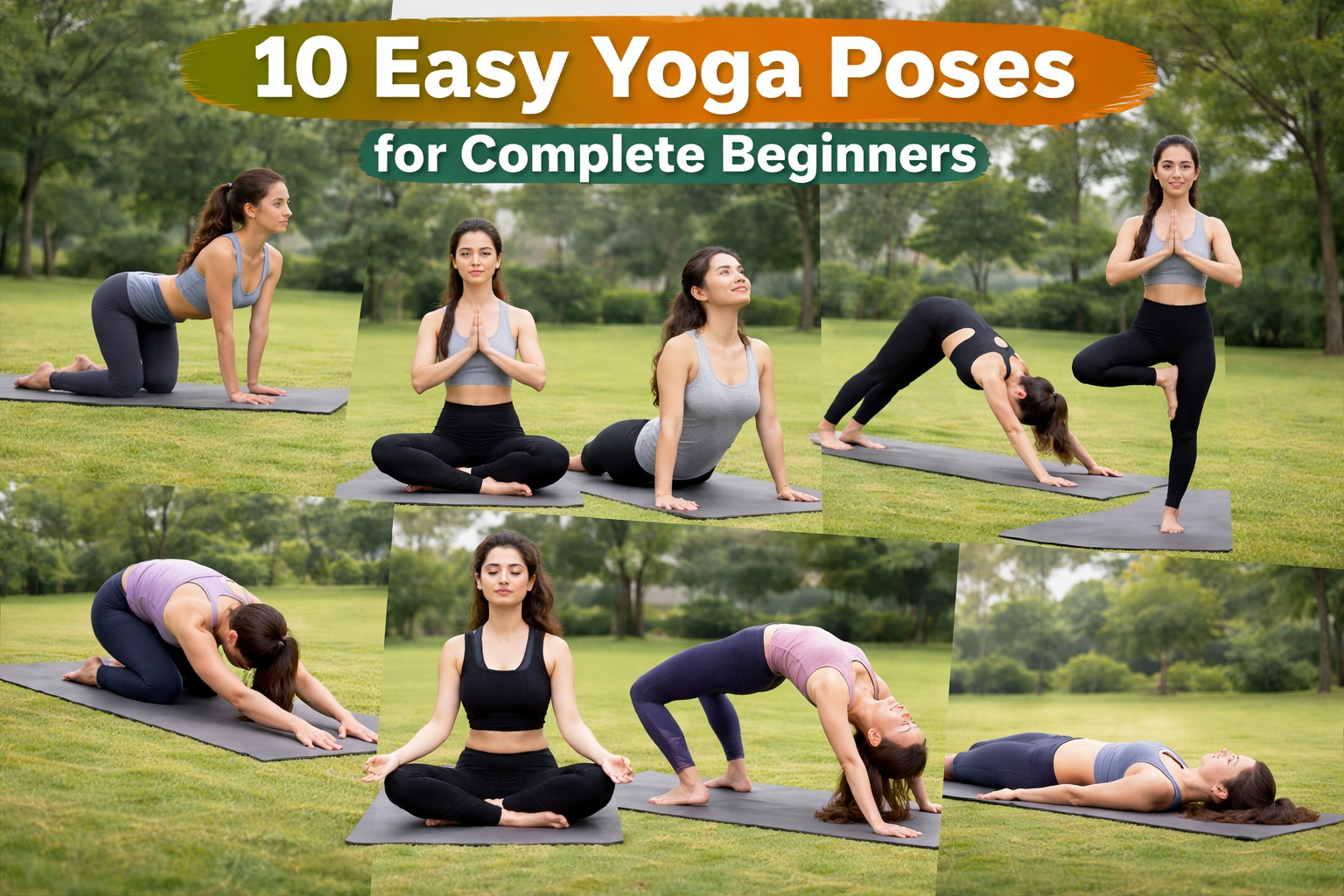

Starting your fitness journey can feel overwhelming. With so much information available online, it becomes difficult to understand where to begin. Should you focus on diet first? Or exercise? Or both?
The truth is simple: the best results come when yoga and diet work together.

This guide is specially designed for beginners who want a simple, practical, and effective approach to fitness. You don’t need a gym, expensive equipment, or complicated routines. With the right combination of yoga and a balanced diet, you can transform your body and mind naturally.
In this detailed guide, you will learn how to build a sustainable lifestyle that supports weight loss, improves energy, and enhances overall well-being.
Why Combine Yoga and Diet for Better Results?

Many people make the mistake of focusing only on exercise or only on diet. However, both play equally important roles in achieving long-term fitness goals.
Yoga helps improve flexibility, strength, and mental clarity, while a proper diet fuels your body and supports fat loss. When combined, they create a powerful system that works from both inside and outside.
Yoga also helps reduce stress, which is one of the major causes of weight gain. When your stress levels are controlled, your body functions better, and you make healthier choices automatically.
According to the NHS, regular physical activity supports overall health and helps maintain a healthy weight.
Benefits of Yoga for Beginners
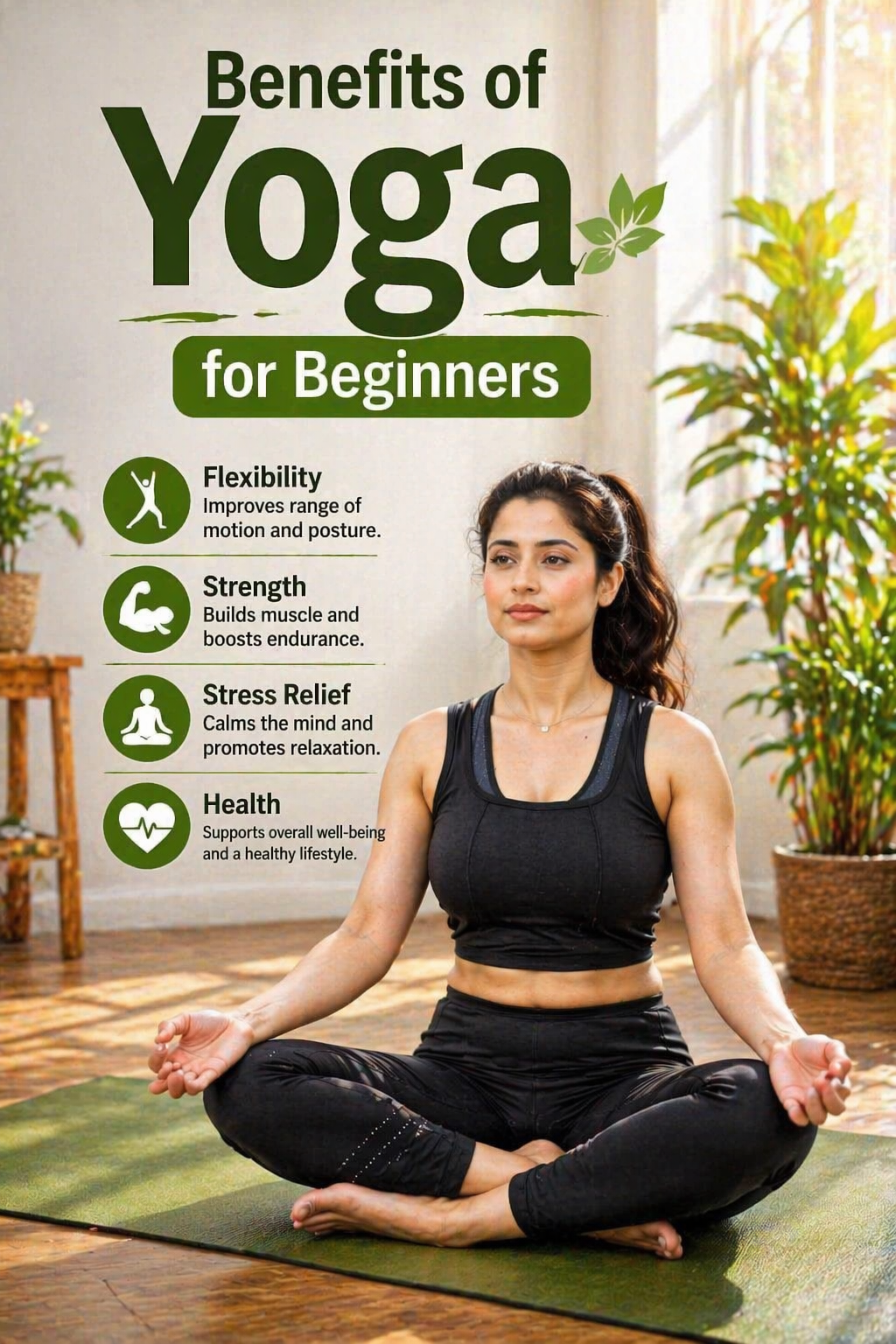
Yoga is not just about flexibility or stretching. It is a complete system that works on your body, mind, and breathing.
- Improves flexibility and mobility
- Boosts metabolism
- Reduces stress and anxiety
- Enhances digestion
- Supports fat loss naturally
- Improves posture and balance
Unlike high-intensity workouts, yoga is gentle on the body and can be practiced daily without the risk of injury.
Beginner-Friendly Yoga Routine
If you are just starting, it is important to keep your routine simple and consistent. Below is a basic yoga routine that beginners can follow daily.
1. Tadasana (Mountain Pose)
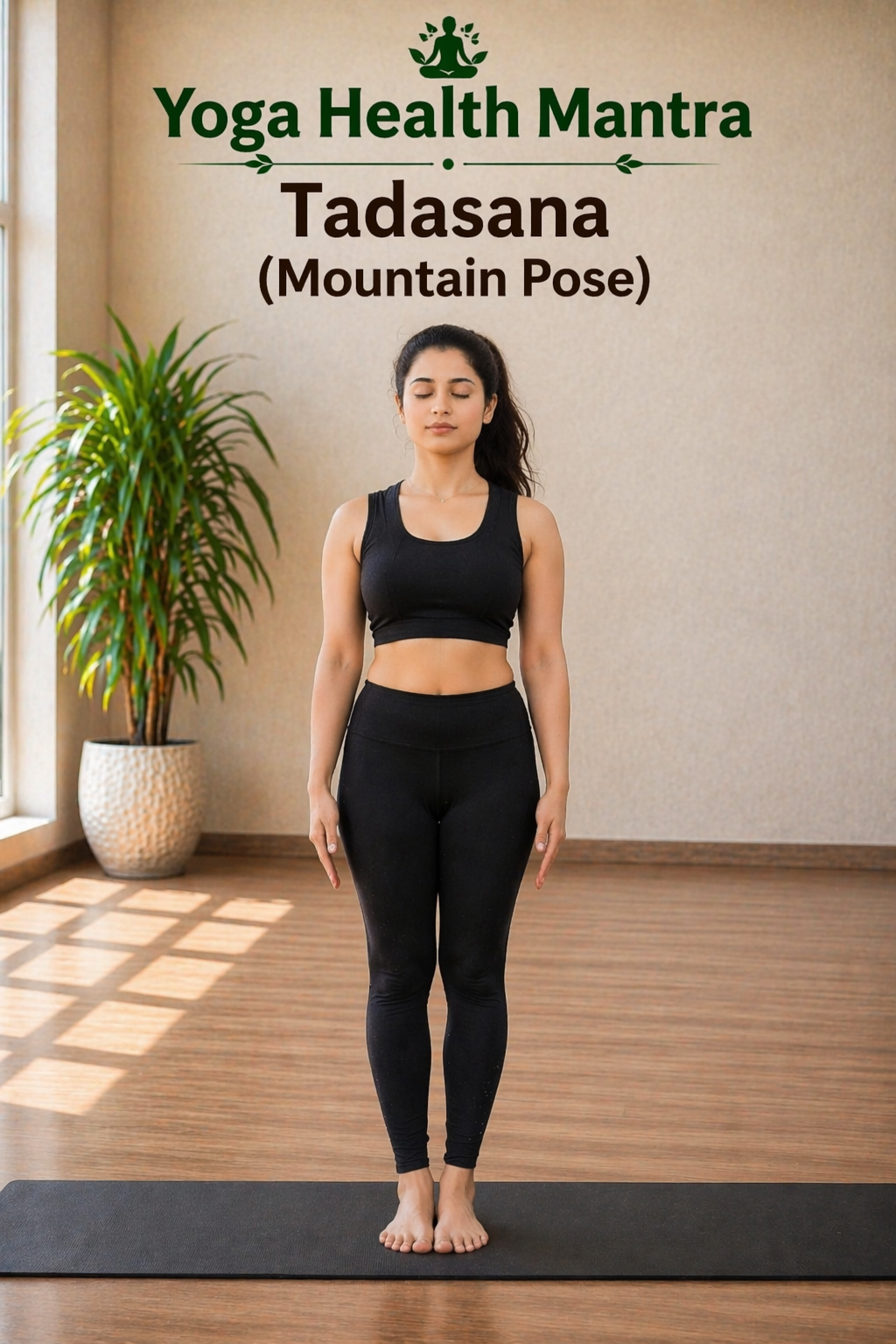
This pose helps improve posture and balance.
How to do it:
- Stand straight with your feet together
- Keep your arms by your side
- Maintain a straight spine
- Breathe deeply and relax
Duration: 1–2 minutes
2. Uttanasana (Standing Forward Bend)
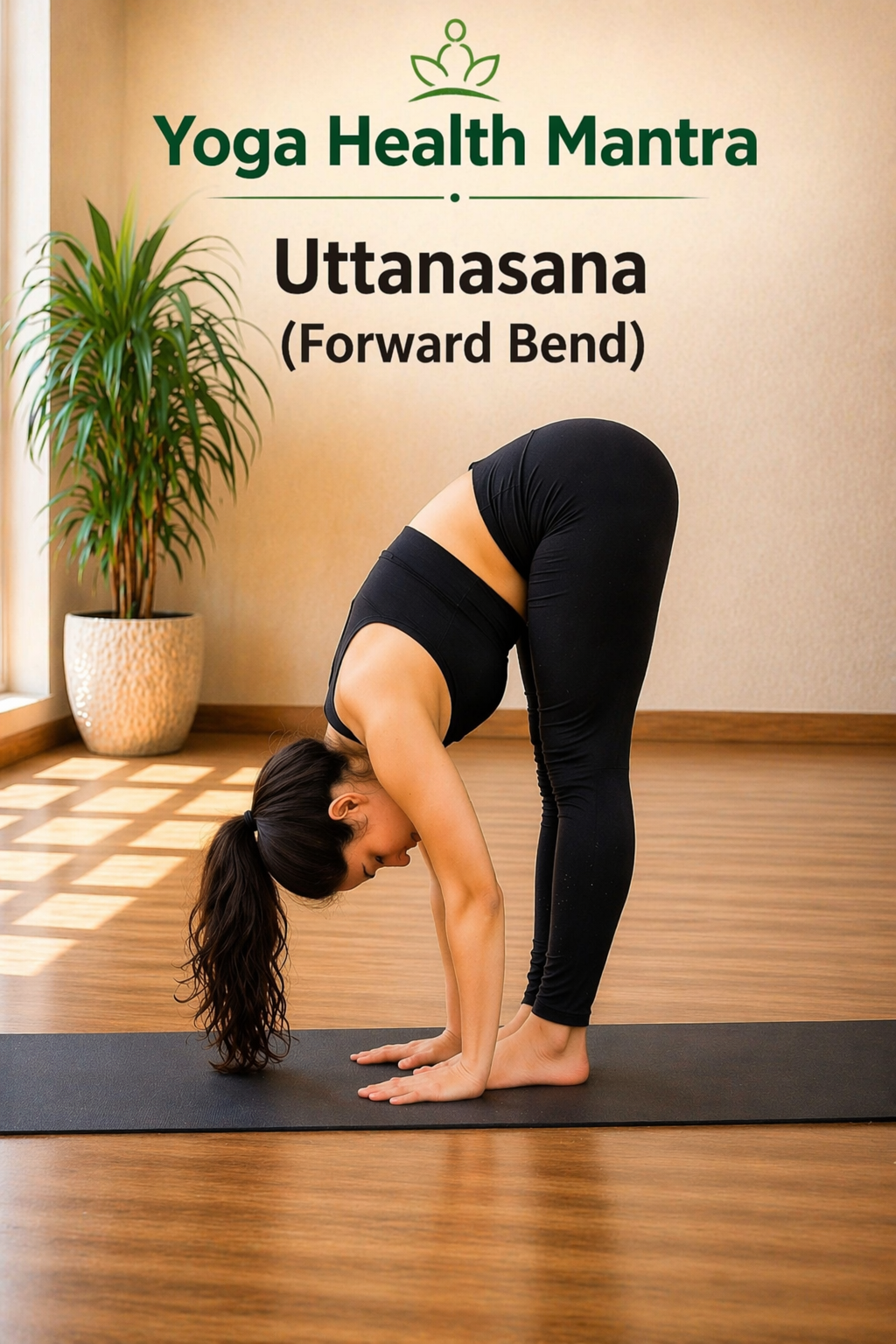
This pose stretches your hamstrings and improves blood circulation.
Steps:
- Stand straight
- Slowly bend forward from your hips
- Try to touch the floor with your hands
- Keep your knees slightly soft if needed
Duration: 1–2 minutes
3. Cat-Cow Stretch
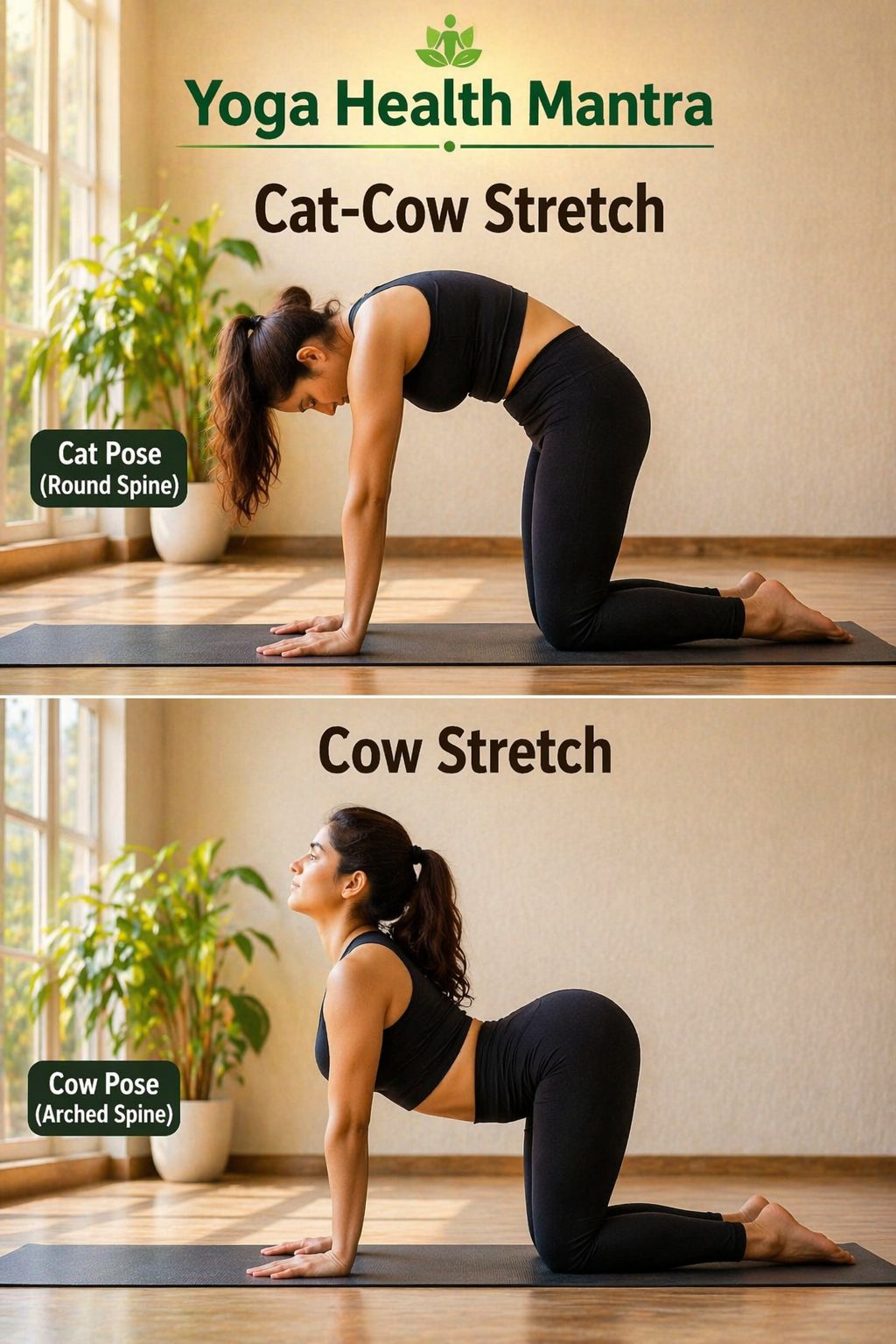
This movement improves spinal flexibility and relieves back tension.
Steps:
- Come on all fours (hands and knees)
- Inhale and arch your back (Cow Pose)
- Exhale and round your spine (Cat Pose)
- Repeat slowly with breathing
Duration: 2–3 minutes
4. Child’s Pose (Balasana)
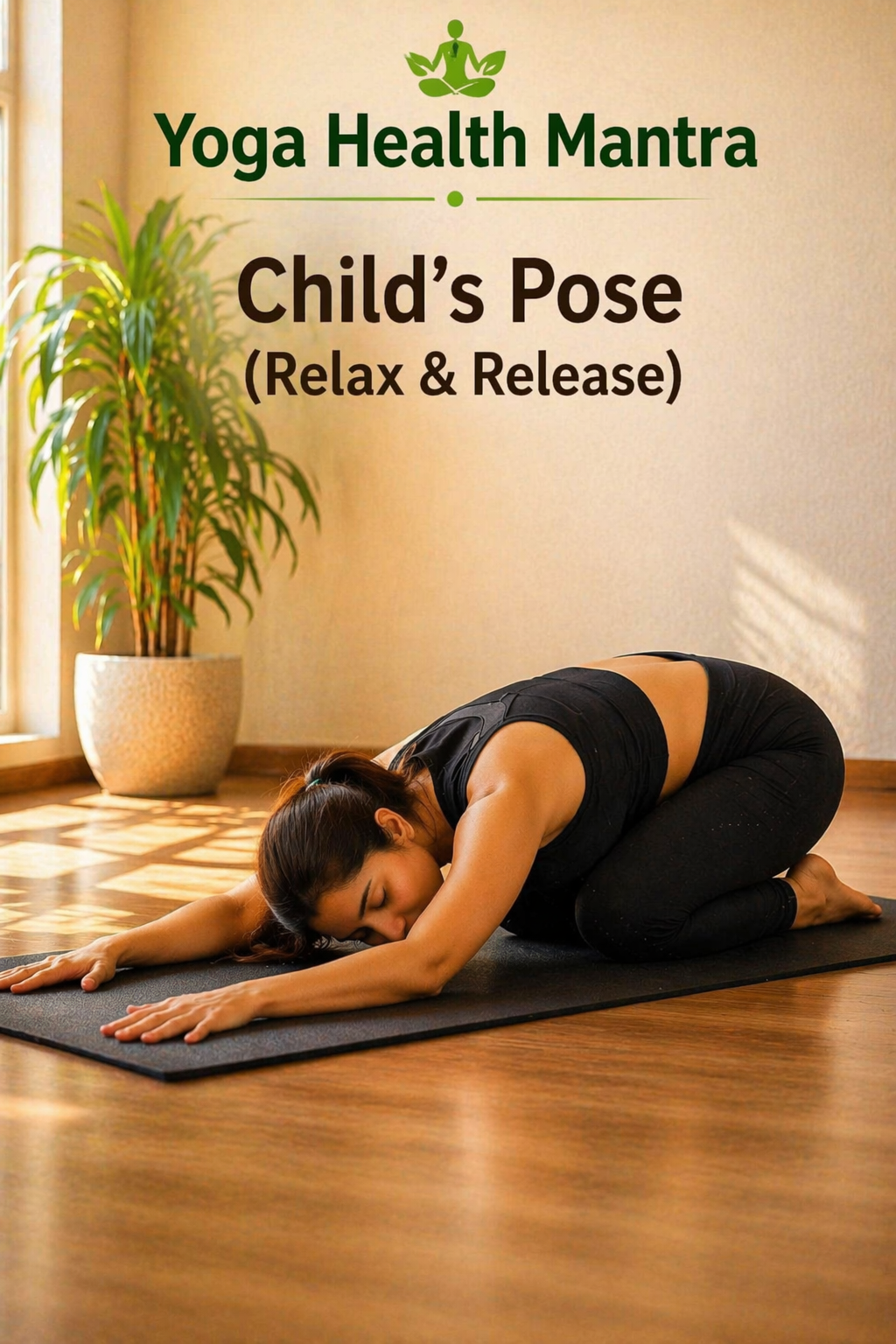
This is a relaxing pose that calms the body and mind.
Steps:
- Kneel down on the mat
- Sit back on your heels
- Stretch your arms forward
- Rest your forehead on the mat
Duration: 2–3 minutes
5. Navasana (Boat Pose)
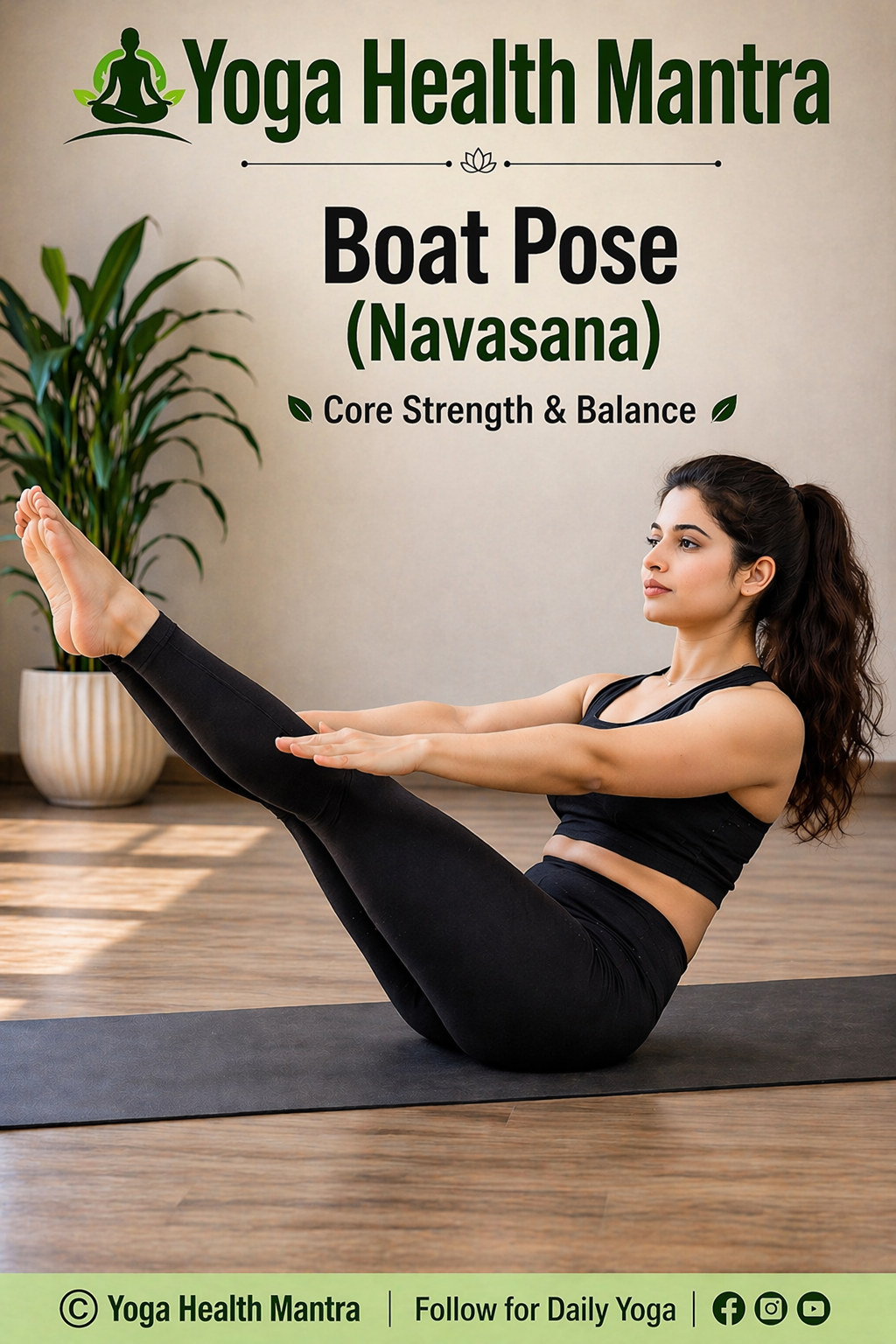
This pose strengthens your core and helps reduce belly fat.
How to do it:
Sit on the floor with your legs extended
Lift your legs upward
Lean slightly backward
Keep your arms straight forward
Balance your body on your hips
Duration: 20–40 seconds
6. Bhujangasana (Cobra Pose)
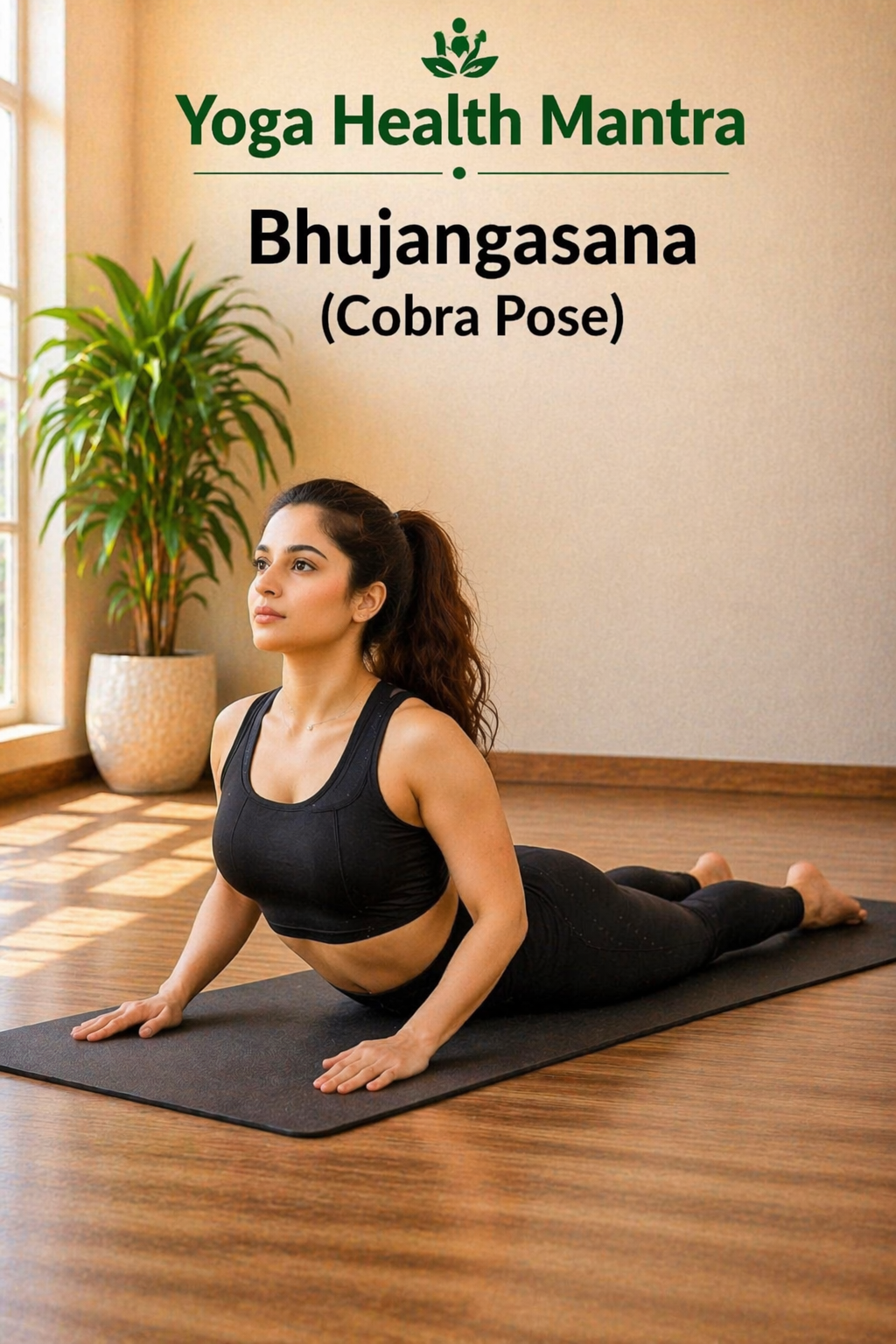
This pose improves digestion and strengthens your back.
How to do it:
Lie flat on your stomach
Place your palms under your shoulders
Inhale and lift your chest upward
Keep your elbows slightly bent
Look forward and keep shoulders relaxed
Duration: 20–30 seconds
7. Setu Bandhasana (Bridge Pose)
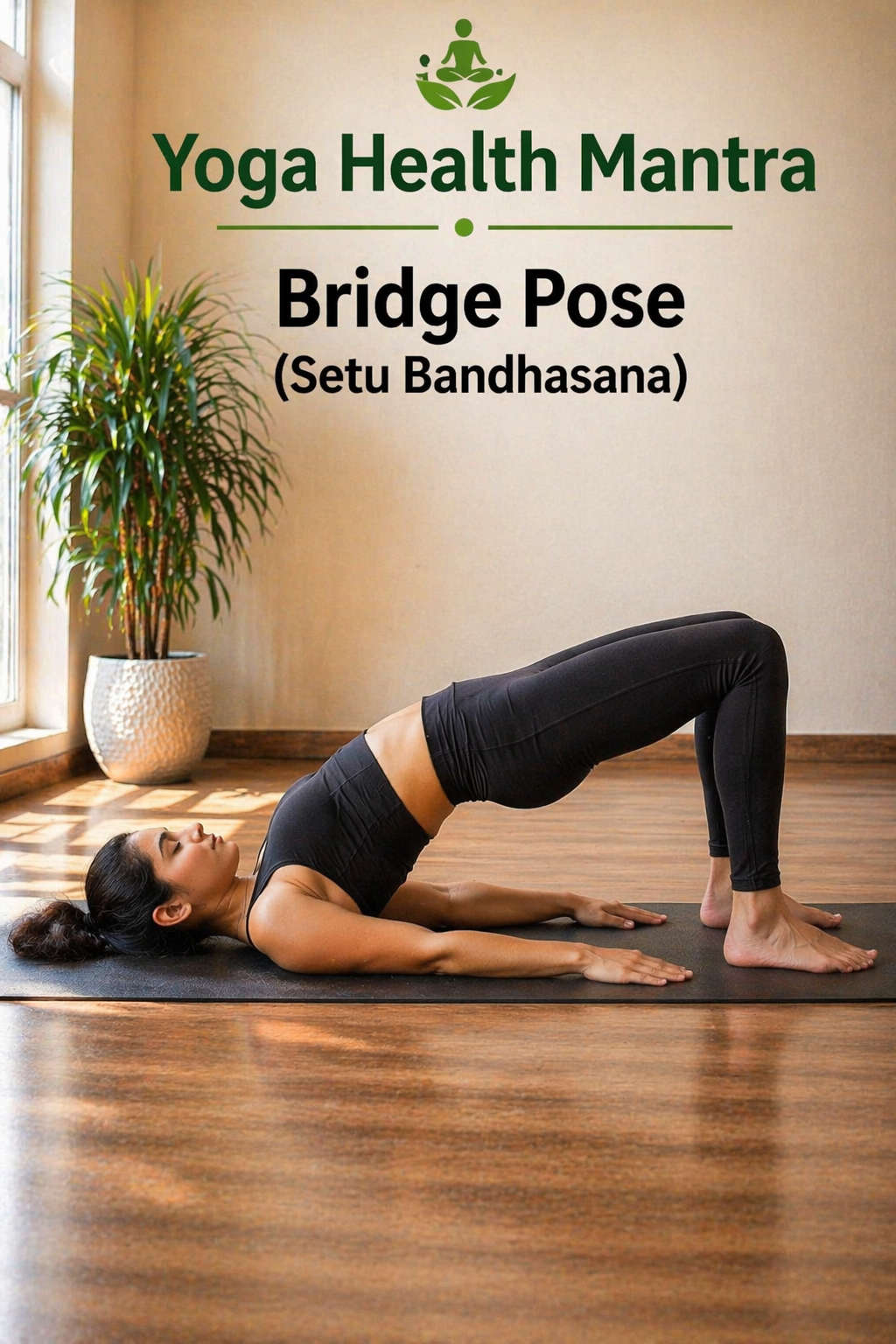
This pose strengthens your lower body and improves flexibility.
How to do it:
Lie on your back with knees bent
Keep your feet flat on the floor
Lift your hips upward slowly
Keep your arms on the floor
Hold the position comfortably
Duration: 30–60 seconds
8. Savasana (Relaxation Pose)
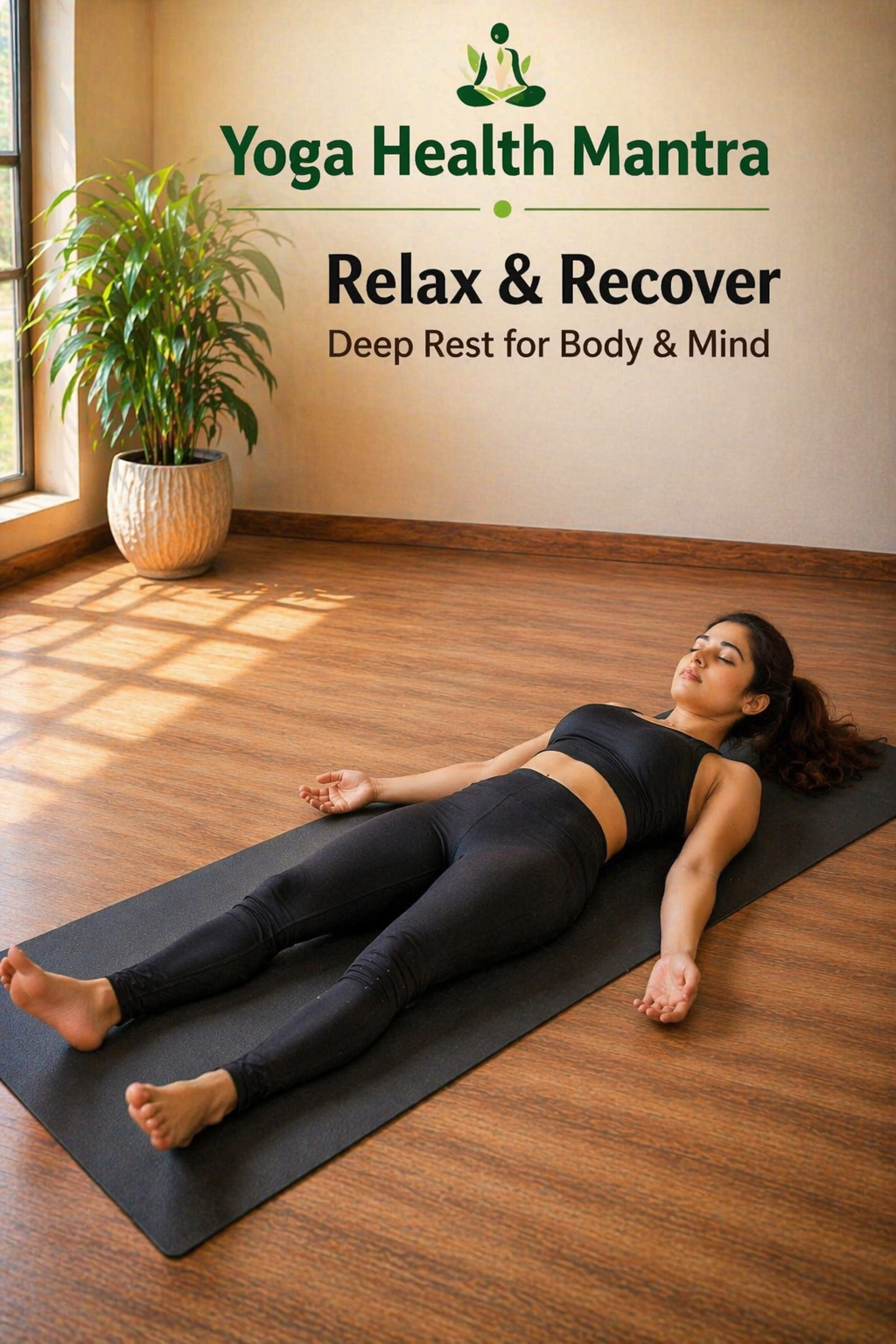
This pose helps your body recover and relax completely.
How to do it:
Lie flat on your back
Keep your arms relaxed beside your body
Close your eyes
Focus on your breathing
Let your body fully relax
Duration: 2–5 minutes
How Often Should You Practice Yoga?
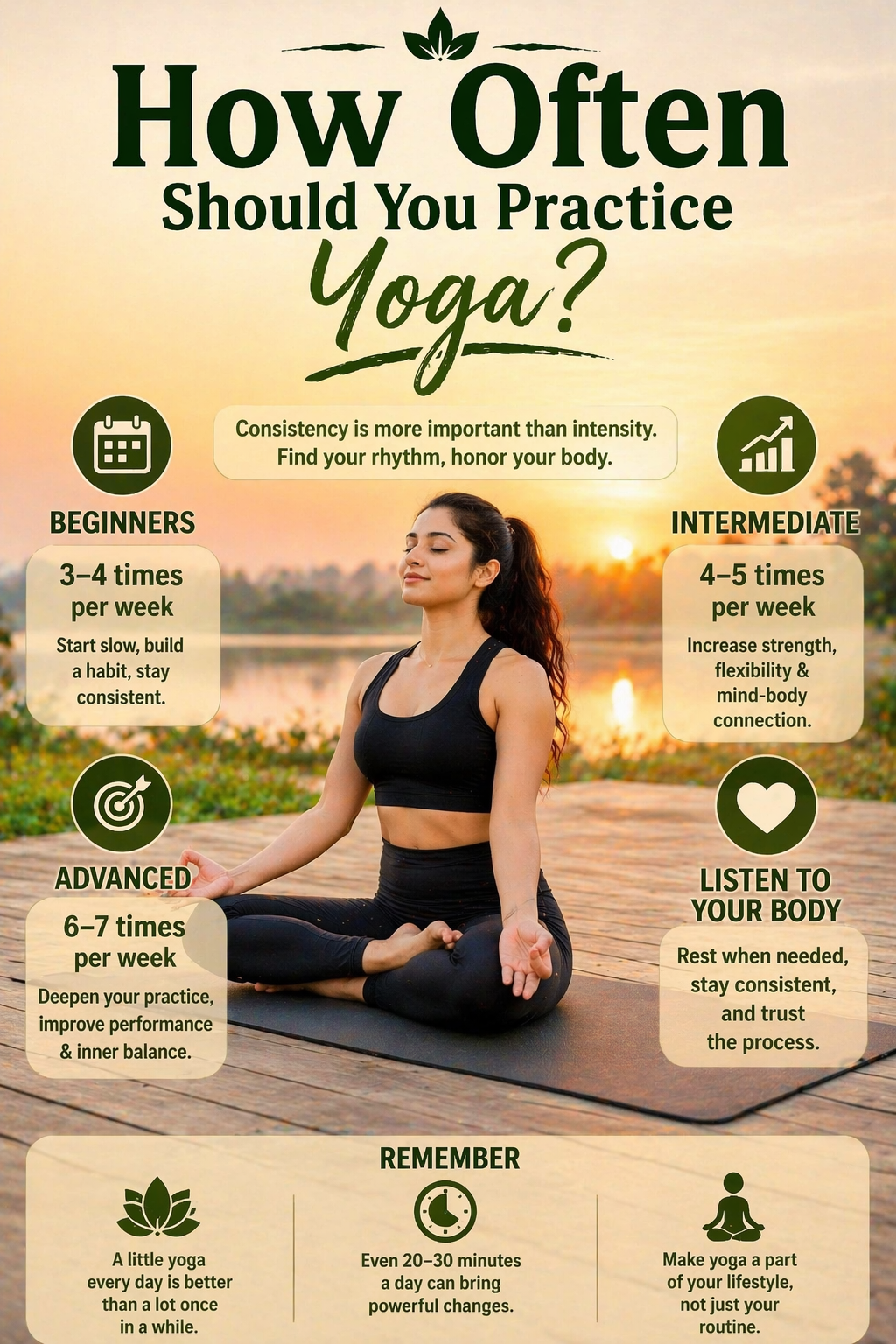
Consistency is more important than intensity. As a beginner, you should aim to practice yoga at least 5–6 days a week.
Each session can be 15–30 minutes long. Over time, you can gradually increase the duration and add more advanced poses.
The key is to make yoga a daily habit rather than a temporary routine.
Important Tips Before You Start
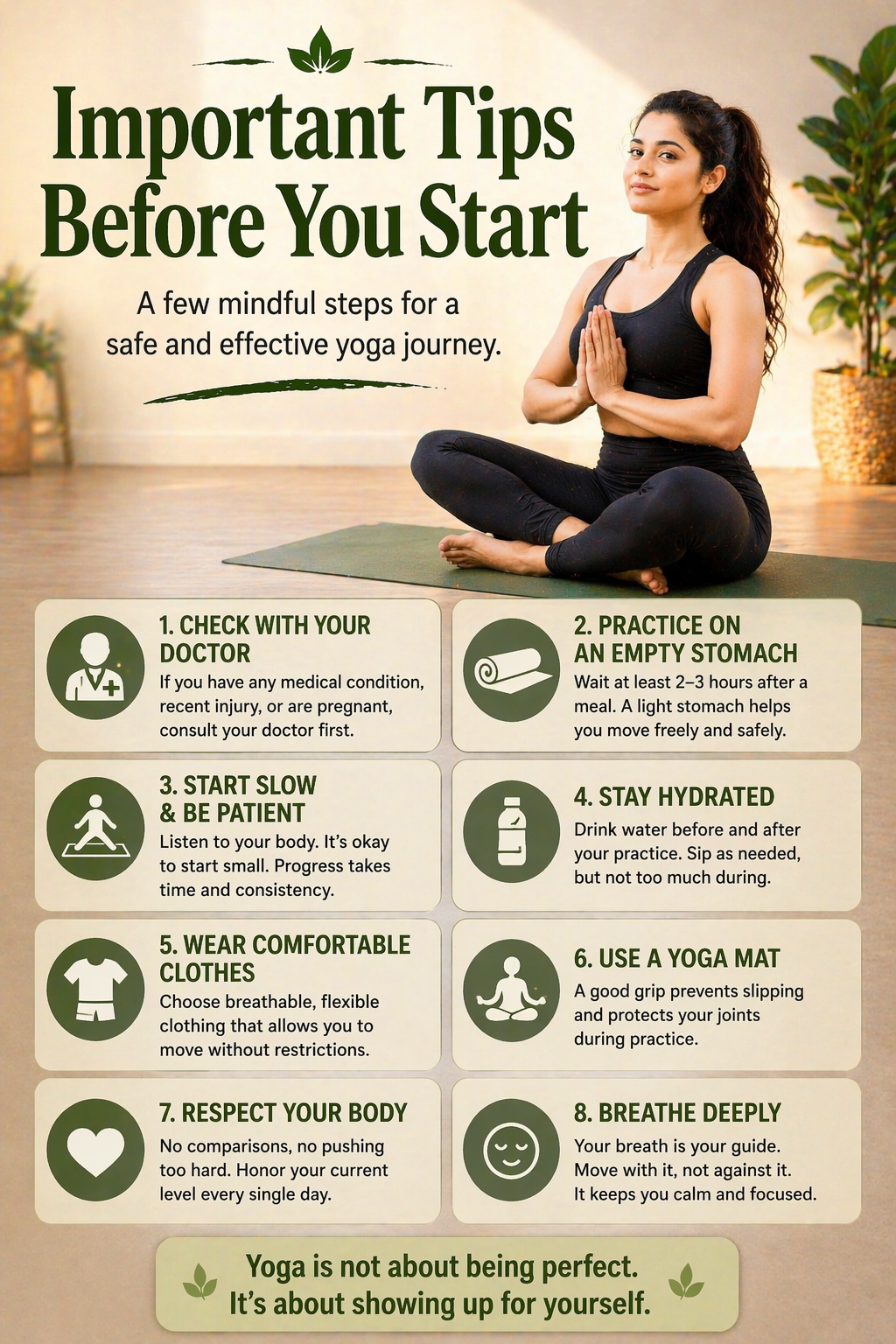
- Always practice on an empty stomach
- Wear comfortable clothing
- Choose a calm and quiet space
- Focus on breathing
- Do not push your body too hard
Following these simple guidelines will help you avoid injuries and get better results.
Understanding the Role of Diet in Weight Loss
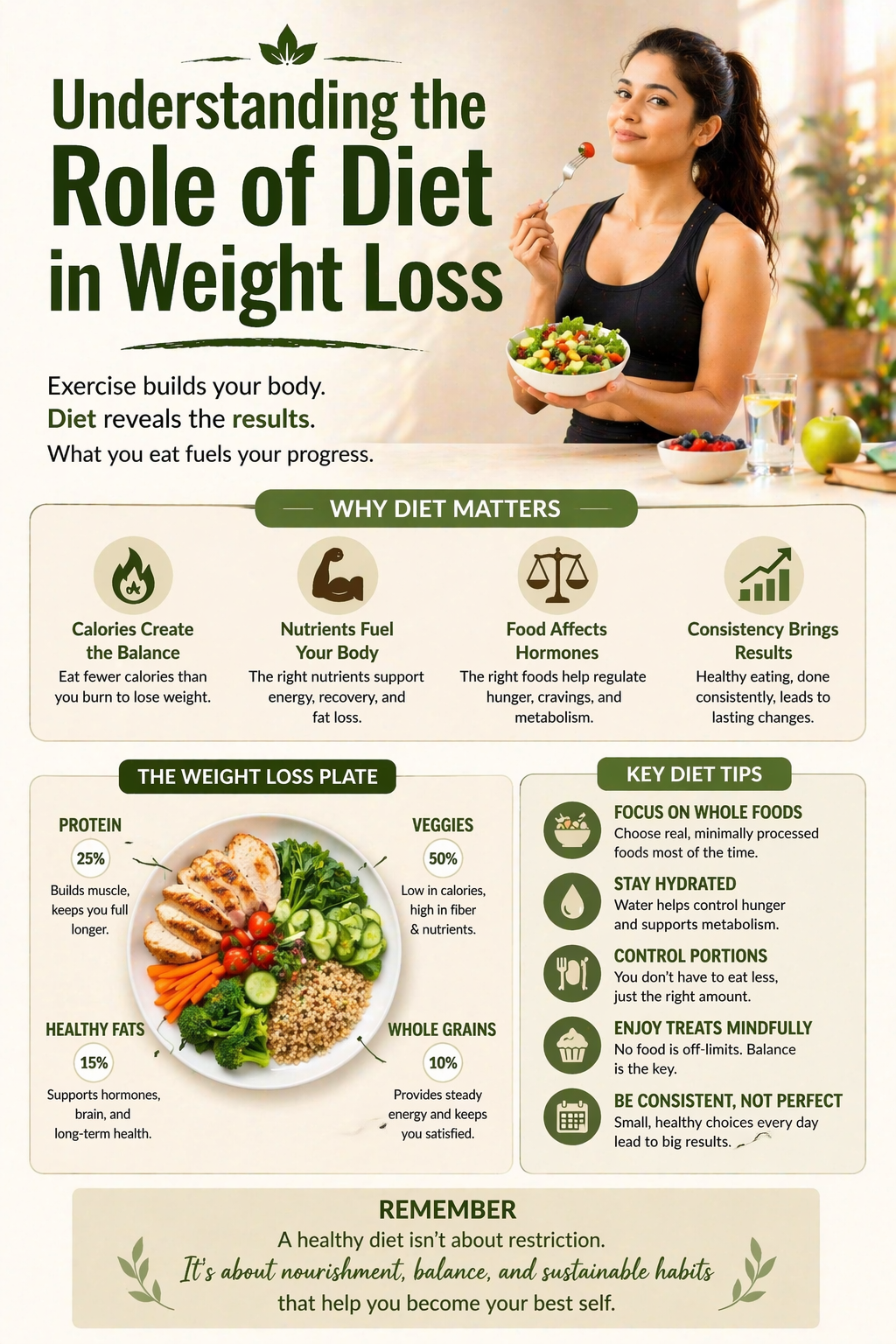
No matter how much yoga you practice, your results will depend largely on what you eat. A healthy diet provides your body with the nutrients it needs while helping you maintain a calorie balance.
For beginners, the goal is not to follow a strict or complicated diet but to build simple and sustainable eating habits.
A good diet should focus on balance, portion control, and consistency rather than extreme restrictions.
According to the Cleveland Clinic, sustainable weight loss comes from long-term lifestyle changes rather than short-term dieting.
Basic Principles of a Healthy Diet

Before following any diet plan, it is important to understand a few simple principles:
- Eat whole, natural foods as much as possible
- Avoid processed and sugary foods
- Maintain portion control
- Stay hydrated throughout the day
- Do not skip meals
These basic habits can make a big difference over time.
Common Diet Mistakes Beginners Make
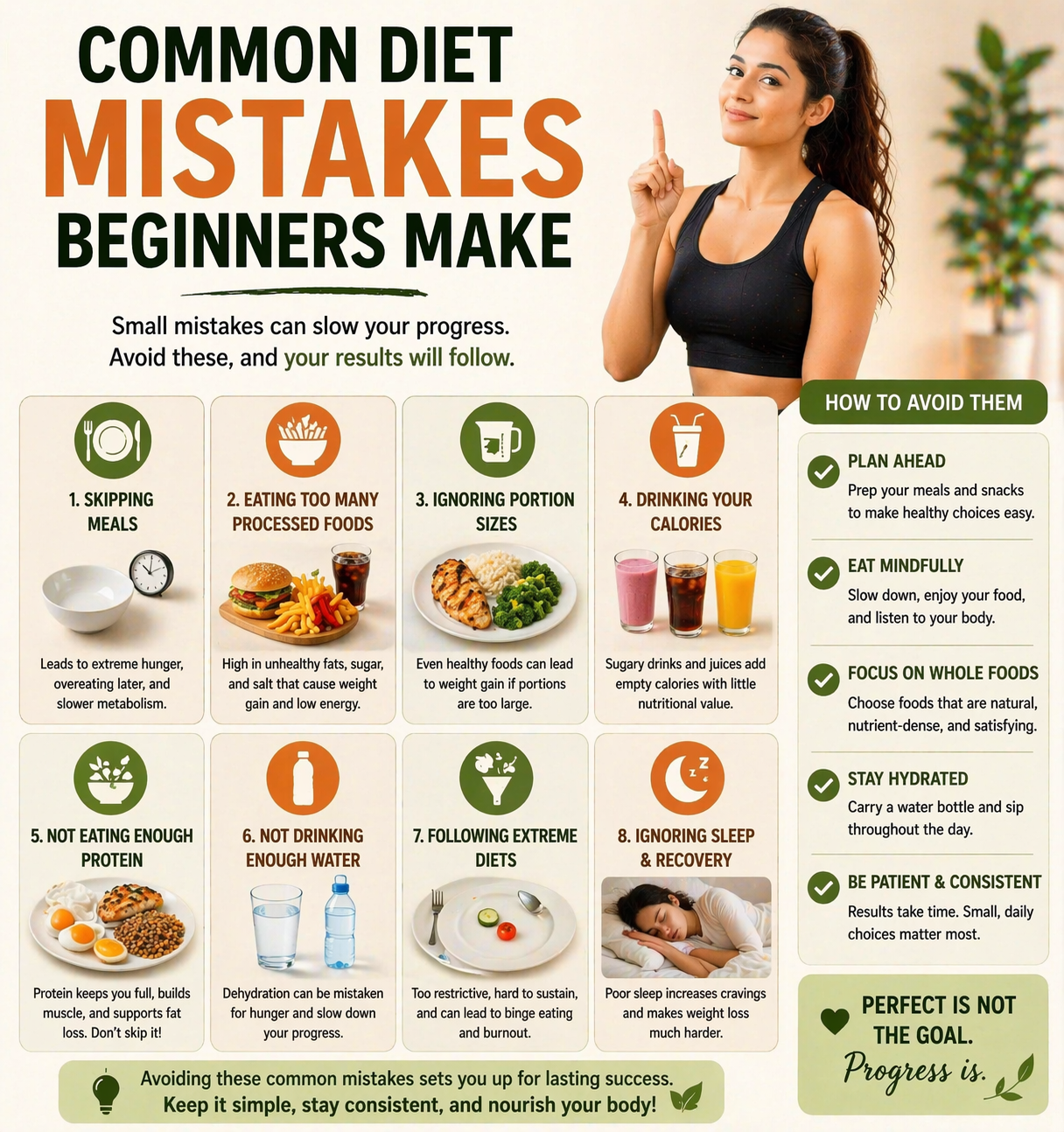
Many beginners make simple mistakes that slow down their progress:
- Skipping meals
- Eating too little
- Following crash diets
- Ignoring portion control
- Not drinking enough water
Avoiding these mistakes will help you stay consistent and get better results.
How Yoga and Diet Work Together
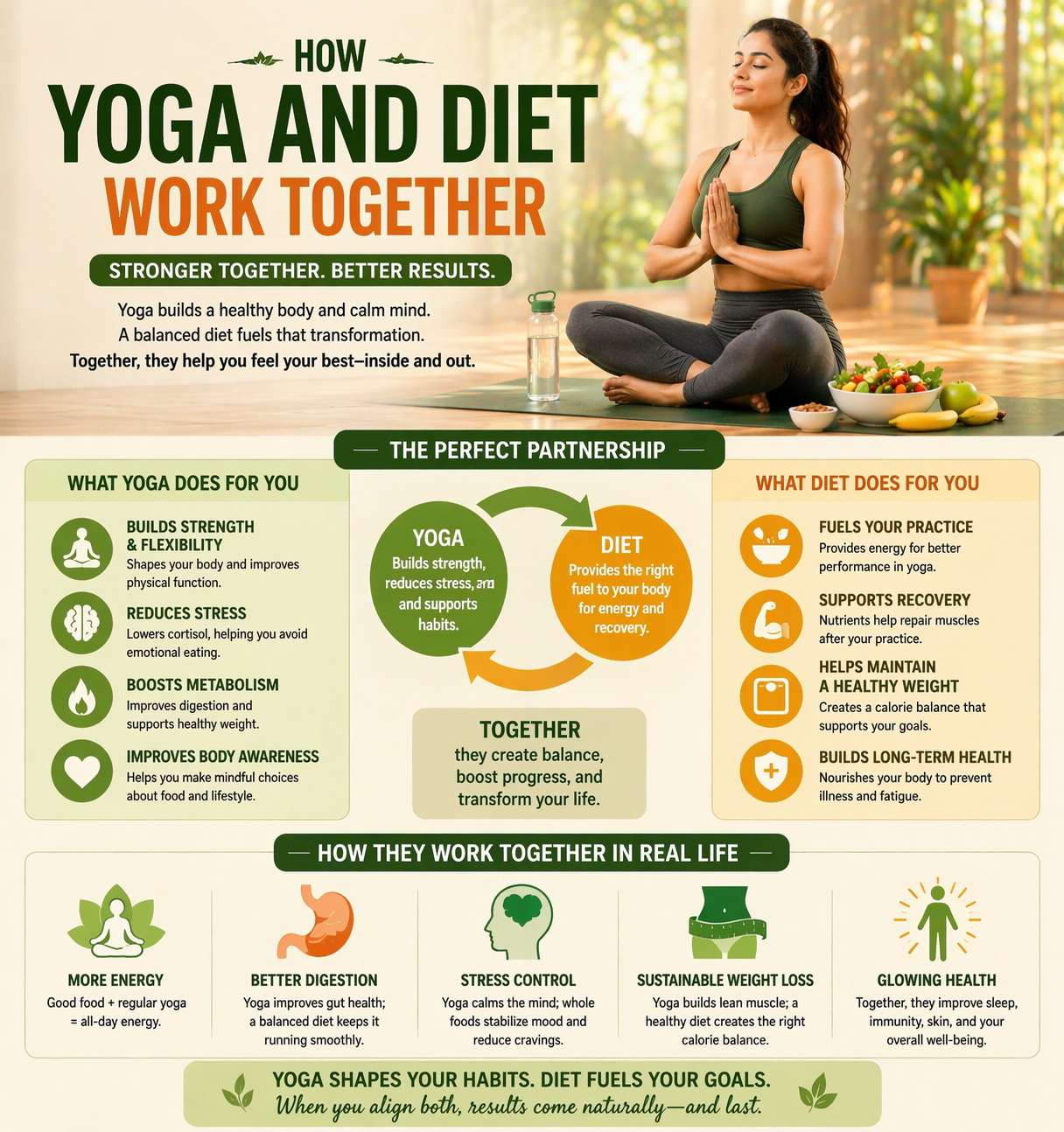
Yoga and diet are not separate—they work together as a system.
Yoga improves your metabolism and reduces stress, while a proper diet fuels your body and supports fat loss.
When both are combined, you get faster and more sustainable results.
If you are following a beginner yoga routine, make sure your diet supports your energy levels and recovery.
Best Time to Practice Yoga for Weight Loss
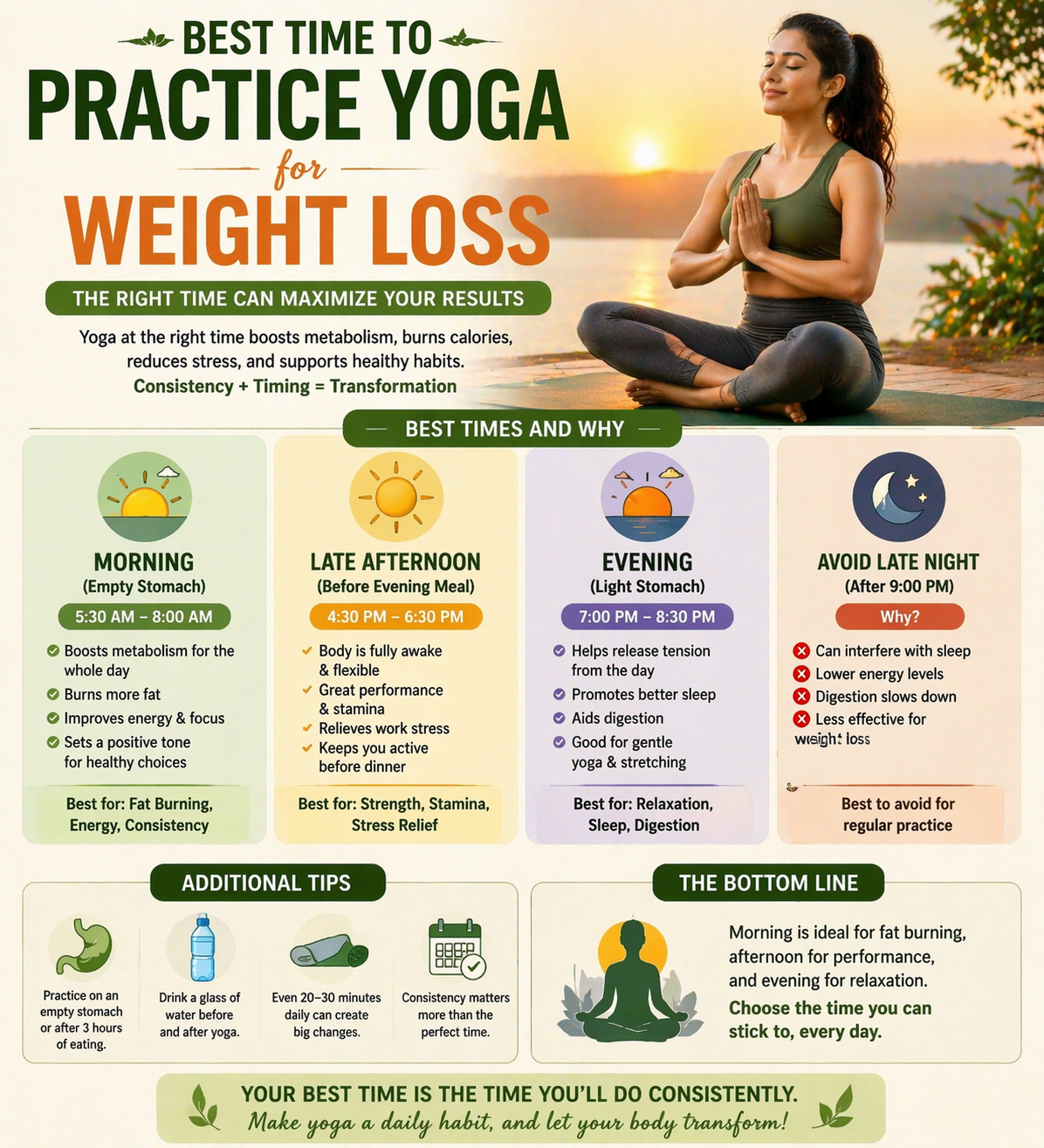
One of the most common questions beginners ask is: what is the best time to do yoga?
The answer depends on your lifestyle, but morning is generally considered the most effective time for yoga practice.
🌅 Morning Yoga (Best Option)
- Boosts metabolism for the entire day
- Improves focus and mental clarity
- Helps burn more calories
- Creates a positive start to your day
If possible, practice yoga in the early morning on an empty stomach.
Explore a complete morning yoga routine
🌙 Evening Yoga (Alternative Option)
- Helps release stress after a long day
- Improves sleep quality
- Relaxes the body and mind
Evening yoga is a great option if you cannot practice in the morning.
Weekly Yoga + Diet Schedule for Beginners
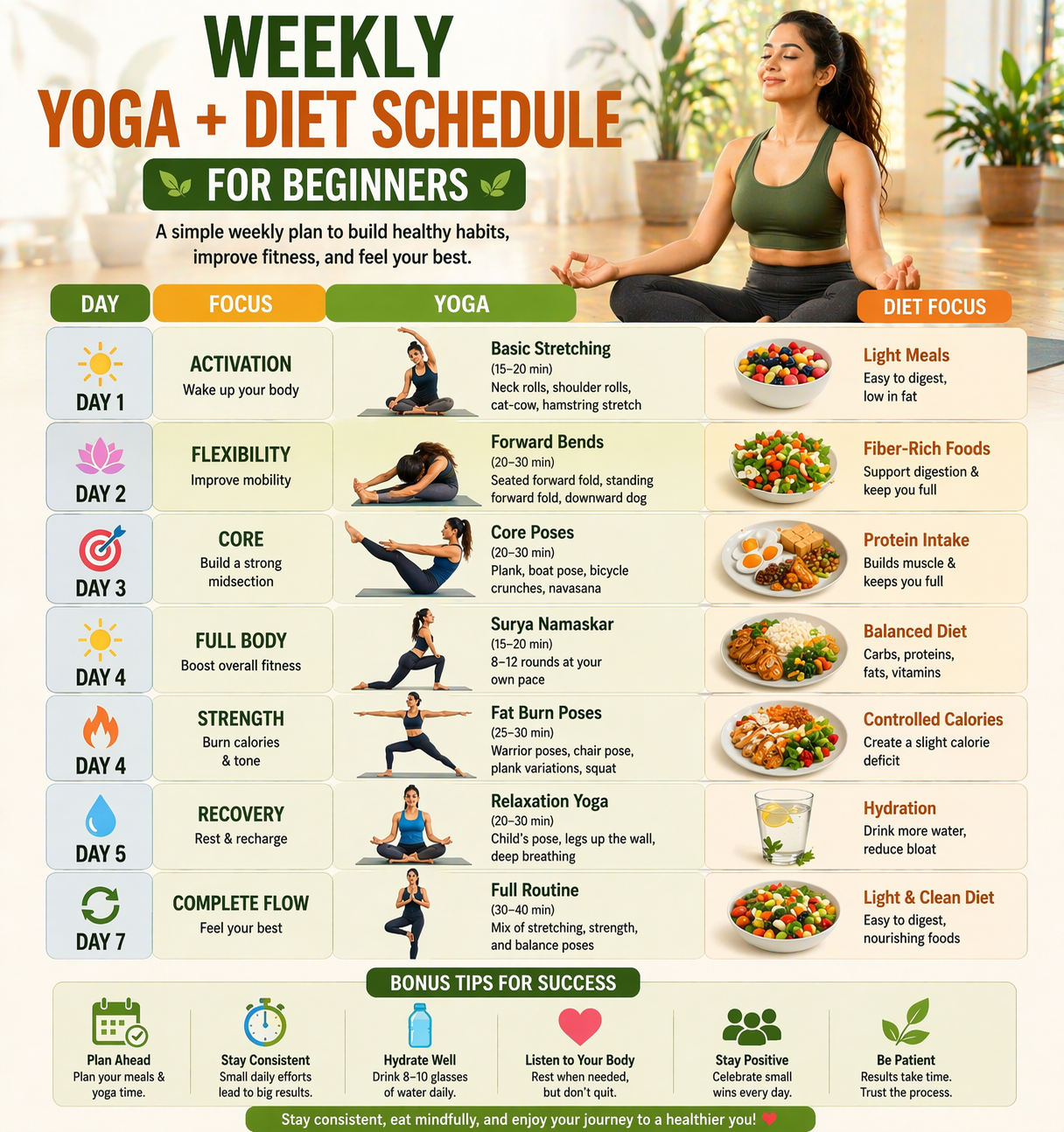
To make things easier, here is a simple weekly structure you can follow:
| Day | Focus | Yoga | Diet Focus |
|---|---|---|---|
| Day 1 | Activation | Basic stretching | Light meals |
| Day 2 | Flexibility | Forward bends | Fiber-rich foods |
| Day 3 | Core | Core poses | Protein intake |
| Day 4 | Full Body | Surya Namaskar | Balanced diet |
| Day 5 | Strength | Fat burn poses | Controlled calories |
| Day 6 | Recovery | Relaxation yoga | Hydration |
| Day 7 | Complete Flow | Full routine | Light & clean diet |
This structured plan helps you stay organized and consistent.
Mindset & Consistency Tips (Most Important)
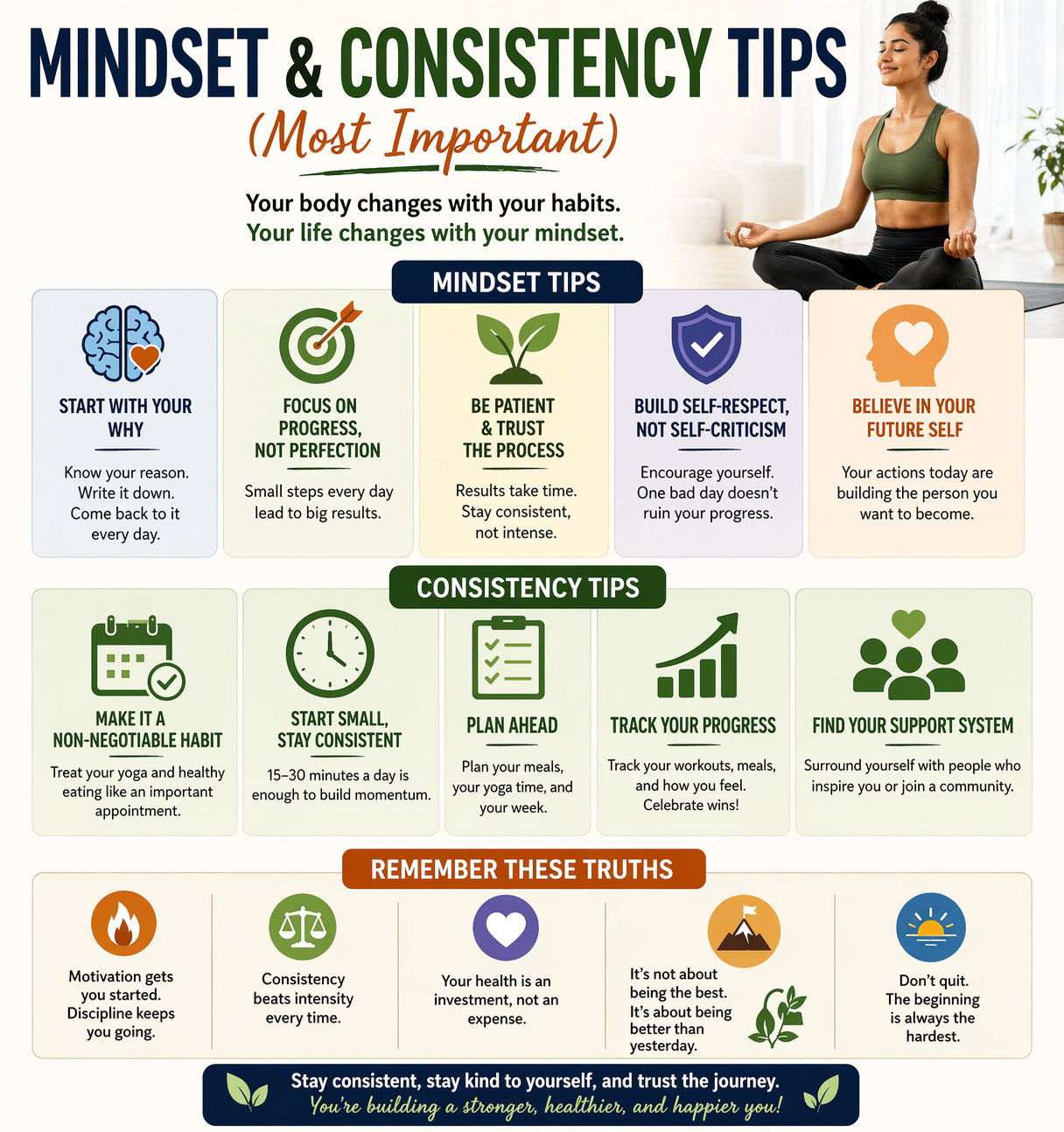
Your mindset plays a huge role in your fitness journey. Without consistency, even the best plan will not give results.
- Start small but stay consistent
- Focus on progress, not perfection
- Do not compare your journey with others
- Celebrate small achievements
- Stay patient and trust the process
Remember, real transformation takes time.
Final Motivation
You don’t need to be perfect to start. You just need to begin.
Every small step you take brings you closer to your goal.
Stay consistent, stay focused, and your body will thank you.
How Long Does It Take to See Results?
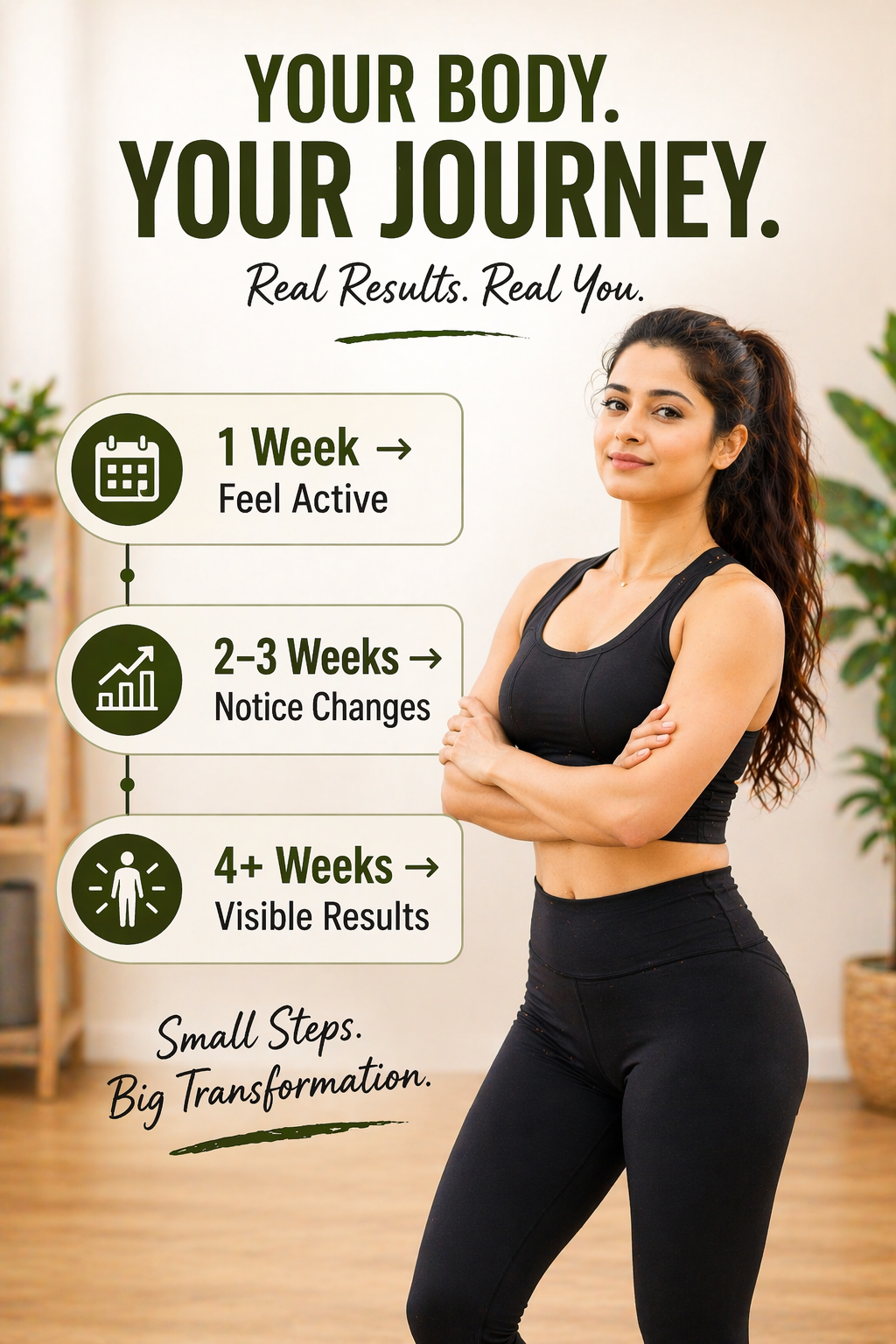
Weight loss is a gradual process, especially when you are following a natural and sustainable method like yoga and a balanced diet. Instead of expecting instant results, focus on consistency and long-term progress.
Week 1: Feel More Active
During the first week, your body starts adapting to the routine. You may not see visible changes yet, but you will feel more energetic and less stiff.
- Improved energy levels
- Better digestion
- Reduced body stiffness
Week 2–3: Notice Changes
As you continue your routine, your body starts responding more effectively.
- Reduced bloating
- Improved flexibility
- Slight inch loss
Week 4+: Visible Fat Loss
With consistent effort, visible results begin to appear.
- Gradual fat loss
- Better muscle tone
- Improved stamina
Consistency is the key to success.
Common Mistakes to Avoid
- Skipping yoga sessions
- Following an unhealthy diet
- Expecting quick results
- Not staying consistent
FAQs – Yoga + Diet Plan for Beginners
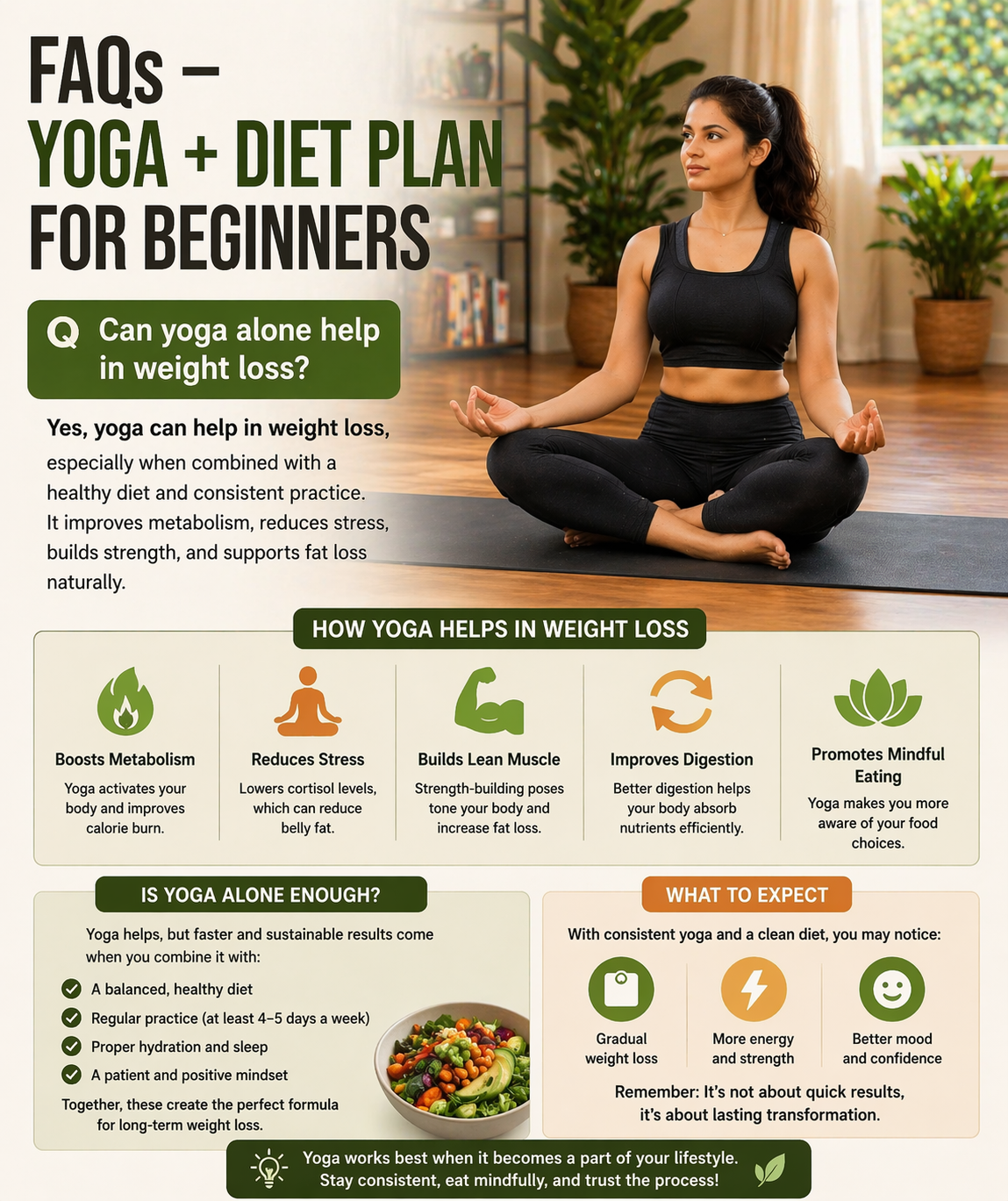
Can yoga alone help in weight loss?
Yes, yoga can support weight loss, especially when combined with a proper diet and consistent routine.
How many days should I follow this plan?
This plan should be followed continuously and repeated every week for the best results.
Is this plan suitable for beginners?
Yes, it is designed specifically for beginners with simple and safe exercises.
Do I need a gym for this plan?
No, this routine can be done at home without any equipment.
How long should I practice daily?
20–30 minutes daily is enough for beginners.
Final Thoughts
Yoga and diet together create a powerful system for long-term health and weight loss. This is not a quick fix but a sustainable lifestyle approach.
If you stay consistent, patient, and focused, your body will naturally transform over time.
Your journey starts today.
👉 Follow daily yoga routines and stay connected with your health journey.
Explore More Yoga Guides
If you found this article helpful, you may also explore these related yoga guides:- Daily Yoga Routine for Beginners
- Yoga for Stress Relief
- 10 Easy Yoga Poses for Beginners
- Yoga During Periods – Safe Poses
- Yoga for glowing skin natural beauty from within
- Yoga Mistakes Beginners Should Avoid | Safe Yoga Tips
- Yoga for Back Pain Relief at Home
- morning yoga routine
- Evening Yoga Routine for Relaxation and Better Sleep