



Have you ever felt tired for no reason, emotionally stuck, or simply disconnected from life?
The ancient wisdom of chakras might have the answer. Our body is not just flesh and bones;
it’s a beautiful, complex network of energy. At the very core of this energy system lie seven
main centers called chakras, a Sanskrit word meaning “wheels” or “discs.”
When these wheels spin freely, life energy flows smoothly, and you feel healthy, happy, and alive.
But when they become blocked due to stress, trauma, or negative thinking, you may begin to face
physical discomfort, emotional struggles, and a sense of disconnection.
In this detailed and easy-to-understand guide, we will explore each of the seven chakras,
where they are located, what they control, the signs of imbalance, and simple, practical
healing methods. No complex jargon, just clear and human guidance.
Let’s begin this beautiful journey inward.
What Are Chakras? (A Simple Explanation)
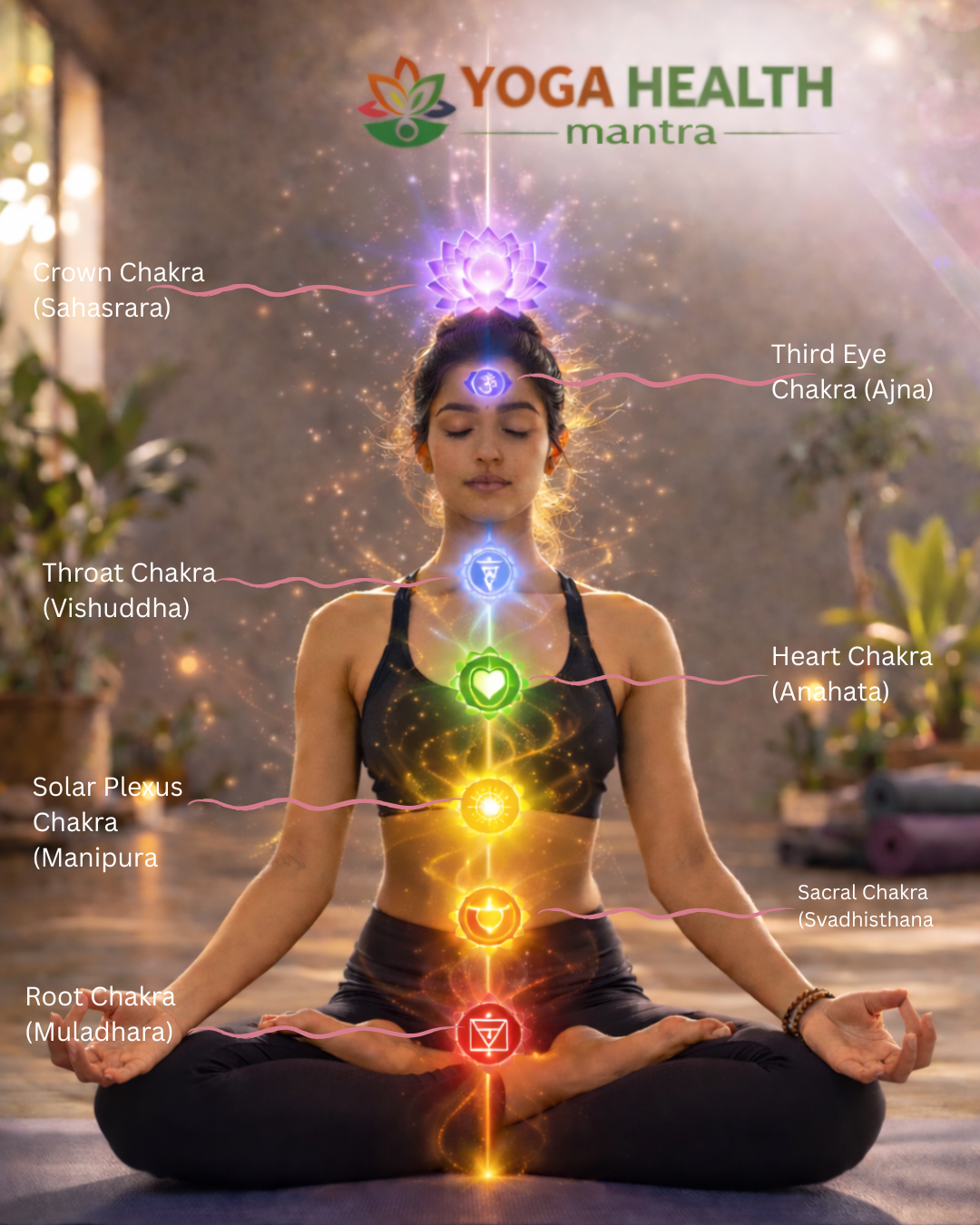
Imagine seven spinning wheels of energy stacked along your spine, from its base to the top of your head.
Each of these energy centers vibrates at a different frequency and is associated with its own color,
element, and purpose.
These chakras work like energy power stations. They absorb, process, and distribute life force energy
(known as prana in yoga) throughout your body. When one of these centers becomes blocked,
like a clogged filter, the natural flow of energy slows down. This is when physical, emotional, or mental
imbalances may begin to appear.
The good news is that you can restore balance naturally. Simple practices such as meditation, yoga,
affirmations, color therapy, and mindful living can help activate and align your chakras.
You don’t need to be an expert or a spiritual master — anyone can begin this journey.
Here are the seven chakras, from base to crown:
- Root Chakra (Muladhara): Survival, safety, grounding
- Sacral Chakra (Svadhisthana): Creativity, emotions, pleasure
- Solar Plexus Chakra (Manipura): Willpower, confidence, personal power
- Heart Chakra (Anahata): Love, compassion, forgiveness
- Throat Chakra (Vishuddha): Communication, self-expression, truth
- Third Eye Chakra (Ajna): Intuition, wisdom, inner vision
- Crown Chakra (Sahasrara): Spirituality, connection to the divine
Now, let’s explore each chakra in detail and understand how to balance them for a healthier and more
harmonious life.
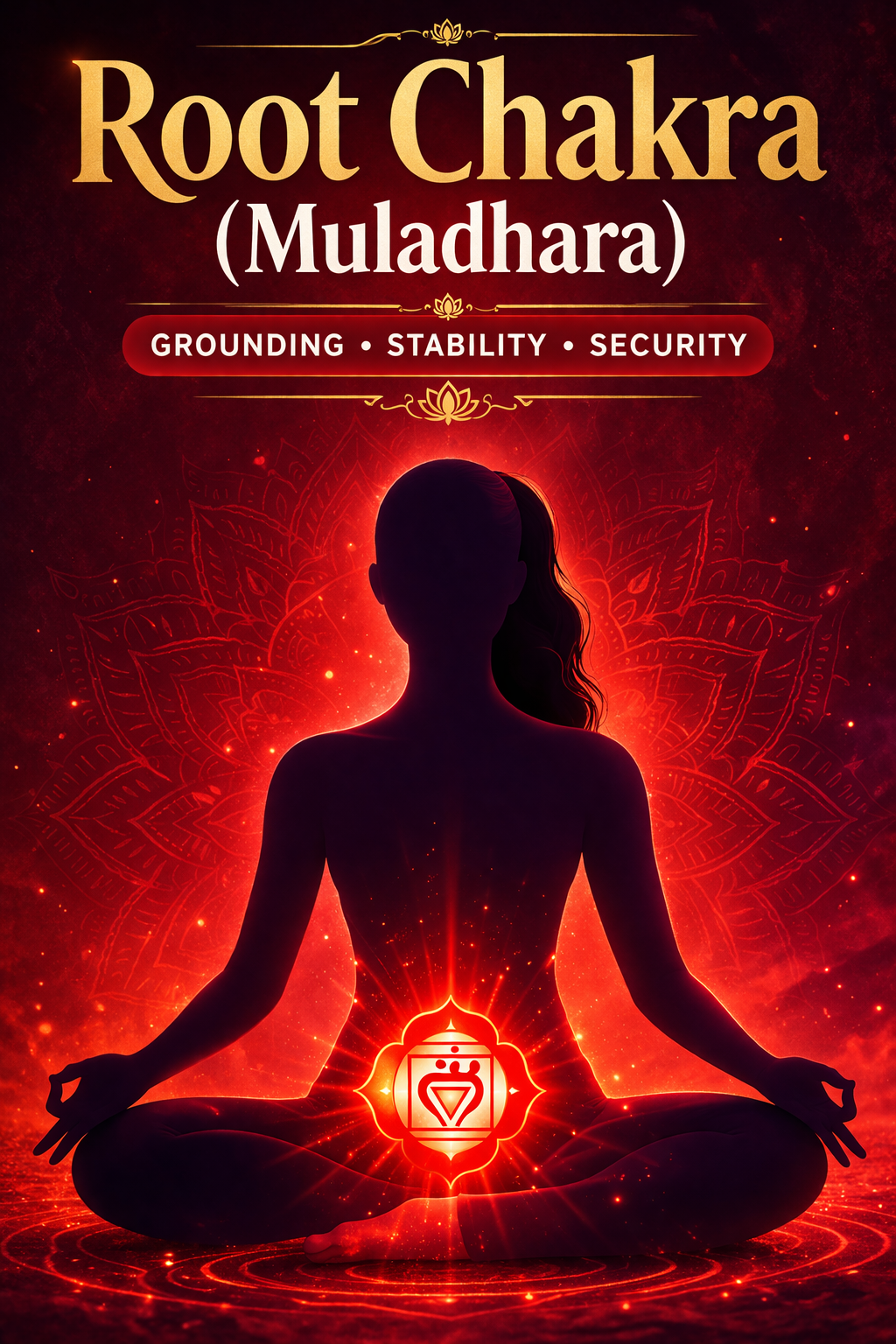
1. Root Chakra (Muladhara) – The Foundation of Life
Location: Base of the spine, between the anus and genitals.
Color: Red – the color of passion, strength, and survival.
Element: Earth – grounding, stability, physical presence.
Seed Mantra: LAM (pronounced “lum”)
What Does the Root Chakra Control?
Your root chakra is exactly what it sounds like – the foundation of your entire energy system.
It is connected to your basic needs such as food, water, shelter, safety, and financial security.
It gives you the inner feeling of stability and belonging, reminding you:
“I am safe. I belong here. I have enough.”
Physically, it is associated with the legs, feet, bones, large intestine, and adrenal glands.
Signs Your Root Chakra is Blocked
When this chakra becomes imbalanced, you may feel ungrounded, fearful, or insecure –
like a tree without roots.
Physical symptoms:
- Chronic fatigue
- Lower back pain
- Constipation or digestive discomfort
- Frequent colds or weak immunity
Emotional & behavioral symptoms:
- Constant anxiety or panic feelings
- Fear of change
- Feeling disconnected from your body
- Financial stress or hoarding tendencies
- Low self-esteem – “I’m not good enough”
How to Heal Your Root Chakra (Simple & Powerful)
- Grounding exercises: Walk barefoot on grass, soil, or sand.
This natural practice, often called “earthing,” helps restore balance. - Yoga poses: Practice Tadasana (Mountain Pose),
Vrikshasana (Tree Pose), and Malasana (Garland Pose). - Affirmations: Repeat daily –
“I am safe. I am grounded. I have everything I need.” - Color therapy: Wear red clothing, eat red foods
like tomatoes, strawberries, and beets, or keep grounding stones
such as garnet or ruby nearby. - Mantra chanting: Sit quietly, close your eyes, and chant
LAM for 5–10 minutes, focusing on the base of your spine.
When your root chakra is balanced, you feel stable, confident, and grounded –
ready to face life with strength and security.
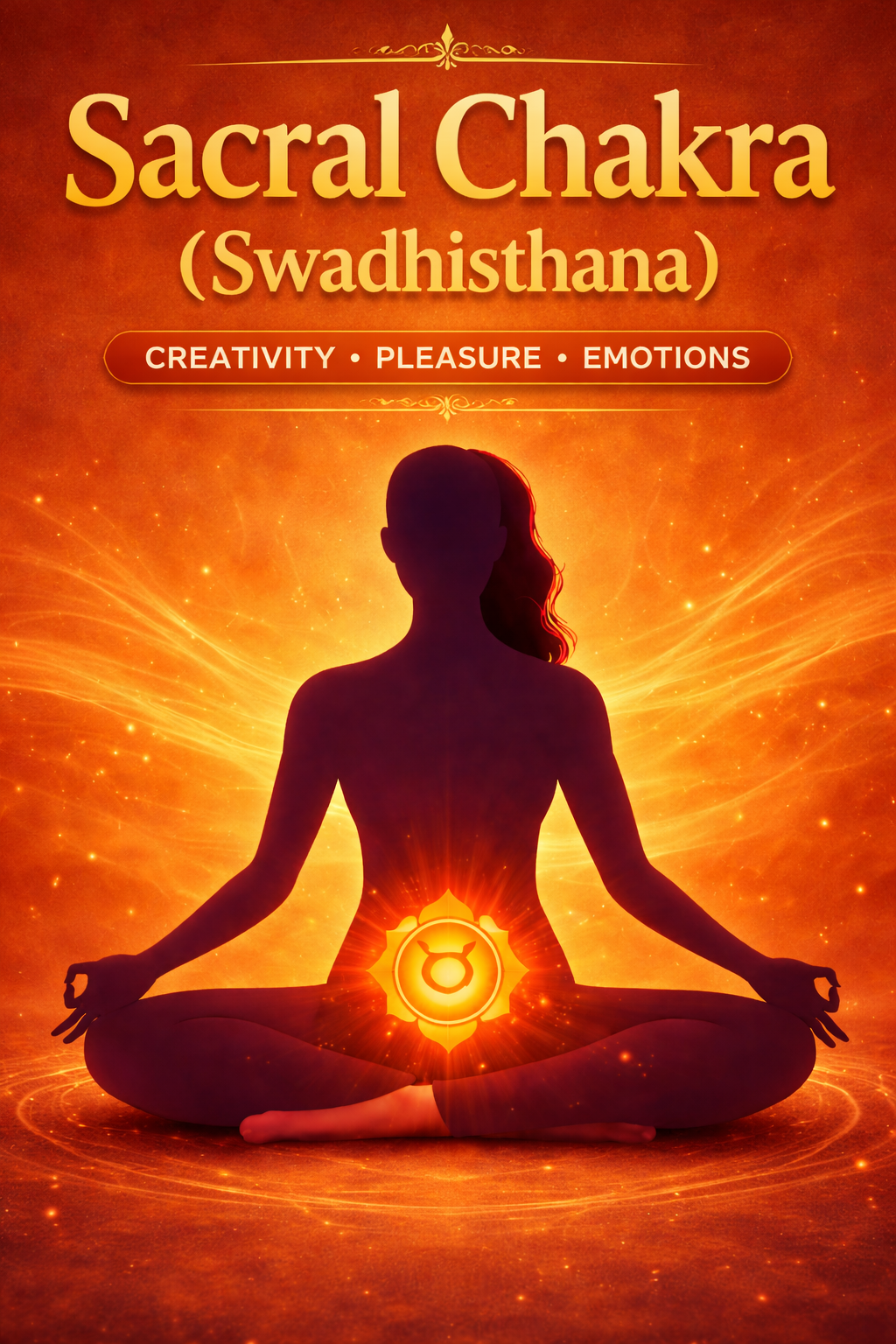
2. Sacral Chakra (Svadhisthana) – The Seat of Emotions & Creativity
Location: Lower abdomen, about two inches below the navel.
Color: Orange – warmth, enthusiasm, and joy.
Element: Water – flow, adaptability, and emotions.
Seed Mantra: VAM (pronounced “vum”)
What Does the Sacral Chakra Control?
This chakra is all about feeling and emotional flow. It governs your emotions, creativity,
and ability to experience joy and pleasure in life. You can think of it as your inner artist
and emotional center combined into one.
Physically, it is connected to the reproductive organs, kidneys, bladder, and circulatory system.
Signs Your Sacral Chakra is Blocked
When this chakra is imbalanced, life may feel dull or disconnected. You might struggle with
emotional expression or feel stuck in certain areas of life.
Physical symptoms:
- Low energy or reduced vitality
- Menstrual discomfort
- Urinary issues
- Lower back pain
Emotional & behavioral symptoms:
- Lack of creativity or inspiration
- Difficulty expressing emotions
- Fear of closeness or emotional connection
- Jealousy or attachment issues
- Feeling stuck or unmotivated
How to Heal Your Sacral Chakra
- Water therapy: Since this chakra is linked to water,
spend time near water, take relaxing baths, or go for a swim. - Yoga poses: Practice Bhujangasana (Cobra Pose),
Upavistha Konasana (Wide-Angle Seated Forward Bend), and
other hip-opening asanas. - Creative expression: Dance, paint, sing, or write.
Allow yourself to express freely and reconnect with your creative side. - Affirmations: Repeat daily –
“I allow myself to feel. I am creative. I deserve joy.” - Orange color healing: Wear orange, eat foods like
oranges, carrots, and sweet potatoes, or use crystals such as carnelian.
When your sacral chakra is balanced, you move through life with ease and flow.
You feel creative, emotionally connected, and open to joy and new experiences.
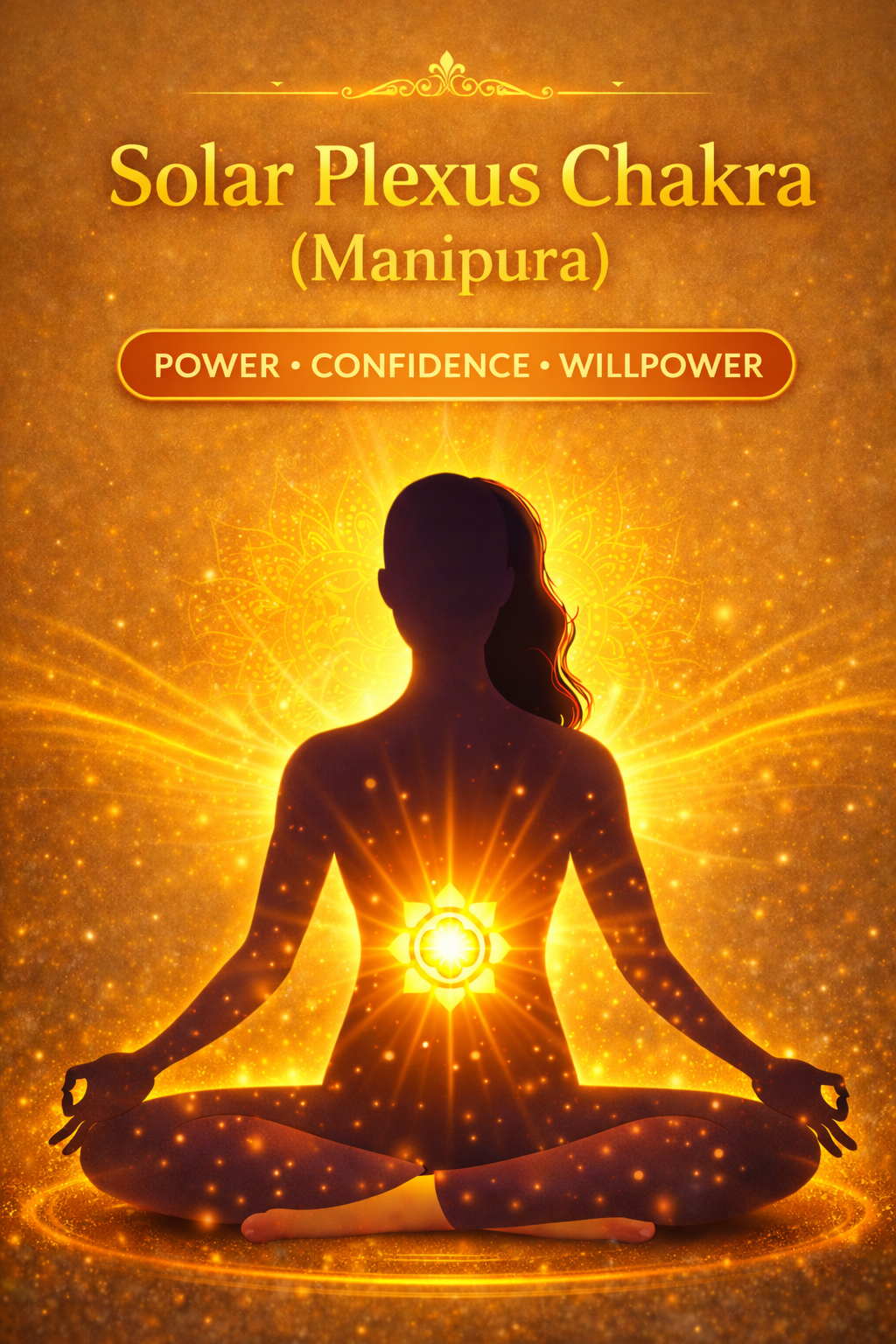
3. Solar Plexus Chakra (Manipura) – Your Inner Powerhouse
Location: Upper abdomen, around the navel/stomach area.
Color: Yellow – symbol of energy, warmth, and personal power.
Element: Fire – transformation, digestion, and willpower.
Seed Mantra: RAM (pronounced “rum”)
What Does the Solar Plexus Chakra Control?
This chakra represents your personal power and confidence. It gives you the strength to take action,
make decisions, and believe in yourself. It’s the energy behind your inner voice that says,
“I can do this.”
If you’ve ever felt a tight or nervous sensation in your stomach before an important moment,
that’s your solar plexus chakra responding.
Physically, it is connected to the stomach, pancreas, liver, gallbladder, and overall digestive system.
Signs Your Solar Plexus Chakra is Blocked
When this chakra is imbalanced, you may feel low on confidence, unsure of your decisions,
or dependent on others for validation.
Physical symptoms:
- Digestive discomfort or acidity
- Blood sugar imbalance
- Chronic fatigue
- Liver-related issues
Emotional & behavioral symptoms:
- Low self-esteem and lack of confidence
- Fear of criticism or rejection
- Constant need for approval
- Anger or control-related behavior
- Procrastination and indecisiveness
How to Heal Your Solar Plexus Chakra
- Core-strengthening yoga: Practice Navasana (Boat Pose),
Ardha Matsyendrasana (Half Lord of the Fishes), and Surya Namaskar (Sun Salutation). - Breathing exercises (Pranayama): Kapalbhati and Bhastrika
help activate your inner energy and boost vitality. - Affirmations: Repeat daily –
“I am powerful. I am confident. I can achieve anything I set my mind to.” - Yellow foods & color therapy: Include bananas, corn, and lemon water in your diet.
Wear yellow or keep a yellow crystal like citrine nearby. - Sun exposure: Spend 10–15 minutes in morning sunlight and
feel the warmth in your body.
When your solar plexus chakra is balanced, you feel confident, motivated, and in control of your life.
You naturally step into leadership and take action without fear.
4. Heart Chakra (Anahata) – The Bridge of Love
Location: Center of the chest, near the heart.
Color: Green (sometimes pink) – symbol of healing, love, and compassion.
Element: Air – openness, expansion, and connection.
Seed Mantra: YAM (pronounced “yum”)
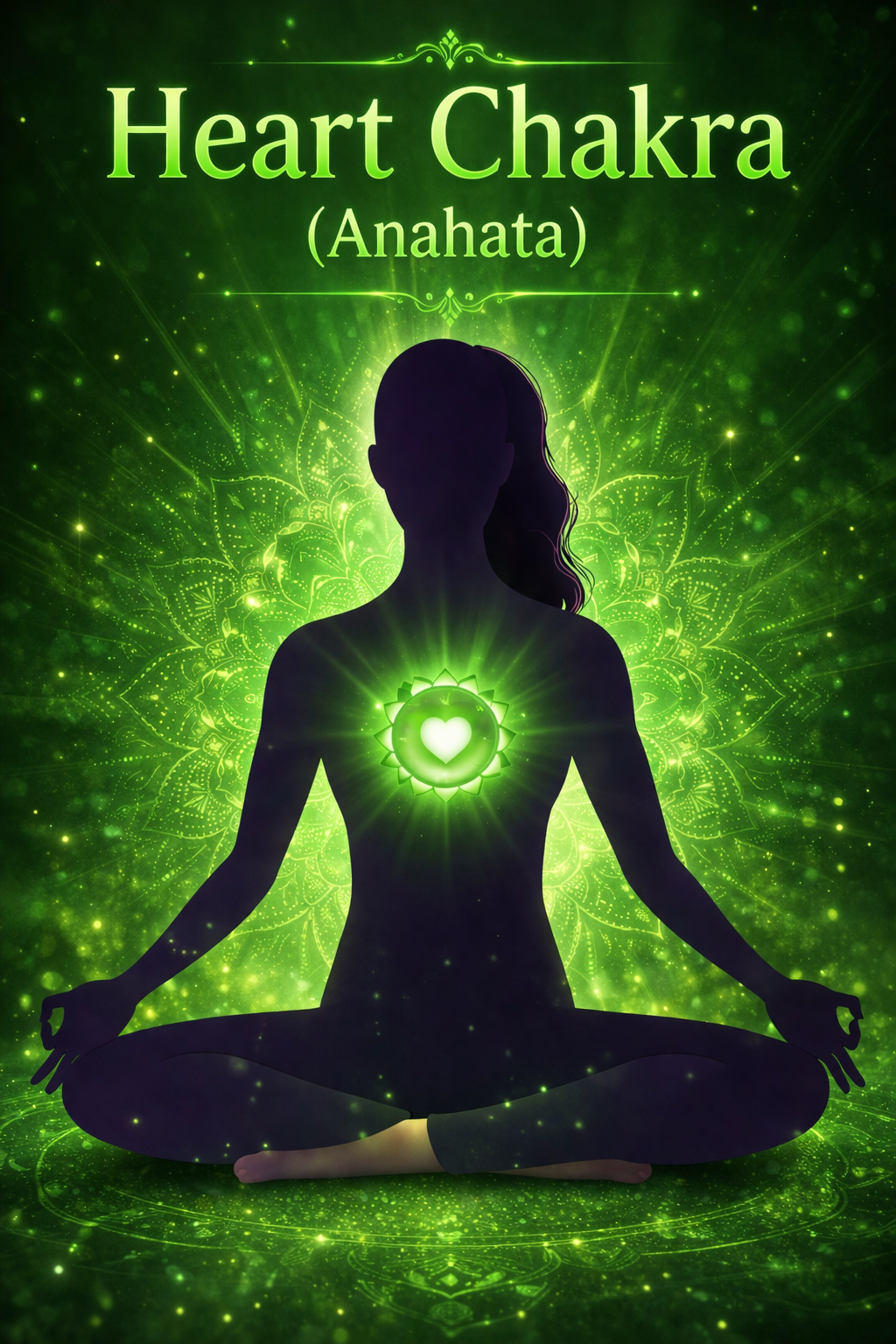
What Does the Heart Chakra Control?
The heart chakra acts as a bridge between your lower (physical) chakras and upper (spiritual) chakras.
It represents your ability to give and receive love, not only romantic love but also unconditional
love for yourself and others.
Physically, it is associated with the heart, lungs, thymus gland, and immune system.
Signs Your Heart Chakra is Blocked
When this chakra is imbalanced, it may feel like your heart is closed off.
You might feel distant, guarded, or unable to connect deeply with others.
Physical symptoms:
- Heart-related discomfort or irregular heartbeat
- Breathing or respiratory issues
- Poor circulation
- Tension between the shoulder blades
Emotional & behavioral symptoms:
- Fear of emotional closeness
- Difficulty forgiving others
- Jealousy or possessiveness
- Lack of self-love
- Feeling unworthy of love
How to Heal Your Heart Chakra
- Heart-opening yoga poses: Practice Ustrasana (Camel Pose),
Matsyasana (Fish Pose), and Bhujangasana (Cobra Pose). - Gratitude practice: Every night, write down three things
you are grateful for to cultivate a positive mindset. - Forgiveness exercise: Write a letter expressing your feelings
and release past emotions for inner peace. - Affirmations: Repeat daily –
“I am loved. I am worthy of love. I forgive myself and others.” - Green healing: Spend time in nature, eat leafy greens,
and use crystals like rose quartz or jade to support emotional balance.
When your heart chakra is balanced, you naturally radiate kindness and compassion.
You build meaningful connections and experience deeper emotional harmony in life.
5. Throat Chakra (Vishuddha) – Your Voice of Truth
Location: Throat region, near the thyroid gland.
Color: Light blue / turquoise – clarity, purity, and expression.
Element: Ether (space) – vibration, sound, and communication.
Seed Mantra: HAM (pronounced “hum”)
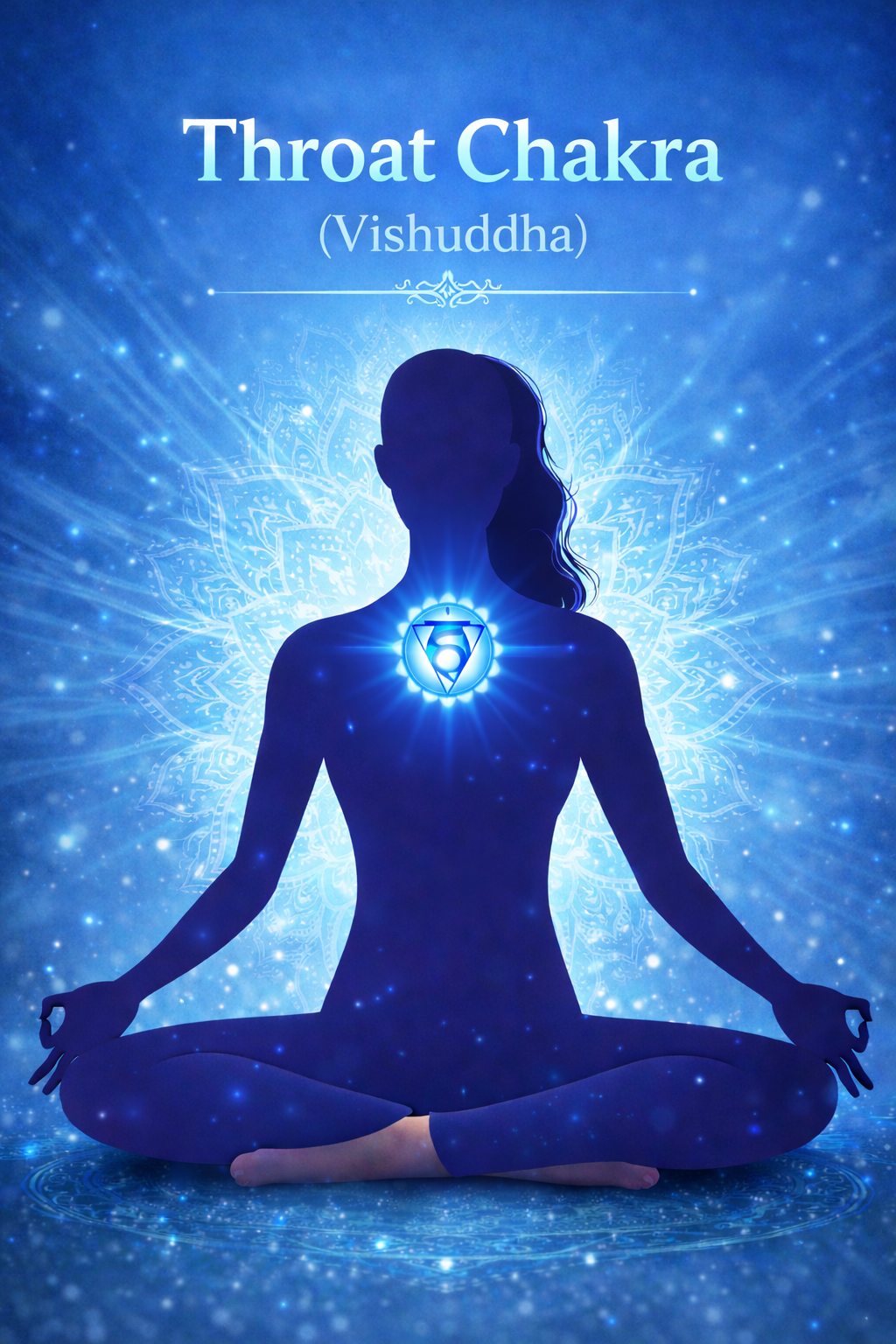
What Does the Throat Chakra Control?
The throat chakra represents your authentic voice. It governs your ability to express your thoughts,
speak your truth, and listen deeply to others. It is also connected to creative expression such as
speaking, singing, and writing.
Physically, it is associated with the thyroid, mouth, tongue, neck, and related areas of communication.
Signs Your Throat Chakra is Blocked
When this chakra is imbalanced, you may feel unheard or unable to express yourself clearly.
At times, you may either hold back your voice or overexpress without clarity.
Physical symptoms:
- Frequent throat discomfort
- Neck and shoulder stiffness
- Oral or gum-related issues
Emotional & behavioral symptoms:
- Fear of speaking or sharing opinions
- Difficulty expressing emotions
- Feeling unheard or ignored
- Being overly quiet or overly talkative
- Difficulty listening to others
How to Heal Your Throat Chakra
- Sound therapy: Chant HAM, hum gently,
or sing to activate your voice and energy flow. - Yoga poses: Practice Halasana (Plow Pose),
Sarvangasana (Shoulder Stand), and gentle neck stretches. - Journaling: Write your thoughts freely without filtering.
This helps release blocked emotions. - Affirmations: Repeat daily –
“I speak my truth with love. My voice matters. I am heard.” - Blue color healing: Wear blue, stay hydrated,
and use crystals like lapis lazuli or aquamarine.
When your throat chakra is balanced, you communicate clearly and confidently.
You express yourself with honesty and listen to others with openness and respect.
6. Third Eye Chakra (Ajna) – The Seat of Intuition
Location: Between the eyebrows (the “third eye”).
Color: Indigo (deep blue) – insight, intuition, and wisdom.
Element: Light – perception, clarity, and vision.
Seed Mantra: AUM or OM
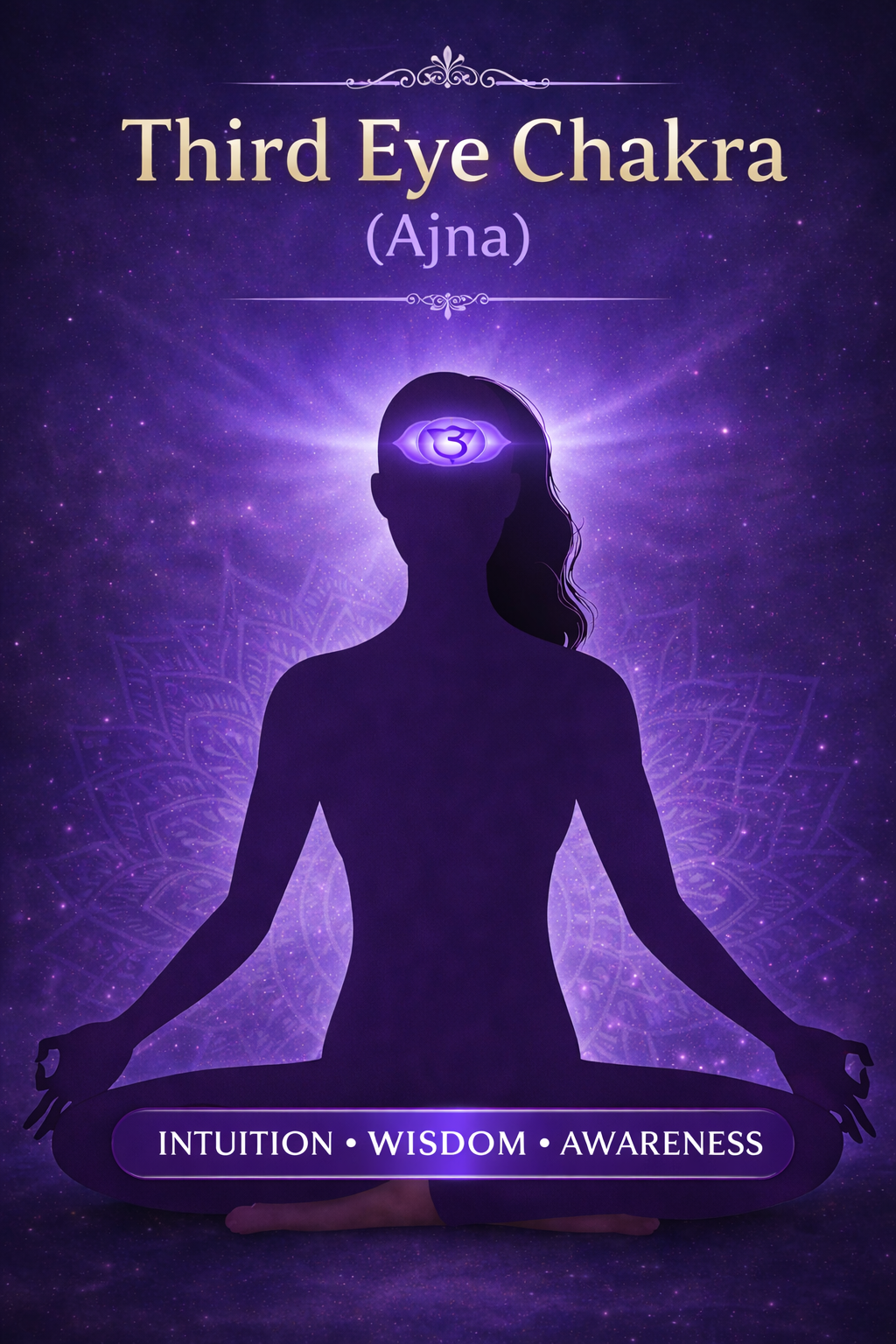
What Does the Third Eye Chakra Control?
The third eye chakra acts as your inner compass. It is connected to intuition, imagination,
awareness, and the ability to see beyond the physical world. When this chakra is balanced,
you develop a strong sense of clarity and inner guidance.
Physically, it is associated with the pineal gland, eyes, and brain-related functions.
Signs Your Third Eye Chakra is Blocked
When this chakra is imbalanced, you may feel confused, uncertain, or overly dependent on logic.
You might ignore your intuition and struggle to make decisions.
Physical symptoms:
- Frequent headaches
- Eye strain or vision discomfort
- Sleep disturbances
- Poor concentration or memory
Emotional & behavioral symptoms:
- Overthinking or mental overload
- Lack of creativity or imagination
- Difficulty making decisions
- Feeling disconnected from inner guidance
- Relying only on logic and ignoring intuition
How to Heal Your Third Eye Chakra
- Trataka (candle gazing): Gently focus on a candle flame at eye level,
then close your eyes and observe the inner image. - Meditation: Sit quietly, bring your awareness to the space between
your eyebrows, and softly chant OM. - Dream journaling: Keep a notebook nearby and write down your dreams
to strengthen awareness and insight. - Affirmations: Repeat daily –
“I trust my intuition. I see clearly. My inner wisdom guides me.” - Indigo & purple foods: Include blueberries, blackberries, grapes,
and use crystals like amethyst or lapis lazuli.
When your third eye chakra is balanced, you gain clarity and deeper understanding.
You trust your intuition, see the bigger picture, and make decisions with confidence.
7. Crown Chakra (Sahasrara) – The Gateway to the Divine
Location: Top of the head (crown area).
Color: Violet or white – symbol of higher awareness and peace.
Element: Cosmic energy or pure consciousness.
Seed Mantra: OM (silent or audible)
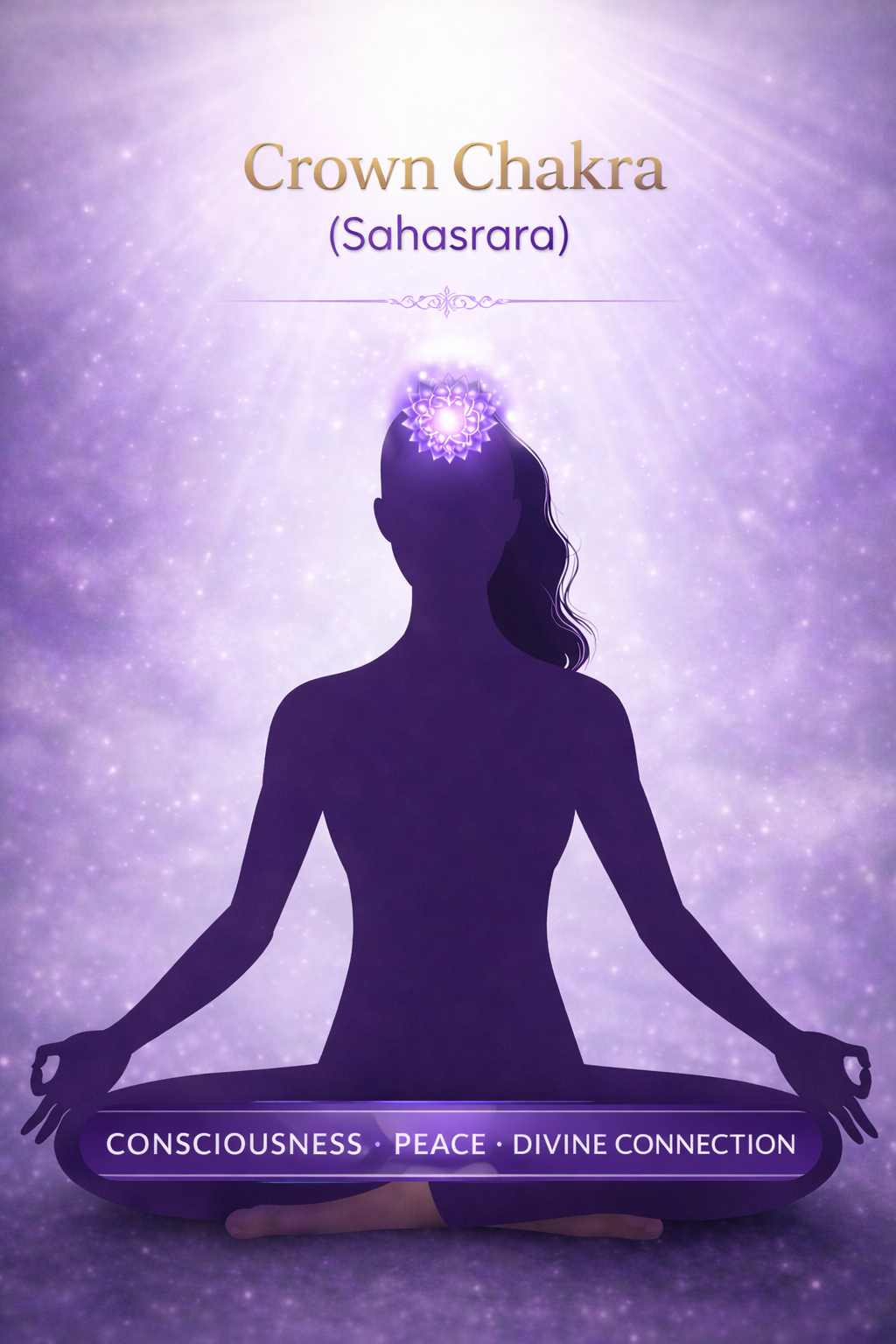
What Does the Crown Chakra Control?
The crown chakra is the highest energy center in your body. It represents your connection
to the universe, higher awareness, and a deeper sense of purpose. It helps you feel connected
to something greater than yourself.
When this chakra is balanced, you experience inner peace, clarity, and a strong sense of
meaning in life. You begin to understand that you are part of a larger, connected existence.
Signs Your Crown Chakra is Blocked
When this chakra is imbalanced, you may feel disconnected, lost, or lacking direction.
It can create a sense of emptiness or confusion about life’s purpose.
Physical symptoms:
- Frequent headaches
- Sensitivity to light or sound
- Dizziness or imbalance
Emotional & behavioral symptoms:
- Feeling disconnected from others
- Lack of purpose or direction
- Closed mindset or resistance to new ideas
- Low empathy or emotional disconnection
How to Heal Your Crown Chakra
- Silent meditation: Sit quietly and observe your thoughts without judgment.
Even a few minutes of stillness daily can bring clarity. - Acts of kindness (Seva): Help others without expecting anything in return.
This creates a sense of connection and purpose. - Mindful learning: Read inspiring or spiritual content that encourages
personal growth and awareness. - Affirmations: Repeat daily –
“I am connected. I am whole. I am at peace.” - Violet & white healing: Wear light colors, create a calm environment,
and use crystals like amethyst or clear quartz.
When your crown chakra is balanced, you feel calm, connected, and aligned with life.
You trust the journey and experience a deep sense of peace and acceptance.
A Quick Summary Table for Easy Reference
👉 Scroll left ↔ right to view full table
| Chakra | Location | Color | Element | Mantra | Balanced State |
|---|---|---|---|---|---|
| Root | Base of spine | Red | Earth | LAM | Safe, grounded, secure |
| Sacral | Lower belly | Orange | Water | VAM | Creative, emotional flow |
| Solar Plexus | Upper belly | Yellow | Fire | RAM | Confident, powerful |
| Heart | Chest center | Green | Air | YAM | Loving, compassionate |
| Throat | Throat | Light blue | Ether | HAM | Truthful, expressive |
| Third Eye | Between brows | Indigo | Light | OM | Intuitive, wise |
| Crown | Top of head | Violet / White | Cosmic | OM | Peaceful, connected |
7 Powerful Ways to Balance All Chakras Together
You don’t need to work on each chakra separately every day. These simple and holistic
practices can help balance all seven chakras together and bring harmony to your energy system.
- Daily Meditation (10–20 minutes):
Sit quietly, close your eyes, and visualize a rainbow-colored light moving from the base
of your spine to the top of your head. Imagine each chakra gently lighting up.For a step-by-step beginner guide, you can also explore this meditation guide
You can also follow a structured daily yoga routine for beginners to stay consistent. - Yoga Flow (Sun Salutation):
Practicing Surya Namaskar helps stretch and energize the entire body.
Try 5–10 rounds each morning for best results.Learn proper technique here: Surya Namaskar step-by-step guide
Start with easy yoga poses for beginners and gradually build your routine. - Chanting the Seed Mantras:
Chant LAM, VAM, RAM, YAM, HAM, OM, OM (silently) in sequence.
This helps align and balance your energy centers. - Eating a Rainbow Diet:
Include a variety of colorful foods to support different chakras:- Red (Root): tomatoes, beets
- Orange (Sacral): oranges, carrots
- Yellow (Solar Plexus): bananas, corn
- Green (Heart): spinach, broccoli
- Blue/Purple (Throat & Third Eye): blueberries, grapes
- White/Violet (Crown): garlic, onions, herbal teas
You can also follow a yoga diet plan for beginners for better results.
- Crystal Healing:
Lie down and place crystals on each chakra point for about 10 minutes.
For example: red jasper (root), carnelian (sacral), citrine (solar plexus),
rose quartz (heart), blue lace agate (throat), and amethyst (third eye & crown). - Essential Oils:
Use natural oils to support chakra balance:- Root: patchouli, cedarwood
- Sacral: orange, ylang ylang
- Solar Plexus: lemon, ginger
- Heart: rose, jasmine
- Throat: peppermint, eucalyptus
- Third Eye: lavender, clary sage
- Crown: frankincense, sandalwood
- Positive Affirmations:
Repeat daily:
“I am safe (root). I am creative (sacral). I am powerful (solar plexus).
I am love (heart). I speak my truth (throat). I trust my intuition (third eye).
I am connected to higher awareness (crown).”
For deeper practice, explore 7 day yoga plan for weight loss or improve your wellness with yoga for better sleep
Frequently Asked Questions (FAQ)
Q1: How long does it take to balance chakras?
It depends on your consistency and personal practice. Some people notice changes within a few days,
while others may take longer. Regular practice, even 10–15 minutes daily, can make a meaningful difference over time.
Q2: Can chakras be overactive?
Yes, chakras can become overactive as well as blocked. For example, an overactive root chakra may lead to
excessive attachment to material things, while an overactive throat chakra may result in overexpression
without listening. The goal is to maintain balance, not force.
Q3: Do I need a guru to heal my chakras?
No, you can begin your chakra healing journey on your own. These practices are simple and accessible.
However, if you are dealing with deeper emotional challenges, it can be helpful to seek guidance from
a qualified professional alongside your practice.
Q4: Is there scientific proof for chakras?
Chakras are part of traditional energy systems and are not directly visible through conventional medical tools.
However, many people experience positive effects through meditation, mindfulness, and energy-based practices.
The most important factor is your personal experience and consistency.
Q5: Can children practice chakra healing?
Yes, children can practice simple forms of chakra awareness. Activities like color visualization,
gentle breathing, and basic yoga can help them stay balanced and relaxed.
Final Words: Your Journey Begins Now
Healing your chakras is not a one-time process. It is a continuous journey of self-awareness
and personal growth. Some days you may feel balanced and energized, while on other days you
may feel disconnected again—and that’s completely normal. The key is to be patient and kind
to yourself throughout the journey.
Start small. Focus on one chakra that feels most out of balance. For example, if you often
feel fearful or insecure, begin with the root chakra. If you struggle to express yourself,
work on the throat chakra. Spend a few days or a week on one area, then gradually move forward.
Remember, everything you need is already within you. Your chakras are not something you need
to gain—they are already part of you, simply waiting to be balanced and activated. With
consistent practice, awareness, and a positive mindset, you can restore the natural flow of
energy in your body.
Thank you for taking the time to explore this guide. May your energy remain balanced,
your mind stay calm, and your life move forward with clarity and purpose.
Explore More: Deepen Your Yoga & Wellness Journey
If you found this guide helpful, explore these handpicked articles to improve your yoga practice, health, and overall well-being:
- What is Yoga? Complete Beginner’s Guide
- Daily Yoga Routine for Beginners
- 10 Easy Yoga Poses for Complete Beginners
- Morning Yoga Routine for a Fresh Start
- Evening Yoga Routine for Relaxation & Better Sleep
- Yoga for Better Sleep: A Natural Way to Sleep Deeply
- Yoga for Stress Relief: Simple Techniques for Beginners
- Yoga for Back Pain Relief at Home
- Yoga for Gas Relief and Better Digestion
- Yoga for Thyroid Patients: Balance Hormones Naturally
- Yoga During Periods: Safe Poses & Tips
- Yoga for Glowing Skin: Natural Beauty from Within
- Yoga Diet Plan for Beginners (Weight Loss Guide)
- 7 Day Yoga Plan for Weight Loss at Home
- Yoga Mistakes Beginners Should Avoid (Safe Yoga Tips)